3 weeks ago
Haiti extradited 18 suspects in President Jovenel Moise's killing to the United States for trial. The move shifts a stalled case into American courts as Haiti battles violence and judicial collapse.

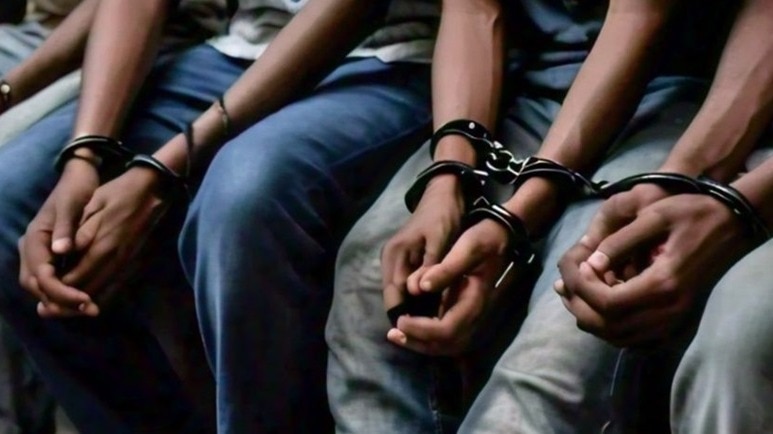
Stock photo used for illustration

Portauprince,UPDATED: Sep 21, 2026 05:28 IST
Eighteen suspects arrested in the July 2021 killing of Haitian President Jovenel Moise were extradited to the United States on Sunday, bringing to a close a long and troubled judicial process in Haiti over a case that shocked the Caribbean nation. The suspects will face proceedings in Florida, according to Jason Reding Quinones, US Attorney for the Southern District of Florida.
"Today marks the next major phase in our pursuit of accountability for the assassination of President Jovenel Moise," Quinones wrote on X. "We will follow the evidence wherever it leads, to those who financed it, facilitated it, supported it or committed crimes to make it possible. Five years later, we are still bringing defendants before American courts, and we are not finished."
Quinones did not identify the suspects, and a spokesperson for the US Department of Justice did not immediately respond to a request for comment on Sunday. The suspects who had remained in Haiti awaiting trial included 17 Colombian soldiers and Joseph Badio, a former Haiti Ministry of Justice employee who was part of an anti-corruption unit.
Badio, seen as a key suspect, was arrested in Haiti in October 2023 after being on the run for more than two years. Defence lawyers in the US for other suspects have said Badio was the mastermind behind a plan in which Moise was to be arrested but was instead assassinated. Authorities have also said some suspects had envisaged a coup, not an assassination, while the Colombian soldiers testified in Haiti that they were beaten, threatened with death and forced to sign documents in a language they did not understand.
Quinones said 30 people have been indicted in the case, while FBI Special Agent in Charge Brett Skiles said there were multiple arrests in the US and abroad on Sunday. He said the FBI and others "remain steadfast in ensuring that all individuals who allegedly sought profit from the assassination of a head of state are held fully accountable".
Haiti's Ministry of Justice and Public Security said it surrendered the suspects "to allow for their trial". "In order to bring to a successful conclusion the judicial proceedings... the Haitian government has decided to strengthen its cooperation with the American judicial authorities," it said, adding that proceedings in Haiti "continue to face significant difficulties".
The extradition came as a surprise to relatives of some of those detained. Diana Marcela Arbelaez Llano, wife of one of the suspects, said in a phone interview from Colombia that families had not expected the move. "We never imagined that the United States would have taken them so suddenly," she said, adding that she hoped they would get the chance to prove their innocence. She said the detained Colombians were very ill because of the conditions in Haitian prisons and added, "I don't know why the United States would have taken them. It's a state of total uncertainty."
Relatives of the Colombian suspects had earlier complained about repeated delays in Haiti's judicial process after the suspects were arrested in 2021. The investigation was stalled by gang violence, death threats and a collapsing judicial system. In October 2025, justice officials in Haiti sought help from the US and Canada after a local court of appeals ordered a fresh investigation into Moise's killing, the third such inquiry since he was shot 12 times at his private residence in July 2021 in an attack that also injured his wife. Earlier investigations had stalled as Haitian judges resigned from the case fearing for their lives, while gangs seized control of the downtown Port-au-Prince courthouse where suspects were being questioned.
The extraditions come as the US continues to prosecute and sentence several other suspects. In May, a jury in Florida convicted four men in the case, and at least five others have pleaded guilty and are serving life sentences. Those convicted recently were Arcngel Pretel Ortiz, Antonio Intriago, Walter Veintemilla and James Solages, who had pleaded not guilty. A jury found them guilty of conspiring to kill or kidnap Haiti's elected leader and of providing material support for the plot.
Christian Sanon, a Haitian-American citizen, is still awaiting trial. Authorities have said he was initially chosen by the alleged conspirators to replace Moise, and that once in power he was expected to award contracts to CTU for infrastructure projects, security forces and military equipment. Ortiz and Intriago were principals of CTU, or Counter Terrorist Unit Federal Academy and Counter Terrorist Unit Security, while Veintemilla was a principal of Worldwide Capital Lending Group. Both companies were based in South Florida. Other suspects who had earlier pleaded guilty in US federal court include a retired Colombian army officer and a Haitian-Chilean businessman who was once an informant for the US government.
Authorities have also said that key fugitives include Dimitri Herard, former head of security at Haiti's Palace, who escaped two years ago after a powerful gang federation stormed Haiti's two biggest prisons. With 18 suspects now sent to the US, the case has entered a new phase even as proceedings in Haiti remain mired in delays, security threats and institutional breakdown.
With PTI Inputs
- Ends
Published By:
India Today Web Desk
Published On:
Sep 21, 2026 05:28 IST