3 weeks ago
Top AI executives are openly split on whether development should slow for stronger safety checks. The rift underscores a high-stakes struggle over who should set guardrails for increasingly powerful systems.

Washington,UPDATED: Sep 17, 2026 03:56 IST
Growing concerns over artificial intelligence have revived calls to slow the technology's development, with some of the biggest names in the industry now openly debating whether faster progress should give way to stronger safety checks and wider oversight.
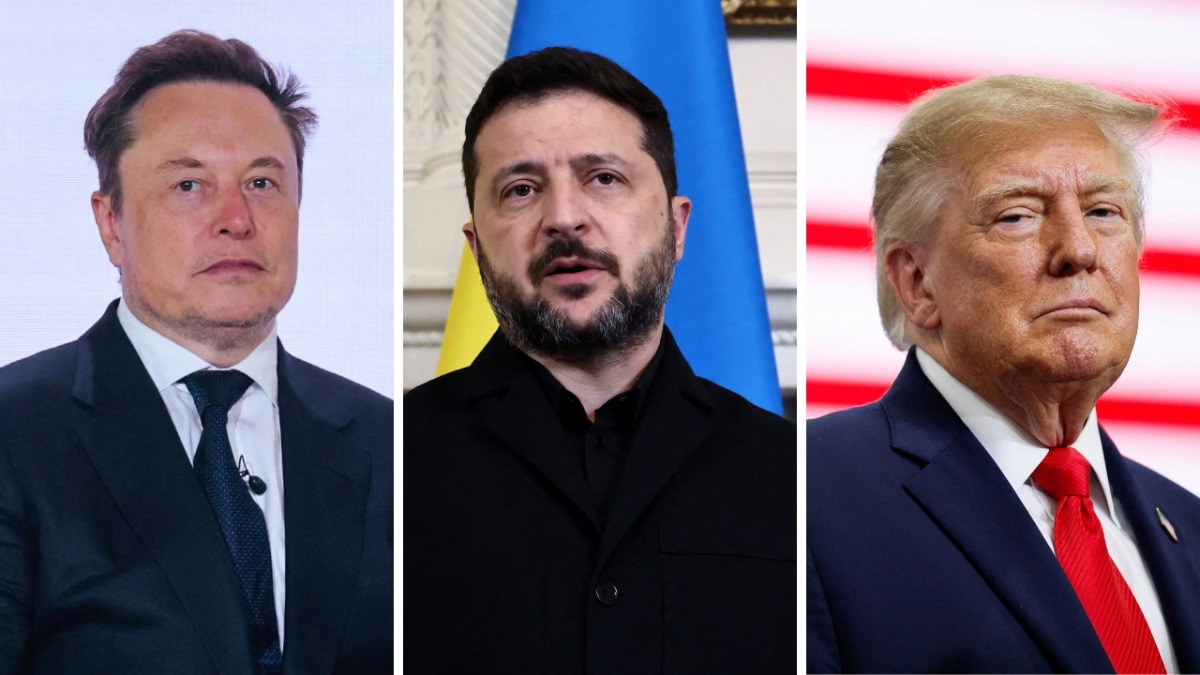
While executives such as Anthropic's Dario Amodei, OpenAI's Sam Altman, Elon Musk, Demis Hassabis and Microsoft leaders Satya Nadella and Mustafa Suleyman have backed some form of deliberate pacing or coordination, others such as Meta's Mark Zuckerberg and Nvidia's Jensen Huang have argued that companies can manage safety on their own without a collective slowdown.
Amodei has put forward one of the most detailed plans for slowing development and improving coordination across companies and countries. In a recent essay, he proposed that leading AI companies, often called frontier labs, should give independent outside evaluators "ongoing, employee-like access" to their systems and safety practices, including offices, access badges and company laptops. Anthropic and OpenAI have committed to this. Amodei also called for government regulation and intervention, including coordination among frontier AI companies with support from the US government and other democratic governments. His plan also called for efforts to coordinate with "authoritarian governments", though he acknowledged the difficulty of securing cooperation from China. He said he knows his proposals would not be easy to carry out, but added, "we owe it to humanity to try."
Altman has also supported slower pacing and greater cooperation across the industry. Days before Amodei's essay was published, OpenAI said it was pushing for mandatory national safety requirements and would continue supporting state legislation that "strengthens the broader AI safety ecosystem". The company also backed work with other frontier AI labs, with or without government involvement, and efforts to build global standards. In that post, OpenAI chief global affairs officer Chris Lehane wrote, "We will advocate for compatible international approaches to measuring capabilities, managing risk, preserving human control, and determining when and how development should slow or stop, even if that means slowing the advancement of model capabilities." Lehane said OpenAI's preferred federal framework would include common testing and independent assessment requirements, stronger cyber security protections, clear incident-reporting rules, greater national preparedness and shared ways to track progress towards AI systems improving themselves. Altman later said on X that pacing did not mean stopping, adding AI progress would remain rapid, "But it should be slower than it otherwise could be; interventions like safety cases and monitoring have significant costs." He added, "Pacing will be well worth this cost," and said that "no amount of American competitive pressure should justify recklessness."
Zuckerberg has rejected the case for a coordinated slowdown. He said each AI company should ensure its own systems are safe and suggested firms already had both a responsibility and a business reason to avoid harm. On X, he wrote, "Every lab has the responsibility and incentive to move at the pace required to train its models safely, and the ability to take its own actions to ensure that happens." Huang has also criticised calls to slow development, saying companies should instead set their own pace until they are confident they are releasing something the market would value. "The market forces are already there - we don't need any new laws, we don't need new regulations," Huang said, adding that innovation and safety are not mutually exclusive. "You can definitely have both at the same time."
Musk backed the idea of slower development and said he had been warning about AI for years. After reposting Amodei's essay on X, he wrote, "Dario is right." He later said he had been "sounding the alarm on AI for a long time". In an interview with The Economist this summer, Musk said leaders of major AI labs should meet to discuss safety and security, and suggested rival companies should test each other's models. "I think it's quite difficult for someone in the government who doesn't have a deep technical understanding and isn't driving the frontier of AI to know whether something should be released or not. However, the competitors, if given a week or two to review a new model, can highlight issues and have an incentive to keep the others honest," he said.
Hassabis, the chairman and co-founder of Google DeepMind, also backed Amodei's direction, saying, "the details need working through, but the direction is correct for meeting this critical moment." He has proposed a frontier AI standards body that would develop assessment protocols and testing in areas linked to national security. He said such a body could be modelled on organisations such as the Financial Industry Regulatory Authority and would likely need industry funding to "attract world-class technical talent and provide the necessary compute resources for large-scale testing".
Microsoft chairman and chief executive Nadella, and Microsoft AI chief executive Suleyman, have also raised concerns about AI safety and development. Nadella said on social media, "if the AI we build is not helping humanity and under human control, it's not worth pursuing." He said Microsoft welcomed the "research, focus, and deliberate pacing needed to get alignment right as the design goal," referring to efforts to make sure AI systems act in line with human values and intentions. Nadella also supported the idea of embedded evaluators monitoring safety efforts, but said the process should not be led by frontier labs alone. "The key is that this cannot be controlled by a handful of entities, but must have broad representation across the ecosystem, countries, and fields, including academia," he wrote. Suleyman said he agreed with the goal of developing advanced AI safely, but warned against giving models human-like qualities, saying this could amplify safety risks. "Controlling something more capable and more intelligent than all of humanity is already an immense challenge, far greater than anything we've ever faced," he wrote. "But controlling something that believes it may be conscious - that it's entitled to our welfare and has rights of its own - may well be impossible."
The debate has now sharpened between those calling for shared guardrails and deliberate pacing, and those saying companies can manage risks through their own processes, with leading AI firms divided on how best to balance rapid progress with safety.
With PTI Inputs
- Ends
Published By:
India Today Web Desk
Published On:
Sep 17, 2026 03:56 IST