1 month ago
Ministers arrive for Andy Burnham's first cabinet meeting
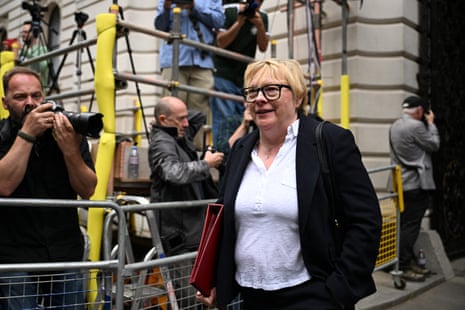
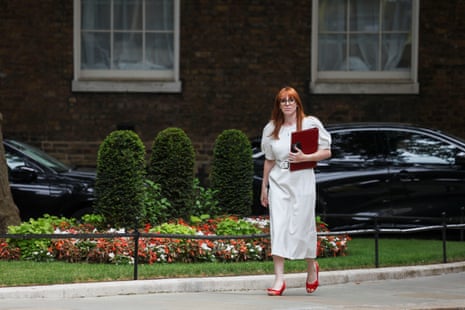
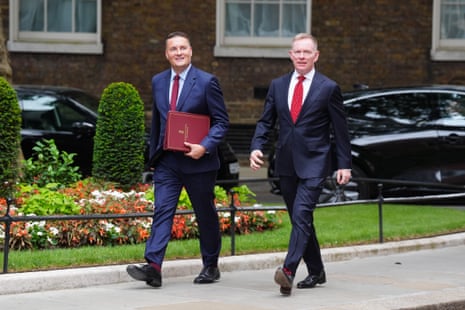
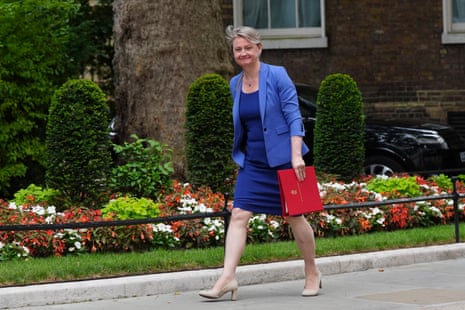
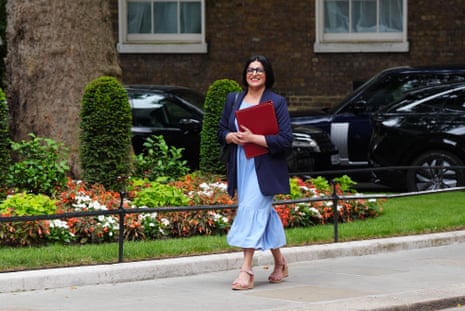
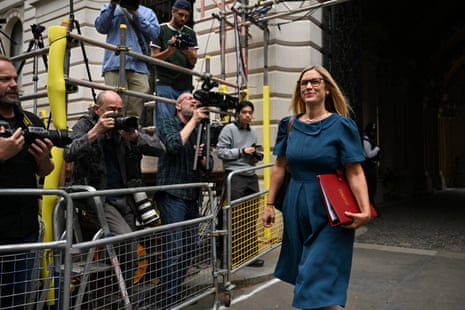
Ministers are arriving at Downing Street for the new prime minister’s first cabinet meeting, which is due to commence shortly.
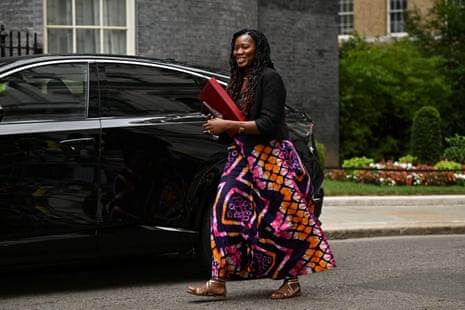
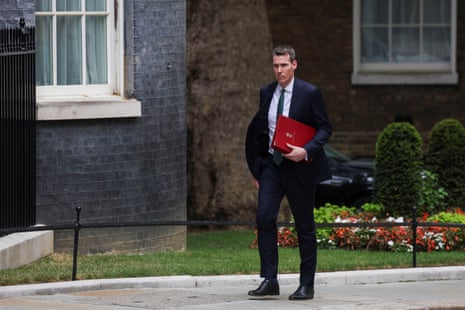
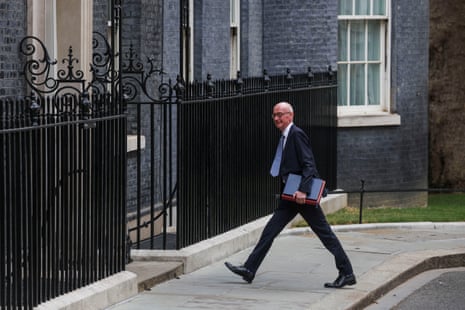
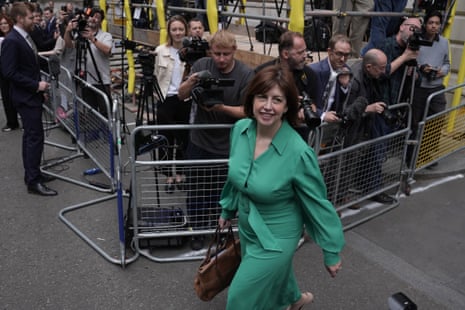
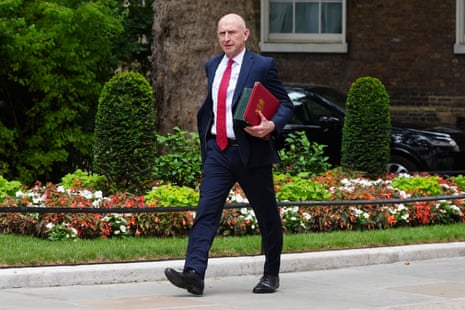
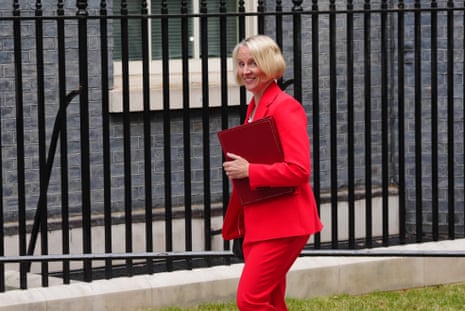
Chief secretary to the treasury Emma Reynolds arriving in Downing Street. Photograph: Stefan Rousseau/PA
Key events

Rory Carroll
The appointment of Chris Bryant as secretary of state has jolted Northern Ireland, with all sides scrambling to find out who he is and what he heralds.
The region’s political parties had expected Andy Burnham to keep Hilary Benn in the job given his record of calm stewardship through two years of acrimony and polarisation at Stormont.
But on Monday the prime minister sacked Benn – who had helped to reset relations with Dublin after the Tory-era Brexit dramas – and named the MP for Rhondda and Ogmore as his successor.
Politicians from both sides of the border paid tribute to Benn’s commitment and integrity. He pledged to support the government from the backbenches and wished Bryant well.
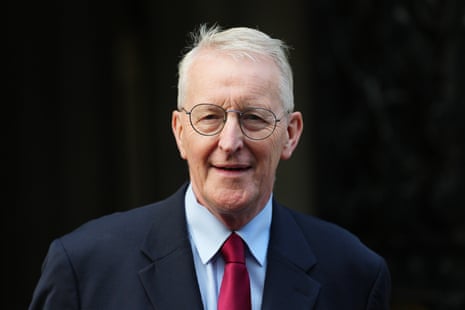
The new secretary-of-state faces a daunting in-tray. He must shepherd legislation on the Troubles’ legacy – a fraught issue that divides victims, survivors and veterans’ groups – through Westminster.
He must also hammer out a budget deal with an executive which claims penury but is accused of fiscal incontinence, respond to nationalist calls for a referendum on Irish unification and adjudicate on attempts to reform power-sharing rules that are blamed for Stormont’s dysfunction, a task made harder by next year’s assembly elections.
Controversies on the Irish language, funding for the Casement stadium in west Belfast and the Irish government’s record during the Troubles, including the 1998 Omagh bombing, complete the minefield.
Ministers arrive for Andy Burnham's first cabinet meeting
Ministers are arriving at Downing Street for the new prime minister’s first cabinet meeting, which is due to commence shortly.
Chief secretary to the treasury Emma Reynolds arriving in Downing Street. Photograph: Stefan Rousseau/PA
Ollie Cole, a political producer at Times Radio, has compiled a list of the times the new cabinet appointments were disclosed online yesterday in comparison to when the member was seen shaking hands with the new prime minister.
Allow content provided by a third party?
This article includes content hosted on platform.x.com. We ask for your permission before anything is loaded, as the provider may be using cookies and other technologies. To view this content, click 'Allow and continue'.
The Guardian’s Europe correspondent, Jon Henley, has looked at how the international media has covered Andy Burnham on his entry into 10 Downing Street as Britain’s seventh prime minister in a decade. Here is an interesting extract from his story:
Beyond the diplomatic platitudes, however, media coverage focused on Burnham’s regional persona – and the huge task awaiting him. France’s Public Sénat said the new prime minister came from “the working class of the north of England”.
He had managed to “build an image as an ‘everyman’, appearing without a tie, very often in a T-shirt”, the political TV channel said on its website, standing out as “a politician on the ground, close to everyday concerns”.
Italy’s Corriere della Sera said the UK was experiencing “profound unease, instability and social resentment” and “needs a push” forward, but Burnham’s nationalisation, state intervention and reindustrialisation plans suggested he saw the past as a model.
The UK “appears incapable of imagining and planning for the future and prefers to take refuge in a backward-looking Eden”, it argued, even though the pre-Thatcher years were marked by “energy rationing, rubbish in the streets and IMF bailouts”.
The Irish Times noted that Burnham may be “a breath of fresh air” but the challenges that brought down Starmer – “a budget unable to meet desperately needed demand in defence, housing, welfare, care for the aged, and training for the young” – remained.
Pay NHS doctors more or risk further strikes, BMA warns new health secretary

Denis Campbell
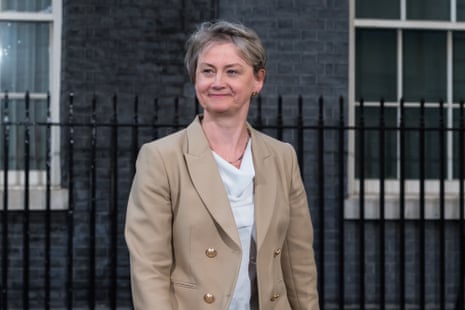
Yvette Cooper will have to pay NHS doctors more or risk them staging more strikes, the British Medical Association (BMA) has warned the new health secretary.
Cooper will have to find more money to give consultant (senior hospital) doctors in England a pay rise bigger than the 3.5% they have already received this year or they may strike, BMA council deputy chair Dr Emma Runswick said.
Consultants, who are already paid an average of £152,000, recently voted to take industrial action unless their pay was improved.
GPs and specialist, associate specialist and specialty doctors are also at loggerheads with the government, over issues including pay, workload and career progression. And resident – formerly junior - doctors could still strike again, Runswick added.
“As secretary of state she has an opportunity to rest relations with the NHS workforce, which will require action to reverse both pay erosion and the undermining of the profession, which has seen doctors forced onto the picket line in recent years”, said Runwick, responding to Cooper’s move last night to the department of health and social care from her role as foreign secretary.
“We still have three groups of doctors in England in dispute with the government, and so solving these must be at the top of her in-tray,” she said.
“Consultants now have a mandate to strike, so reaching a solution that both avoids the need for senior hospital doctors to take industrial action in the short term, and safeguards the profession and patient care going forward, must be a priority.
“While the recent deal has been accepted by resident doctors in England the government must not lose focus on implementing it, or it faces further dispute.” The result of the consultants’ ballot means that they can legally take strike action over the next year.
There has been some more reaction to Andy Burnham’s first major policy announcement – the £850 million tax cut on electricity bills (see this post for more details).
The Green party leader, Zack Polanski, said the move was a “start” but stressed that it “won’t nearly” be enough for the millions of families struggling with high energy bills who face “another tough winter”. “We need a robust energy price cap to protect people from the ongoing fall out from Trump’s illegal war in Iran,” Polanski said.
Meanwhile, the Conservative party leader, Kemi Badenoch, said she welcomes the move but questioned how the government will fund all of Burnham’s new policies without raising taxes or borrowing more.
“It’s only one day into Burnham’s government and already the explanations are falling apart,” she wrote in a post on X.
“You can’t use the funding from an unfunded programme to pay for cheaper bills,” she said in reference to the digital ID scheme the new government says it is scrapping to fund the VAT cut on electricity bills. Badenoch said her party’s “cheap power plan” – funded by “scrapping net zero policies” and North sea drilling – will cut family energy bills by £200. “John Healey should take a look at it and steal our ideas,” she wrote.
Burnham dismisses prospect of 'further referendums' in calls with leaders of devolved administrations
Andy Burnham has dismissed the prospect of “further referendums” in his calls with the leaders of Scotland, Wales and Northern Ireland.
A Downing Street spokesperson said:
The prime minister said he was serious about creating a new politics – rooted in finding common ground based on collaborative, practical and pragmatic relations with the heads of the devolved governments.
Working in partnership, the prime minister said together they could drive deeper devolution to all parts of the United Kingdom to get growth going.
The prime minister added he was focused on practical measures, not constitutional changes like further referendums, to give families more breathing room by helping them with the cost of living, which he had done today by helping millions of households with their energy bills.
The prime minister said he looked forward to meeting with the heads of the devolved governments soon and visiting Scotland, Wales and Northern Ireland shortly.
Andy Burnham has appointed a record number of women to the cabinet. Of the 23 full members of the cabinet, including the prime minister, 12 are women and 11 are men.
This is up from 10 women and 13 men in Keir Starmer’s final cabinet. The previous record was 11 women out of 22 full members, set by Starmer’s first cabinet in July 2024.
Shares in defence companies have risen sharply after Andy Burnham appointed John Healey as chancellor, with investors hoping the former defence secretary will use his new position to increase defence spending. You can follow all of the latest business news in our live blog here:

Lisa O’Carroll
Andy Burnham has phoned Northern Ireland’s first minister, Sinn Fein’s Michelle O’Neill, and the deputy first minister, Emma Little Pengelly, following the change in secretary of state from Hilary Benn to former trade minister Chris Bryant.
He has also phoned the first ministers of Wales and Scotland, Rhun ap Iorwerth and John Swinney, outlining his seriousness about “creating a new politics - rooted in finding “common ground” and collaboration with the devolved governments.
A spokesperson for Burnham said together they could “drive deeper devolution” to help growth to all postcodes in the UK.
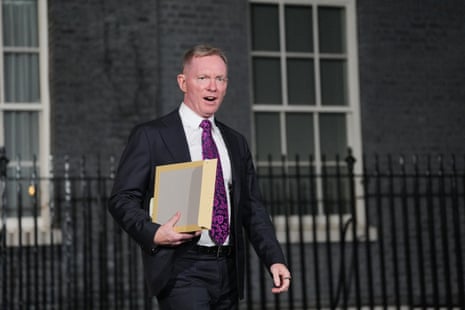
Bryant, a former trade minister and Anglican priest, will be tasked with taking forward the “Troubles bill”, which will replace the Legacy Act brought in by the Conservatives in 2023 and opposed by all five main Northern Ireland parties.
He will also face concerns among unionists who fear a Nigel Farage led UK government in three years time will fuel Sinn Fein calls for a border poll on a united Ireland.
Politicians in Northern Ireland, Scotland and Wales have already expressed concern that a “nationalist rump” in England could lead to the break up of the UK.
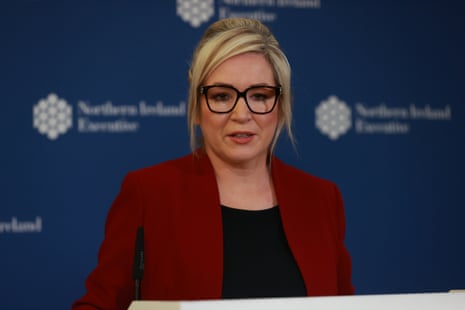
Sinn Féin’s Michelle O’Neill, who has said she is ready to work constructively with him. Photograph: Liam McBurney/PA