1 hour ago
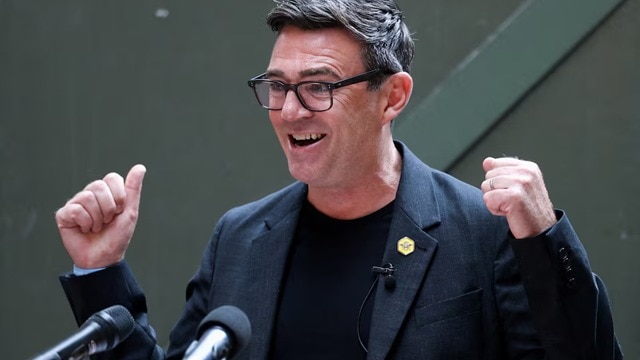
Andy Burnham has won the Labour leadership and is set to take office on Monday. His return to national politics puts devolution, public services and India ties in sharper focus.
Stock photo used for illustration

London,UPDATED: Jul 17, 2026 21:08 IST
Andy Burnham was elected the new leader of the Labour Party on Friday, succeeding in his third attempt after failed bids in 2010 and 2015. He is set to formally take charge at Downing Street on Monday after meeting King Charles III at Buckingham Palace, becoming Britain’s 59th prime minister.
Burnham has said he wants to do politics differently, with a strategy he described as distinctly Labour. His rise also carries interest for India, given his earlier efforts to deepen ties as Mayor of Greater Manchester and his stated support for building closer links.
Burnham, 56, returned to Westminster politics last month after winning a by-election at Makerfield in northern England, a contest seen as a test of his ability to counter the growing challenge from the far-right Reform UK. Setting out his political direction, he said: "As your leader, I will set a direction that is distinctively Labour. We won't try to out-Green the Greens, or out-Reform Reform, or doing what we've done in the past... wearing too many Tory clothes."
Among the main elements of his agenda are greater devolution across the regions of the United Kingdom, re-nationalising essential services and a pro-business approach shaped by his nine years as Mayor of Greater Manchester. He said: "We turn places round together, and that is the way we ran in Manchester, and we will take to the whole country," while also promising more power to help re-industrialise the country and build an education system that gives equal weight to academic and technical learning.
In his first major speech laying out what he called "Burnham-ism" for Britain, he said: "From here, we do it differently. We win by being us, boldly, confidently, authentically us. Labour. That's how we win." He added: "I know what I believe after 25 years as an elected Labour representative, and I know what I want to do, working with you all. I have a plan, and what I also want you to know is that I won't change. I have a style; it's my style. I will always stay close to the ground, close to the people." Burnham has also said he plans to spend the next few weeks of the parliamentary recess travelling across the country.
His links with India have drawn attention because of a major delegation he led there in 2019 as Mayor of Greater Manchester. During an Indian business delegation’s visit to Manchester last year, he said: "I have fond memories of my time in India in 2019, when I experienced first-hand so much of what this vibrant, welcoming country has to offer." He added: "That trip was significant because it saw us accelerate so many key projects, all aimed at capitalising on the strong synergies between Greater Manchester and India," and pledged his "full support in building ever closer ties".
Born in Merseyside and brought up in Cheshire, Burnham is a University of Cambridge graduate. His father was a telephone engineer and his mother worked as a receptionist at a GP surgery. He entered politics as a researcher and special adviser before being elected as the MP for Leigh in Greater Manchester in 2001. Under Tony Blair, he was seen as one of Labour’s promising younger MPs, and under Gordon Brown he rose quickly through senior roles including Chief Secretary to the Treasury, Culture Secretary and Health Secretary.
After Labour lost the 2010 general election, Burnham served in Ed Miliband’s shadow cabinet. He then lost the 2015 leadership contest to Jeremy Corbyn before resigning as an MP in 2017 to run for mayor. Since then, he has become known as the "King of the North", a reference to the television drama Game of Thrones, and had been widely seen as waiting for another chance at the Labour leadership. As problems for Keir Starmer mounted within the party, Burnham quickly emerged as the frontrunner to lead Labour into the next general election, expected by 2029.
His Dutch-born wife, Marie-France van Heel, and their three children in their 20s — Jimmy, Rosie and Anne-Marie — are expected to divide their time between London and northern England. That fits with Burnham’s proposal for a "No. 10 North", which he says would prevent power from being concentrated only at No. 10 Downing Street. With his leadership win and his promise to govern in a different style, Burnham now moves from regional politics back to the national stage, with devolution, public services and closer international ties, including with India, among the themes he has highlighted.
With PTI Inputs
- Ends
Published By:
India Today Web Desk
Published On:
Jul 17, 2026 21:08 IST