 2 weeks ago
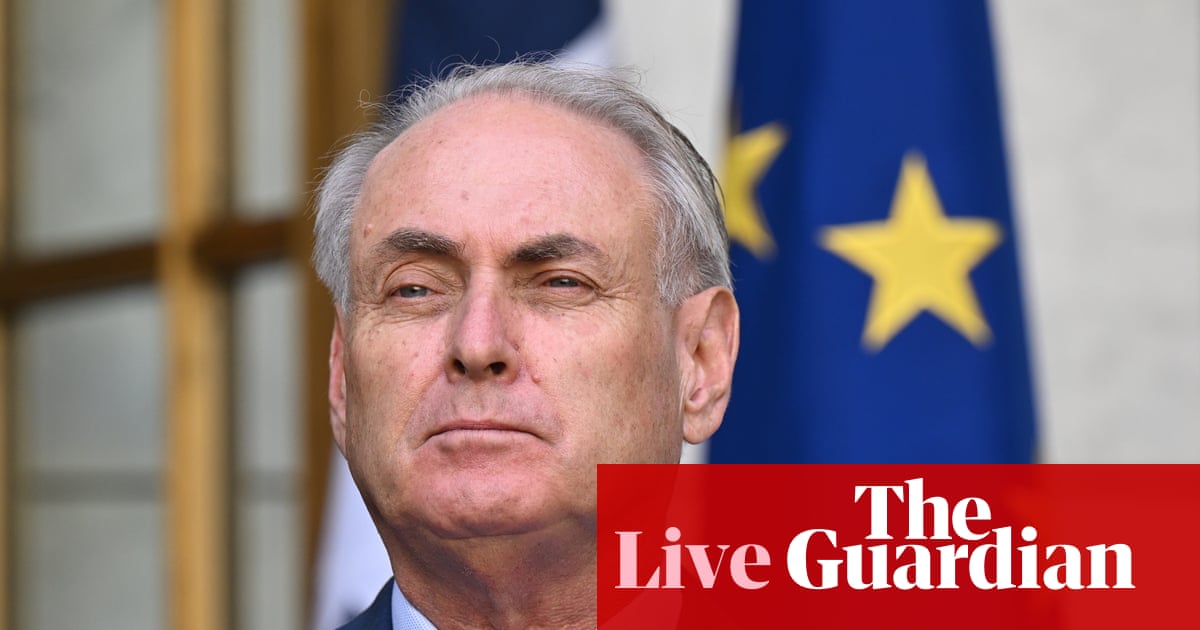
Anthony Albanese says an artificial intelligence agent developed by OpenAI hacked Medicare in June.
Australia’s prime minister made the comments at the UN summit in New York, saying it appeared no personal information had been accessed.
Investigations were ongoing, however, into how the agent had infiltrated Australia’s government-run universal health care system.
“This situation is obviously unacceptable,” Albanese said.
“Today, I spoke with the CEO of OpenAI, Sam Altman, to express Australia’s extreme concern about this incident.
“And I also expressed my disappointment that it took the company way too long to inform the government what had occurred.”
A taskforce has been launched to explore the “legal situation” of the breach.
Albanese said the OpenAI agent had gained unauthorised access into the public-facing Medicare statistics reporting service portal, which is administered by Services Australia.
The portal contains non-sensitive Medicare information relating to data and statistics, such as spending.
Albanese said the agent had accessed “public and non-public files.”
“A forensic investigation, aided by the Australian Signals Directorate, is now under way to ascertain more information, including what other government systems were affected,” Albanese said.
He said there appeared to be no broader compromise to the Services Australia network.
“Evidence currently available is there is no broader compromise to the Services Australia network.”
The deputy prime minister, Richard Marles, said the government learned of the June breach “a couple of weeks ago” and ministers were informed last week.
Marles said the agent was non-human and called the breach a “very serious incident”.
“What we have seen is unauthorised access in to an Australian government website and that is completely unacceptable and we have made that clear to OpenAI.”
Marles said the government had established a taskforce that will be led by the the Department of Prime Minister and Cabinet and working with the Australian Signals Directorate and the AI Safety Institute.
skip past newsletter promotionafter newsletter promotion
“We will look at what is the legal situation in respect of this and what it means to have gained an unauthorised access, albeit in an unintended way.
Marles said the government was “working cooperatively with OpenAI” but called it “fundamentally … a very unacceptable situation”.
In a statement, OpenAI spokesperson Drew Pusateri said the company was conducting an extensive review of “misaligned model activity during training and evaluation” and was “notifying third parties when our review identifies potential impacts to their systems.”
“During this review, we identified activity involving several Australian government websites and services as our models attempted to look up answers, and available statistics for questions about Australia during an internal evaluation,” Pusateri said.
“In the course of that, our models took actions we did not intend.”
He said the review had found no evidence of patient records being accessed.
“The information accessed included aggregate health statistics and internal file names.”
Pusateri said OpenAI was supporting investigations and that its review was ongoing, adding it was committed “sharing what we learn as that work continues”.
It comes just days after Albanese joined more than 20 other leaders in urging greater international safeguards to protect people from the risks of AI.
Altman and Dario Amodei, the CEO of Anthropic, heads of two of the world’s largest artificial intelligence companies, addressed the United Nations security council on Wednesday in New York, in separate briefings on AI safety.