1 month ago
Last Updated:December 08, 2025, 13:08 IST
A country long criticised for overlooking or indirectly benefiting from narcotics flows is now unveiling one of the most muscular anti-drug campaigns in modern history

Crackdowns in the Americas historically divert trafficking rather than halt it. If Latin routes become riskier, networks may strengthen flows through Africa or the Middle East, regions that connect directly to India’s maritime and trade corridors. (Image: AFP)
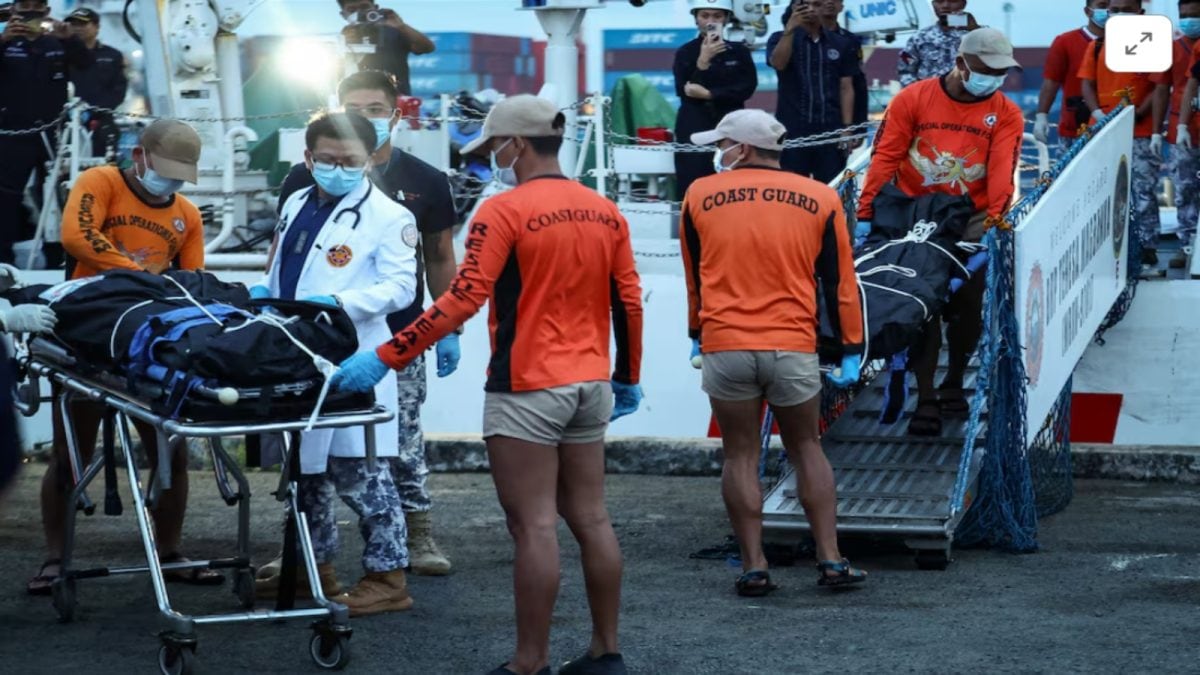
The US’ decision to launch military strikes on alleged Venezuelan drug-trafficking networks has jolted the geopolitical establishment. ‘Operation Southern Spear’ — Washington’s newly unveiled campaign of maritime air and naval strikes across the Caribbean Sea and Eastern Pacific — has already destroyed multiple vessels and killed nearly 90 people since September 2025.
What makes this shift extraordinary is not merely the scale of force but the timing: it comes just as renewed scrutiny, including reporting from Al Jazeera, reopens old allegations of America’s own historical complicity in the global narcotics trade.
This contrast — a superpower accused for decades of enabling certain drug flows now declaring narcotics networks “terrorist entities" — sets the stage for a deeper debate. For India, the implications go well beyond foreign-policy interest. A militarised drug war reshapes global enforcement, alters trafficking routes, and tightens import-export scrutiny. The question is no longer whether this crackdown affects India, but how soon and how sharply.
A Past That Haunts the Present
As per a Al Jazeera report, the US drug story has never been purely domestic. From the Cold War era to the conflict years in Central America, America’s strategic interests and intelligence priorities often intersected with narcotics networks, sometimes in ways that looked uncomfortably permissive. These episodes, whether involving anti-communist militias, covert funding channels, or overlooked trafficking corridors, have long cast a shadow over Washington’s moral authority in the global drug debate.
Importantly, this history is not monolithic; it ranges from outright allegations of facilitation to claims of selective blindness. But what unites them is the impression that the “war on drugs" has been unevenly applied, shaped as much by geopolitical expediency as by moral conviction. It is precisely this history that makes the US offensive of 2025 appear like a dramatic attempt to rewrite its role — to transform itself from an ambivalent actor into the world’s most aggressive drug-war enforcer.
Operation Southern Spear And The Return Of Open-Force Drug Policy
Since September, Operation Southern Spear has visibly shifted US counter-narcotics strategy from interdiction to outright force projection. At least 22 strikes have been carried out against suspected trafficking vessels, with the destruction of 23 boats reported and 87 people killed. These figures represent one of the most intense US military actions linked to drug enforcement since the 1980s.
What changed in 2025 was the legal framing. The US designated groups like Tren de Aragua as Foreign Terrorist Organizations — a move that expands American legal authority to treat the drug trade not as organised crime but as terrorism. This opens the door to military options traditionally reserved for non-state armed groups. The US president’s recent admission that ground operations inside Venezuela “cannot be ruled out" signals how quickly this escalation could widen into a hemispheric confrontation.
For Venezuela, such actions constitute a violation of sovereignty; for Washington, they are framed as counterterrorism necessary for hemispheric security. The gap between those interpretations is likely to define regional politics in the months ahead.
The Moral And Geopolitical Paradox At The Heart Of America’s Drug War
To observers, the contradiction is hard to ignore. A country long criticised for overlooking or indirectly benefiting from narcotics flows is now unveiling one of the most muscular anti-drug campaigns in modern history. But focusing solely on the hypocrisy oversimplifies the story. In truth, this pivot reflects evolving geopolitics more than moral awakening.
At one level, militarisation allows Washington to reassert itself as the central force shaping global drug policy, especially at a time when Latin American states are debating alternative, more humane models. At another, designating drug gangs as terrorist actors shifts counter-narcotics initiatives into the national-security arena, where oversight is looser and military tools become the default.
This is not merely a policy shift, it is a reframing of the global narcotics economy as a battlefield. And once that framing is normalised, it becomes easier for conflicts over territory, ideology, and influence to be waged under the banner of drug control.
Why India Cannot Watch From The Sidelines
India’s geographic distance does not insulate it from the consequences of this new drug-war architecture. If anything, New Delhi sits at a strategic fault line of global trafficking routes — between the Golden Crescent, the Golden Triangle, and expanding synthetic-drug corridors that now cut through the Indian Ocean.
A more aggressive US posture will inevitably harden global enforcement norms. Maritime surveillance may intensify, shipping routes may come under tighter scrutiny, and intelligence networks may refocus on regions previously considered secondary.
For India, which already grapples with heroin inflows from Afghanistan-Pakistan, methamphetamine production links to Myanmar, and precursor-chemical leakages from domestic industries, this could mean a more complex enforcement environment.
There is also the risk of displacement. Crackdowns in the Americas historically divert trafficking rather than halt it. If Latin routes become riskier, networks may strengthen flows through Africa or the Middle East, regions that connect directly to India’s maritime and trade corridors. Even legitimate commercial traffic could face heightened suspicion, affecting exporters, logistics hubs, and diaspora-heavy sectors such as shipping and port services.
This is equally a domestic policy moment. India has tended to stress on policing, interdiction, and criminalisation. But as the global conversation shifts toward terrorism labels and military tools, India must decide whether to adapt, resist, or redefine its approach. Balancing robust enforcement with human-rights obligations, rehabilitation systems, and international cooperation will become more critical than ever.
The World At A Crossroads: Militarisation Or Reform?
The global drug war has entered a new phase. But whether it represents progress or regression remains deeply contested. For decades, punitive, militarised approaches have failed to stem demand or dismantle supply chains. They have, however, fuelled violence, empowered cartels, and stretched the mandate of armed forces far beyond their intended roles.
The US shift in 2025 risks deepening this trajectory. By collapsing drug trafficking into the framework of terrorism, it may legitimise harsher tactics worldwide while shrinking the space for public-health models that focus on addiction treatment, harm reduction, and economic alternatives.
For India, and for every country navigating the flow of narcotics, people, and capital, the question now is not only how to fight drugs but how to define the fight. Transparency, global cooperation, human-rights safeguards, and demand-side interventions may offer a more sustainable path than escalating militarisation. But with the world’s most powerful military now redrawing the contours of the drug war, the space for such alternatives may narrow unless nations actively push back.
The war on drugs may have been declared in the 1970s, but in 2025, it is being reinvented. Whether this reinvention leads to stability or spirals into new conflicts will depend on how countries like India respond to the moment, with caution, conviction, and clarity about what truly reduces harm.
 Click here to add News18 as your preferred news source on Google.
First Published:
December 08, 2025, 13:05 IST
News world As The US Targets Venezuela’s Drug Rings, Its Own Narco Trail Looms. What Is The Lesson For India?
Disclaimer: Comments reflect users’ views, not News18’s. Please keep discussions respectful and constructive. Abusive, defamatory, or illegal comments will be removed. News18 may disable any comment at its discretion. By posting, you agree to our Terms of Use and Privacy Policy.

Stay Ahead, Read Faster
Scan the QR code to download the News18 app and enjoy a seamless news experience anytime, anywhere.