1 month ago
As Tehran and Muscat negotiate a proposed Strait of Hormuz shipping corridor, India Today's OSINT team maps 16 Indian flagged vessels and records 19 attacks on India linked ships since March.


New Delhi,UPDATED: Aug 6, 2026 19:29 IST
US President Donald Trump has repeatedly claimed that the “Strait of Hormuz would reopen fully.” Yet despite those assurances, a lasting arrangement has remained elusive. The latest diplomatic push came this week, when Iran announced it had reached a mutual understanding with Oman on the geographical parameters of a proposed shipping route through the strategic waterway. For India, however, the uncertainty is far from over.
India Today's Open Source Intelligence (OSINT) team tracked 16 India-flagged vessels operating across the Persian Gulf, the Strait of Hormuz, the Gulf of Oman and the Red Sea using MarineTraffic data reviewed on August 6.
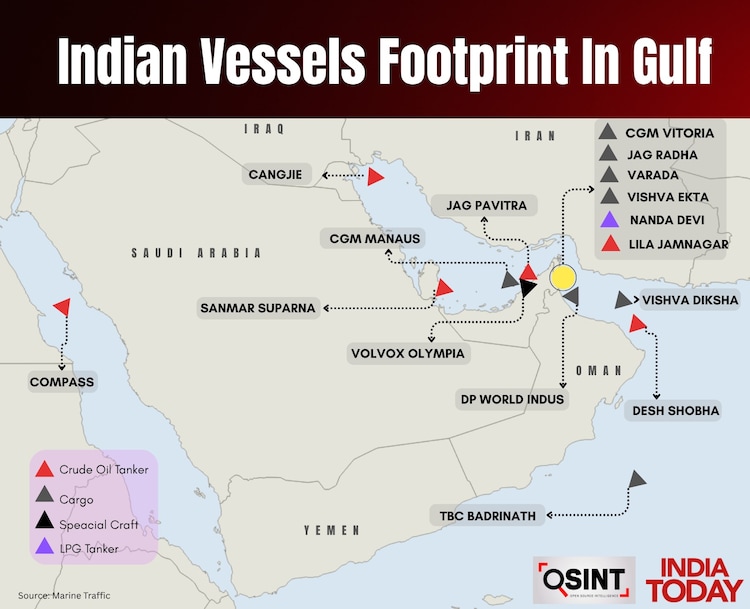
Nine of them, CGM Vitoria, Jag Radha, Varada, Vishva Ekta, Jag Pavitra, CGM Manaus, Volvox Olympia, Vishva Diksha and TBC Badrinath, are general cargo vessels. Five are crude oil tankers: Cangjie, Sanmar Suparna, Compass, Desh Shobha and Lila Jamnagar. Nanda Devi is an LPG tanker, while DP World Indus is listed as a special craft. Most are operating in and around the Strait of Hormuz and adjoining Gulf waters. Vishva Diksha is in the Gulf of Oman, Desh Shobha and TBC Badrinath are farther out in the Arabian Sea, while Compass is transiting the Red Sea towards Egypt.
For New Delhi, the stakes extend well beyond maritime trade. As the world's second largest supplier of seafarers, the country finds itself exposed on two critical fronts: energy security and the safety of thousands of Indian sailors serving aboard merchant vessels.
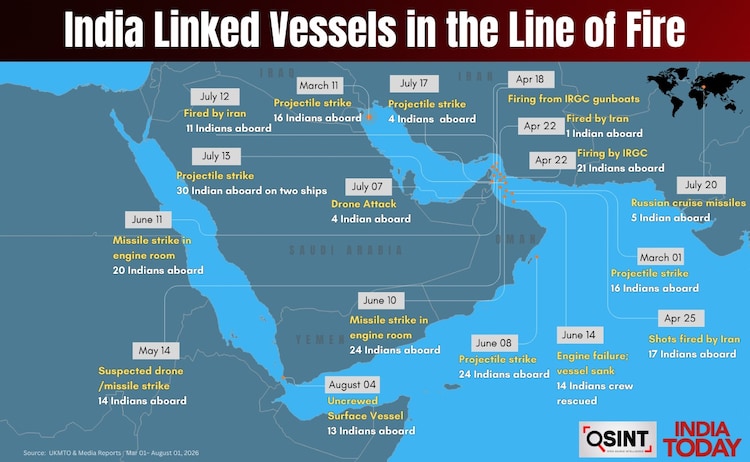
India Today identified at least 19 India-linked vessels that came under missile strikes, drone attacks, projectile fire, armed harassment or warning shots between March 1 and August 6.
The incidents involved multiple actors, including Iranian and US forces and, in one case, a Russian strike in Odesa. Since the conflict with Iran began, 17 Indian seafarers have lost their lives, from the attack on MT Skylight in March to the Russian strike on Odesa in July.
The danger is not easing. On August 4, another Indian flagged merchant vessel came under attack by an "uncrewed surface vessel about 9 nautical miles southwest of Al Mukha, Yemen", triggering a fire on board, according to UKMTO. India later condemned the attack on MSV Faize Noore Oliya and confirmed that “all 13 Indian crew members were rescued.”
The incident also shows a broader reality: the risks are no longer confined to the Strait of Hormuz.
During the latest escalation between Iran and the United States on July 16, Reuters reported that "Tehran had instructed Yemen's Houthi movement to prepare to disrupt the Red Sea shipping route if US forces struck Iranian infrastructure."
As tensions intensified, the Ministry of Ports, Shipping and Waterways said it "accords the highest priority to the safety, security and welfare of Indian seafarers" and has operationalised a "comprehensive and graded Seafarer First framework."
Union Minister Sarbananda Sonowal said in a post on X that during the ongoing crisis, "4,052 stranded Indian seafarers have been safely repatriated, while the emergency response system has handled 16,448 calls and 40,594 emails."
Even as the security situation remains fragile, diplomatic efforts to reshape navigation through the Strait of Hormuz appear to have regained momentum.
Iran's Foreign Ministry said Tehran and Muscat had reached a "mutual understanding on the geographical parameters of the route under discussion" for a proposed shipping corridor through the Strait of Hormuz. Foreign Ministry spokesperson Esmaeil Baghaei described the negotiations as "professional" and said they were "moving forward."
Reuters, citing senior Iranian and regional sources, reported that the “proposed arrangement could give Tehran greater control over ships entering the Gulf through the Strait of Hormuz; however, the key operational details are still under negotiation.”
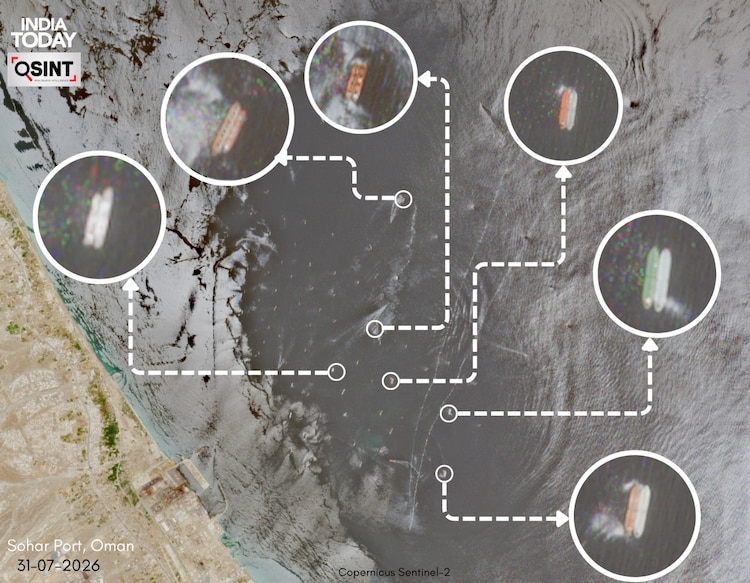
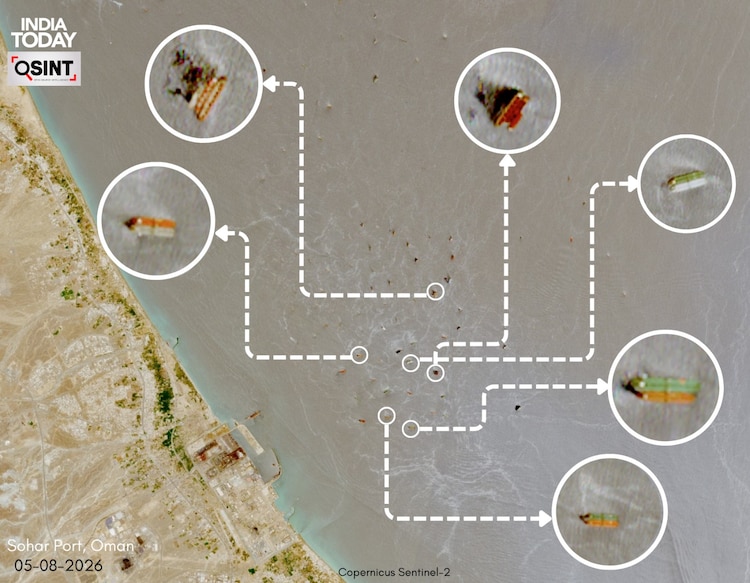
Commercial shipping activity, meanwhile, remains heavy off the coast of Oman. Copernicus Sentinel-2 satellite imagery accessed on July 31 and August 5 shows multiple tankers positioned alongside one another off Sohar Port in a pattern consistent with ship-to-ship transfer operations. While the imagery cannot identify individual vessels or independently confirm cargo transfers, the repeated presence of paired tankers on both dates suggests sustained offshore transfer activity in waters that have become increasingly important to regional energy trade.
- Ends
Published By:
bidisha saha
Published On:
Aug 6, 2026 19:29 IST