 1 month ago
Farnham song ‘Two Strong Hearts’ not banned under hate speech laws, Queensland government confirms

Andrew Messenger
The John Farnham song Two Strong Hearts is not banned as hate speech, the Queensland government has confirmed.
Seven protestors were arrested in Brisbane’s CBD yesterday for allegedly saying or holding a sign reading “from the river to the sea”, which was banned under specific circumstances under legislation passed earlier this year.
The Farnham song features the lyric “like a river to the sea”.
The attorney general, Deb Frecklington, responded to a parliamentary petition on Monday asking her to exempt songs and books from being banned under the legislation.
She said the law had a “high bar” for conduct that would be prohibited, which is only illegal if it causes a member of the public to feel menaced, harassed or offended, though under the act the person does not have to exist. It also allows a person to do so for a genuine artistic, religious, educational or historical purpose. It also does not prohibit “expressions which closely resemble a prohibited expression”.
“The act does not prevent or prohibit the publication of books or the playing or recitation of songs as noted in the petition unless it meets the requirements set out in the act … for example, Two Strong Hearts by John Farnham is not proposed to be banned as suggested in the petition,” she said.
Key events
Albanese says decision on future of fuel excise tax cut coming soon
The prime minister, Anthony Albanese, held a press conference a moment ago, where he was asked about the ceasefire deal and its impact, if any, on the fuel excise tax cut.
He said the government would make an assessment in the coming days, as a decision “obviously” needs to be made prior to 30 June when the temporary cut expires.
He said:
We’ll make an assessment over the coming period. … We know that an end to the conflict doesn’t mean that it’s business as usual. …
We obviously need to make a decision prior to June 30, and we need to do that in advance of June 30 so people have appropriate notice. … We’ll make an appropriate assessment.
Farnham song ‘Two Strong Hearts’ not banned under hate speech laws, Queensland government confirms
Andrew Messenger
The John Farnham song Two Strong Hearts is not banned as hate speech, the Queensland government has confirmed.
Seven protestors were arrested in Brisbane’s CBD yesterday for allegedly saying or holding a sign reading “from the river to the sea”, which was banned under specific circumstances under legislation passed earlier this year.
The Farnham song features the lyric “like a river to the sea”.
The attorney general, Deb Frecklington, responded to a parliamentary petition on Monday asking her to exempt songs and books from being banned under the legislation.
She said the law had a “high bar” for conduct that would be prohibited, which is only illegal if it causes a member of the public to feel menaced, harassed or offended, though under the act the person does not have to exist. It also allows a person to do so for a genuine artistic, religious, educational or historical purpose. It also does not prohibit “expressions which closely resemble a prohibited expression”.
“The act does not prevent or prohibit the publication of books or the playing or recitation of songs as noted in the petition unless it meets the requirements set out in the act … for example, Two Strong Hearts by John Farnham is not proposed to be banned as suggested in the petition,” she said.

Patrick Commins
Graeme Samuel criticises ‘very loud voices’ of vested interests fighting tax reform
Graeme Samuel, a former ACCC chair, says the proposed changes to capital gains tax and negative gearing are in the public interest, and has called out the “very, very loud” complaints by “private vested interests” attempting to derail the changes.
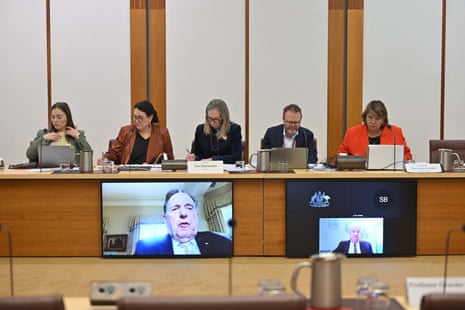
Samuel, at the Senate committee hearing into the tax changes, ran through his long history in public life, before saying “and the one thing that I have learned over all these 35 years is this, that the measure of the public interest in relation to reform is generally in inverse proportion to the noise that is made by private vested interests”.
And I can tell you now that the noise in relation to these tax reform proposals announced in the budget has been very, very loud indeed, which persuades me that the public interest is trying to be submerged by the loud voices of private vested interests.
Saul Eslake, an independent economist, also strongly backed the tax changes, saying it was “far from obvious” that the arrangements that have been in place since 1999 “have aided the achievement of any worthwhile public policy objectives”.
But, like other experts appearing earlier in the day, he had suggestions for improvements.
He backed a carve-out for start-ups with a zero cost base, worried the 30% minimum tax rate on capital gains would hurt low-income earners, and argued in favour of investors being able to average their capital gains over a number of years for tax purposes.
Andrew Messenger
Fire ants detected on Sunshine Coast
Residents of the Sunshine Coast have been urged to be on alert, after fire ants were detected outside the south-east Queensland containment boundary.
The aggressive ants arrived in Brisbane more than two decades ago, and have spread since, despite an nationally funded eradication campaign.
The Invasive Species Council said on Monday that a nest had been discovered outside the current containment boundary during proactive surveillance activities.
The council’s advocacy director, Reece Pianta, said nests often become more visible during winter, because the ants will often build distinctive mounds above ground to capture warmth from the sun, making them easier to spot than at other times of the year.
“Every colony found and treated this winter reduces the risk of fire ants spreading further and helps keep eradication on track,” Pianta said.
Australia still has a chance to become the first country in the world to eradicate an established fire ant invasion, but success depends on finding every last nest.
Fire ants are considered one of the world’s worst invasive species and pose a serious threat to Australia’s environment, economy, agriculture and way of life.
Residents can report suspected fire ants, or notify the program that they have checked their property and found none, online or by calling 132 ANT (13 22 68).


Tom McIlroy
Penny Wong to meet activists from Global Sumud Flotilla
The foreign minister, Penny Wong, is to meet activists who took part in a Gaza flotilla protest and were arrested by Israeli authorities in international waters last month.
Eleven Australians were part of the Global Sumud Flotilla, sailing from Mediterranean ports in an attempt to deliver food, medicine and baby formula to the war-ravaged Gaza Strip, blockaded by Israel.
Wong told a budget estimates hearing earlier this month she believes the Australian women who have alleged they were sexually assaulted and beaten by Israeli soldiers.

Israel’s national security minister, Itamar Ben-Gvir, sparked outrage by posting a video of himself taunting detainees as they knelt with their heads on the ground and their hands zip-tied behind their backs.
Members of the group will meet Wong on Monday afternoon, and are expected to push for an independent Australian investigation into the matter.
The Australian government has raised concerns with Israel over the treatment of the flotilla’s members, as well as Israel’s refusal to grant Australian diplomats access to the detained activists.

Benita Kolovos
Ben Carroll rules out leadership tilt against Victoria premier
Victorian deputy premier and education minister, Ben Carroll, was grilled at a press conference earlier about a possible leadership spill against the premier, Jacinta Allan, when Labor MPs gather for their final caucus meeting before the winter parliamentary break on Tuesday.
Carroll repeatedly dismissed suggestions that he was positioning himself as a challenger, telling reporters:
I have said I’ve got the job that I want.
When asked directly if he wanted to be premier, Carroll replied:
I have always aspired to be the education minister.
Asked whether he had ever aspired to the state’s top job, he said:
We have a premier, and she’s working harder than anyone every day. I want to serve Jacinta Allan. I’ve got a young daughter at home, and I couldn’t be more proud to make sure she grows up knowing that I supported Jacinta Allan to be a world-class premier and get re-elected in her own right.
He then flatly rejected a possible spill on Tuesday.
Reporter: “Are you going to try to get the premier’s job tomorrow?
Carroll: “No.”
Reporter: “Are you going to ask her to step aside?”
Carroll: “No.”
Still not satisfied, a reporter then asked Carroll to “look her [Allan] in the eye and say that”. Carroll proceeded to look the premier in the eye and say: “I can look her in the eye and say that.”
Patrick Commins
CGT discount same as spending $50bn to subsidise wealthiest investors, expert says
Imagine spending $50bn a year to subsidise investment returns for the country’s wealthiest people.
This is how Kathryn James, an associate professor from the University of Melbourne’s law school, has described the current investor tax concession regime to the Senate committee hearing today.
James strongly backed changes to what she called the “costly and inequitable” tax concessions for capital gains, pointing to the tens of billions of dollars of revenue foregone each year.
While there has been vocal opposition to switching to the inflation-adjusted discount model, James said “it is worth highlighting that taxing real gains is a special concession in and of itself”.
“The combination of capital gains and negative gearing enables investors to immediately claim investment losses, often at the top marginal rate, and defer capital gains, which are then only taxed on half the gain, and so tax half the effective marginal rate,” she said.
The budget papers showed that the current system results in the government “subsidising the investment preferences of these investors”.
Imagine a government proposal to spend more than $50bn a year, subsidising the investment activities of the wealthiest 10% of Australians. It would be politically unthinkable, but this is effectively what we do when we provide the same support through tax concessions.
Patrick Commins
Reduced housing supply from tax changes worth it to improve equity, expert says
Proposed changes to CGT and negative gearing will mean an estimated 35,000 fewer new homes over coming years, but Susan Lloyd-Hurwitz, the chair of the Housing Supply and Affordability Council, says it will be worth it in the goal of reducing inequality in the housing market.
Lloyd-Hurwitz was questioned by Liberal senator Andrew Bragg, who asked whether “there was ever a good argument to suppress any supply”.
“I think the good argument around accepting that impact is to do with an intergenerational inequity and the fact that we are building a society that is being divided into Australians that have housing wealth and those that don’t,” Lloyd-Hurwitz says.
She said the reforms “go some way to reduce the speculative investment demand to overconsume housing, which we are highly incentivized to do by the current settings”.
And so in the council’s view, assuming that that is a correct assessment, accepting that for the greater payoff is something that we would support.
Lloyd-Hurwitz said the tax bill should pass and that the council would be conducting its own modelling into the changes.
She did, however, warn of potential “unintended consequences” from tax changes that could dissuade institutional investment in rent-to-buy projects.
Benita Kolovos
Victorian high-school students will be able to use devices for only two hours a day
Carroll provided some more detail on device-free time for secondary schools during the press conference.
He said guidelines will launch in the coming months after consultation with schools but he expects devices will only be allowed for two hours a day in secondary schools:
There shouldn’t be any more than two hours. We want eyes up, screens down. A full reset in the classroom is so important – for behaviour, for calmness, for the students’ own mental health – the focus needs to be on the most important adult in the classroom, and that’s the teacher, and that’s why we are moving down this with a relentless focus on excellence inside every classroom.
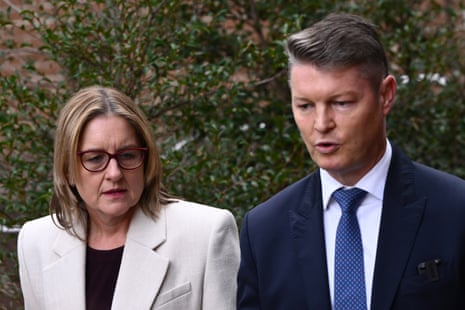
He said the device limit would be “strict”, though exceptions would exist for neurodiverse students who rely on technology, as well as for those studying science and technology.
Carroll stressed the limit was in the best interest of students, following “world best practice” from international experts:
The big tech giants, their algorithms, they do not have these young people’s best interests at heart. They’re focused on eyeballs, and we’re focused on their minds and their hearts for the future.
Jacinta Allan announces device-free time for secondary schools
Benita Kolovos
The Victorian premier, Jacinta Allan, and deputy premier and education minister, Ben Carroll, held a press conference earlier this morning to announce that all state secondary schools will be required to incorporate planned device-free time in their learning starting in term 1, 2027.
It complements digital device limits that will come into effect in primary schools at the same time, of a maximum of 90 minutes per day for students in years 3-6 and “minimal device time” for those in prep to year 2.
The government says this device-free time at high schools could include using whiteboards or paper, group debates, practical experiments or performances instead. Speaking from Ngayuk College in Kalkallo, in Melbourne’s outer north, Allan told reporters:
Victoria was the first state in the nation to ban mobile phones in schools, and that has now been modeled in every other jurisdiction … Today we’re making a further announcement about how we are going to be supporting teachers in how they manage the time in the classroom with devices, limiting the time that devices are in used in classrooms.
Carroll added:
We were the first jurisdiction in Australia to limit screen times. And now we’re also going further at our secondary colleges. We want to make sure that students know their focus is on the teacher, the most important adult in the classroom, and their focus is on their learning.
Minns says bull sharks may be culled but great whites sharks are protected
NSW’s premier, Chris Minns, has said the government will consider a cull of bull sharks in the harbour after a woman was attacked while swimming at Coogee beach on Monday morning.
White sharks are a protected species, and the premier said there is no evidence to suggest a cull would help protect swimmers.
As it relates to bull sharks in the harbour, that’s a different story.
They’re not a protected species and we’re currently undertaking a head count … of whether there’s been an increase in the harbour as a result of a healthier harbour and more fish stocks within that tributary [and] what it means for swimming and recreating in the harbour. But a cull of great whites is not going to be the answer to this and we’re not contemplating that as a change.
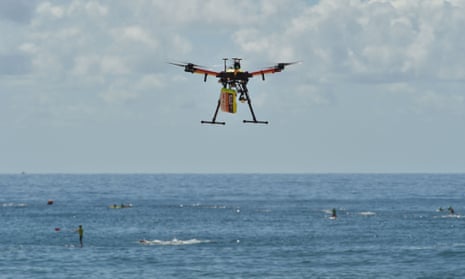
The state government would look at AI-powered drones and having shark nets set across the year, he said.
Our beaches on the Pacific Ocean are open to all sea life from anywhere in the Pacific Ocean at any time and we can’t promise 100% safety in all circumstances.
But if we can put in mitigation devices, drone technology and nets, a little bit from the old and some from the new, then I think we can significantly increase our safety protocols on those beaches and make it safer, not completely safe, but safer to swim in Sydney’s beaches.
Here is some previous reporting we’ve done on the effectiveness of shark nets:
Patrick Commins
Budget’s tax reform measures will deliver small boost to productivity, experts say
The proposed changes to the capital gains tax discount and negative gearing will push productivity in the right direction but won’t meaningfully shift the dial, experts say.
Back to the Senate committee hearing into the budget’s tax reform measures, and ANU tax economist Peter Varela said there was a benefit from taxing different assets such as shares and property in the same way.
“Tax neutrality will always get you more productivity,” Varela said, as that way investors make decisions based on the underlying fundamentals of the investment.
Michael Brennan, the head of the e61 Institute and a former boss of the Productivity Commission, agreed with that in principle, but said the proposed reforms were “not economy changing”.
“I wouldn’t want to overstate the overall productivity gain,” he said, noting that the higher overall capital gains tax would offset the benefits.
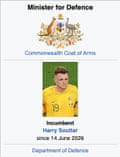
In a bit of silliness, someone briefly revised the Wikipedia page for the Australian defence minister last night to show the position filled with a new representative: Socceroos star Harry Souttar.
The page didn’t last long, but in an alternate universe…

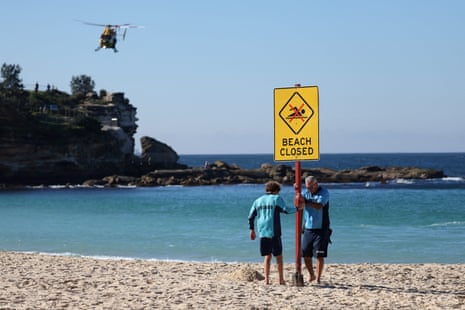
Drones given short-term approval to fly at Coogee beach after shark attack
Drones have been approved to circle above a popular city beach where a woman was mauled by a shark despite its proximity to an airport.
The Civil Aviation Safety Authority has given a temporary exemption for aerial surveillance of Coogee Beach after the woman, in her 30s, was critically injured by a shark on Saturday.
Surf Lifesaving NSW’s public safety manager, Brent Manieri, confirmed the CASA ban was lifted to allow drones to fly across several beaches for the rest of the week.
“We will be operating … to ensure there’s a level of aerial surveillance that the community can feel safe and assured in when they want to come back down and have a swim,” he told ABC on Monday.
BHP hits record high $332bn as Australian share market bounces

Luca Ittimani
The Australian share market has added $40bn in value after Iran announced an “immediate and permanent” peace with the US and Israel.
The benchmark S&P/ASX200 index, worth $2.7tn, has jumped 1.45% to 8,931 points this morning.
BHP, the Anglo-Australian mining company, briefly hit a record high share price this morning of $65.44, with a market value of over $332bn for the first time. It’s now sitting at $65.13.
The big four banks have all added at least $1bn in market value in early trading.
But today’s ASX bounce is smaller than the one observed the prior trading day, Friday, which was in response to Trump cancelling scheduled strikes on Iran. By comparison, Japan’s Nikkei is up 4.3%.
Australian traders seem to be more sanguine in the face of good news and more scared of bad news so far, suggesting Donald Trump’s threats are more trusted than his promises.

Patrick Commins
Big capital gains will be taxed more under budget reforms
The proposed changes to the taxation of capital gains “isn’t going to shift the dial very much” in terms of average tax rates here versus comparable countries, unless you are an investor who is betting on very high returns, an expert says.
A Senate committee hearing is asking tax experts about whether foreign investors will see Australia as a less attractive place to put their money, should Labor’s reforms go through.
Matt Nolan, a senior research manager at the e61 Institute, said Australia will remain in the “middle to lower-middle of the pack” when it comes to average tax rates.
But the switch from a flat 50% CGT discount to an inflation-adjusted approach will have different impacts depending on your rate of return.
“Once real rates of return go over about 15% we start looking similar to [high taxing] Denmark,” Nolan said.
This [inflation-adjusted] system will tax low returns less heavily, so if things go wrong, you don’t get as punished. But when things go really right, society shares in that a bit more.
So the overall effect on taxes might be minimal, but individuals who anticipate quite substantial gains might see Australia as relatively higher tax.
Who is donating to One Nation? – Back to Back Barries podcast
Tony Barry and Barrie Cassidy discuss One Nation’s successful fundraising drive. They look at how the major parties are handling the rise of the rightwing party and where they agree the prime minister made a missstep.
Take a listen:
Patrick Commins
Tax experts back budget tax reforms, but bill not ‘perfect’
The two-day senate committee hearing into the budget tax reform started this morning, with tax experts and economists backing the broad direction of the changes to the capital gains tax discount.
But there is room for improvement, said Michael Brennan, the head of the e61 Institute. Brennan says an inflation-adjusted capital gains tax treatment, as proposed in the budget, is an improvement, saying there is a “fundamental weakness in any fixed discount relative to an inflation discount”.
He said the 50% discount “taxes high returns pretty lightly, and taxes low returns very heavily”.
Brennan disagreed with some arguments that the changes should be restricted to housing, saying that was a poor approach as a matter of first principles in tax design – which says all assets should be treated commonly.
But he says just as real gains should be taxed, losses should also be adjusted by inflation. And the minimum 30% tax rate for capital gains as proposed should be replaced with averaging of the gains over five years.
Peter Varela, a tax economist at the ANU’s Tax and Transfer Policy Institute, agreed the reforms were a “step in the right direction”, although “the bill is not perfect”.
Like Brennan, Varela said “we want tax neutrality across different types of savings investments”.
Woman injured in shark attack remains in critical but stable condition
The 35-year-old woman injured by a shark at Sydney’s Coogee beach yesterday remains in hospital in critical but stable condition, a spokesperson for St Vincent’s hospital confirmed this morning.
You can read more here: