1 month ago
Chalmers welcomes decision to lift minimum wage for young adults
This morning, the full bench of the Fair Work Commission decided to grant 18-20-year-olds the full adult minimum wage – to be phased in for businesses to adjust.
Until now, “junior pay rates” applied to people under 21, meaning 18-year-olds were paid 70% of the award rate, 80% for 19-year-olds and 90% for 20-year-olds.
Junior wages will still remain in place for minors, while the higher rate for junior workers will start to be phased in over a four-year period from December.
Chalmers says the decision recognises the “unfairness” in the system.
This is a great outcome for young workers, especially in retail, fast food and pharmacy. We welcome it.
This is all about ensuring that Australians get fair, decent wages, and the outcome announced by the Fair Work Commission will help achieve that.
Key events Show key events only Please turn on JavaScript to use this feature
Inflation to hit 5%, RBA predicts

Patrick Commins
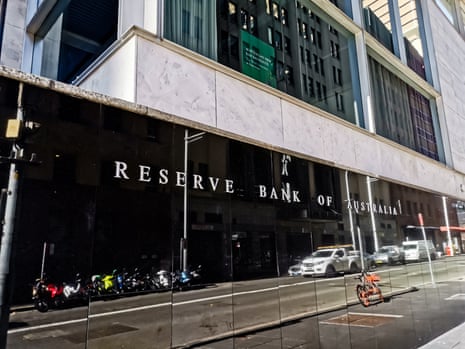
The Reserve Bank says oil at around $US100 will push inflation to about 5% in the year to June, or 0.75 percentage points higher than expected in February.
The international oil price benchmark, Brent crude, has traded at $US100 or above since the 17 March rate decision, and last fetched about $US109 a barrel.
The RBA board decided to hike rates earlier this month, in a 5-4 split decision that spoke to a dissenting view among a big minority of members that it would have been better to wait a few weeks to better gauge the potential fallout from the US-Israel war on Iran.
In the end, a majority believed the Middle East conflict was overwhelmingly an inflationary shock that threatened to broaden out into other prices beyond fuel.
All agreed, however, that rates would have needed to go up sooner rather than later, given inflation was already running too hot before the start of hostilities.
The minutes push back against some predictions that we have three more rate hikes ahead of us.
Members agreed:
That it was not possible to predict the future path for the cash rate target with any confidence, given the high degree of uncertainty around the breadth and duration of the current conflict in the Middle East.
The minutes noted “a longer conflict could have a material bearing on both inflation and economic activity. Members therefore acknowledged that future policy decisions would require the board to balance its two objectives carefully” – the two objectives being low and stable inflation, and full employment.
Scrapping “unfair” junior rates a win for low-paid workers, Greens say
In another perhaps unsurprising move, Greens senator Barbara Pocock says scrapping “unfair” junior rates is a big win.
She says they guarantee an “endless supply of cheap labour”:
Low-paid workers are already facing an uphill battle as wages have failed to keep up with the inflation.
The Greens believe workers’ pay should reflect their skills, not their age. We need to continue to raise the wages of under-18s who do the same work for less pay.
Fair Work Commission decision “adds to cost pressures”, retailers say
The Australian Retail Council (ARC), perhaps unsurprisingly, is not entirely happy with today’s Fair Work Commission decision to get rid of junior wages for those aged 18 and up.
It says the move will add significant costs to businesses already under pressure.
ARC chief executive officer, Chris Rodwell, says junior rates have served the nation well “for generations”:
They recognise that younger workers often have little or no workplace experience and help employers, particularly small businesses, give young people their first opportunity.
Crucially, junior rates for workers aged 17 and under will remain in place. That’s important. Early work experience is critical, and we cannot afford to make it harder for young Australians to get their first job.

Benita Kolovos
Allan hops on “temporary” free public transport
The premier spoke from the Peter MacCallum Cancer Centre before boarding a train at Parkville station to Town Hall to mark the first day of free public transport for the next month. Jacinta Allan said it was a “temporary measure” to help ease financial pressures on households:
Free public transport will [have] a broader benefit to everyone. It’ll save people money – we expect that it will save regular users of our public transport system over $220 for the month of April … and it’s going to take pressure off the pump, which leaves that fuel available for others in our community.
Whilst we can’t control global oil prices, as Victorian premier, I am determined to do everything that I can to ease cost of living pressures.
Asked whether she would extend the measure if the war continues to rage on, Allan said the government would “continue to monitor the situation in the Middle East and continue to look at the practical, sensible ways we can continue to help Victorians households”.
She said authorities would also be keeping a close eye on public transport and roads data but said the network had capacity to deal with additional commuters.
Benita Kolovos
Allan takes aim at “bitter infighting” within Liberals
The Victorian premier, Jacinta Allan, also held a press conference this morning (see post below about Liberal leader Jess Wilson’s presser), where she had a crack at the Liberal party’s disunity – despite facing tensions within her own Labor ranks.
She said the preselection saga demonstrated the “bitter infighting” within the Liberal party:
If you can’t run your own party, how on earth can you put yourself forward to run the state? Victorians can see that the Liberal party, being the weak, extreme, divided outfit that they are, are only focused on themselves.
Well, as Victorian premier, I’m focused every minute of every day on Victorians who need their government helping them to make life easier and more affordable.
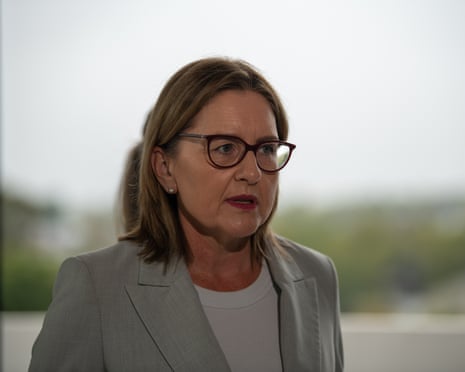
Most children haven’t been removed from social media, despite federal ban

Josh Butler
The eSafety Commission says the federal government’s ban on under-16s accessing social media is not working as well as had been hoped, with a survey finding nearly a third of young people still had social media, and that nearly 70% of children with accounts on major platforms had not been removed.
In a compliance report on the legislation, more than three months on from the law coming into force, eSafety said “despite overall reductions in account ownership, a substantial proportion of children under 16 retained accounts on age-restricted platforms”. It said:
Of the parents who reported their child had an account on each platform prior to 10 December 2025, around 7 in 10 reported that their child still had an account on Facebook (63.6%), Instagram (69.1%), Snapchat (69.4%), and TikTok (69.3%). Around three in 10 reported that their child no longer had an account. One in two of these parents (48.5%) reported that their child still had an account on YouTube following the age restrictions coming into effect.

Prior to the ban, the survey respondents said about 49.7% of their kids had social media; post-ban, that was down to 31.3%. The Albanese government has long conceded that not all kids would be immediately removed from their accounts, but that the laws would reduce the number and help parents set their own household rules.
As we reported earlier, eSafety is “actively investigating potential non-compliance” with the ban by Instagram, Facebook, Snapchat, Instagram and YouTube. The eSafety report said the most common reason kids still had social media was that they hadn’t been asked by the platform to verify their age, with 67% of parents listing this as the main reason.
But the report also noted that age verification technology is not perfect, and makes mistakes. The government was not prescriptive about what methods the platforms should use, but often pointed to facial scanning as a method to verify age. The eSafety report said facial age estimation is “a popular and effective form of age assurance” but conceded that it “is known to have higher error rates for children near the age threshold of 16 years.”
Communications minister Anika Wells will hold a press conference at 12.30pm.
PM says Labor focused on fuel ‘supply, supply, supply’

Tom McIlroy
Anthony Albanese says uncertainty over the duration of the war in Iran is adding to Australians’ anxiety about price increases and tensions overseas.
Speaking to Labor MPs at Parliament House on Tuesday morning, he said the government was working to shore up fuel supply, even as global energy reliability is being undermined by the war.
“We have been concentrating on supply, supply, supply,” Albanese told the closed-door caucus meeting.
People are doing it tough. There is uncertainty over the war and uncertainty over how it ends. This is causing understandable anxiety.
The increase in price only adds to this anxiety.
The PM said Australia was viewed as a reliable partner for energy exports in Asia and “expect that reliability to be reciprocated”.
He also said the government wanted to “avoid mandating” fuel purchases. “We’re a nation where we want to look after each other,” he said.
Albanese will address the Press Club in Canberra on Thursday.
Australia should support the US to reopen the strait of Hormuz, Taylor says
Jumping back to Angus Taylor’s press conference, he says Australia should be working with world leaders and the US to open up the strait of Hormuz.
What we all want to see is the strait of Hormuz opened up. Anthony Albanese should be working with leaders across the world to do everything we can to support that happening.
And I’ll tell you why that matters, because then you get 20% more oil going on to the global market and prices come down. It’s pretty simple stuff.
When asked exactly what that support should look like, Taylor evades the question and says it’s “pretty simple” that we want fuel prices to go down. He doesn’t say what measures the government should take to reopen the Strait.
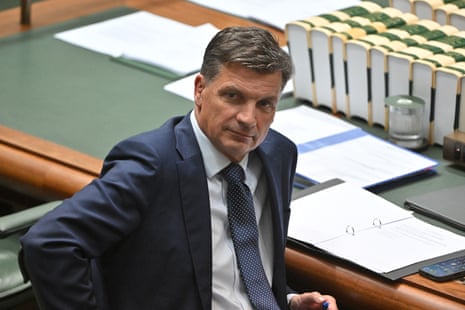

Penry Buckley
State leaders to discuss returning GST windfall to consumers
The NSW premier, Chris Minns, says state and territory leaders will meet shortly to discuss forgoing the GST windfall from increased fuel prices, passing on an additional reduction in fuel prices.
Minns said yesterday the states were “considering” the proposal to forgo extra GST, announced by the federal government as part of their emergency fuel plan alongside a cut to the fuel excise.
This morning, Minns has told a press conference that premiers and first ministers were meeting to discuss the policy imminently. He says it will lead to an additional reduction in fuel prices.
We want to do that with the federal government. There’s some complexity around GST arrangements that, if you have the time, would be easy to sort out, but given the tightness of the time, [we] need to return this to NSW commuters. In fact, commuters and motorists right across the country. We want to look at a common sense and practical way of returning that. I think there’s a pathway through it.
It may well be that we drop the excise to the extent of the windfall gain from the GST. So we’re working through that detail. We’ll communicate that with the commonwealth. Hopefully today, we can get a further savings for motorists in our economy during tight times. Look, this is part of our approach and response to the fuel crisis in Australia, caused by conflict in the Middle East.
Minns says he does not think the states will be “bogged down” in how GST relief will be distributed, but he says he doesn’t know the position of other states. The treasurer, Daniel Mookhey, says GST relief would roughly match the relief from the excise, worth a reduction of about 7 to 10 cents per litre of fuel.
Taylor opposes increasing size of parliament
Angus Taylor says the government should rule out increasing the number of politicians on Capital Hill, and that the government should be focused on fixing the fuel crisis.
Yesterday, the special minister for state, Don Farrell, said he hadn’t given up on increasing the size of parliament and said it’s “what great Labor leaders do”.
Farrell is really the only person talking about the issue at the moment. Ironically, the opposition is turning it into more of a thing by talking about it, while telling Labor not to talk about it.
This proposal, which would cost over $600m in taxpayers for Australians, hard-working Australians, is not what we need right now. Australians are in a cost-of-living crisis. They’re in a fuel crisis. We have an economy that is not working for hard-working Australians, and the priority of this government, clearly, is to increase the size of the parliament now.
We call on the prime minister to immediately rule out going down this path … today.
Matt Canavan accuses the government of having “secret plans”:
Yesterday, his special minister of state, Don Farrell belled the cat, [he] revealed these hidden plans, these secret plans to increase the number of politicians, and the prime minister needs to come clean now with the Australian people about what are these plans?
The government has previously flagged an interest in looking at increasing the number of representatives. Also, after every election a committee looks at the electoral process and has previously made recommendations on increasing the size of parliament.
Benita Kolovos
Jess Wilson says review will occur into Victoria Liberals candidate vetting processes
Stepping away from federal politics for a moment, the Victorian Liberal leader, Jess Wilson, has admitted she’s “frustrated” that the party’s candidate vetting process failed to identify that the man who ousted Moira Deeming for the top spot on the upper house ballot wrote a court character reference for a friend convicted of sexually assaulting a 15-year-old girl.
Wilson told reporters outside parliament on Tuesday that Dinesh Gourisetty, who beat Deeming in a preselection vote on Sunday, should never have made it through the vetting process. Candidates pay a $5,000 application fee to the party, which is meant to cover stringent vetting performed by an external consultancy.
She said:
The situation that we found ourselves in yesterday should never have happened. The situation should not have occurred. It’s fair to say I’m frustrated by this. My team is frustrated by this, and we need to learn from what occurred and ensure that we improve our processes and that the vetting processes that the party undertakes are improved. I know that work is already under way.
Wilson said she told the party president and state director there needed to be a review into “how this occurred”.
She said she was not aware anyone knew the information before Monday, though Gourisetty’s supporters claim the timing was designed to cause “maximum damage” to the party’s executive. Wilson said:
I’m not aware of anyone who knew about this information [before Monday]. All I know is when I became aware of this information, which was yesterday morning ... I immediately spoke to the party about my expectation that Mr Gourisetty would not be welcome in my team ... We have since passed a resolution through state executive that will make Mr Gourisetty ineligible for a future convention.
Wilson said it was up to Deeming if she wanted to contest the new preselection vote:
As I said consistently throughout the pre selections, I’ll back all my colleagues and welcome whether Moira wants to put in her nomination form.
She also said she had confidence in the state president, Philip Davis, and that the party did not need to be taken over by the federal administration.
Chalmers welcomes decision to lift minimum wage for young adults
This morning, the full bench of the Fair Work Commission decided to grant 18-20-year-olds the full adult minimum wage – to be phased in for businesses to adjust.
Until now, “junior pay rates” applied to people under 21, meaning 18-year-olds were paid 70% of the award rate, 80% for 19-year-olds and 90% for 20-year-olds.
Junior wages will still remain in place for minors, while the higher rate for junior workers will start to be phased in over a four-year period from December.
Chalmers says the decision recognises the “unfairness” in the system.
This is a great outcome for young workers, especially in retail, fast food and pharmacy. We welcome it.
This is all about ensuring that Australians get fair, decent wages, and the outcome announced by the Fair Work Commission will help achieve that.
Chalmers tells us to expect an ‘ambitious’ budget
Despite the impact of the war on the budget and decision to halve the fuel excise, Jim Chalmers says the budget will still be ambitious and deal with intergenerational inequality.
Chalmers says the legislation to halve the fuel excise will be introduced to parliament today and will contain some “extra powers” for Chalmers to do “more for when we are able to come to a concluded view with the states and territories”.
On the budget, the treasurer says it will take into consideration the uncertain global economic conditions.
Clearly, when we are seeing the way that the global economic conditions are playing out here in Australia, any diligent, responsible government factors that into their budget planning.
There will be a focus on some of the generational issues in our economy and in our budget.
Asked whether cutting the fuel excise will lead to another Reserve Bank rate rise, Chalmers says he won’t comment on the decisions of the central bank, but adds “I don’t think market expectations for interest rates changed much yesterday after the announcement of our policy.”
‘Australians hate paying these charges’: Chalmers
Jim Chalmers is pretty happy this morning after the Reserve Bank decided to ban both debit and credit card surcharges, which will start rolling in later this year.
Speaking to reporters from Parliament House, Chalmers says the changes will increase transparency – with the Reserve Bank also amending interchange fees (the transaction charges paid by a merchant’s bank to a cardholder’s bank for card purchases).
Australians hate paying these charges. Let’s be blunt about it, and the Reserve Bank has done quite a bit of work here. They are responsible for the system that is being changed here. They have the ability to make these changes without the parliament legislating them.
Chalmers also gives his colleagues including Jerome Laxale a shoutout for spearheading this work from parliament.
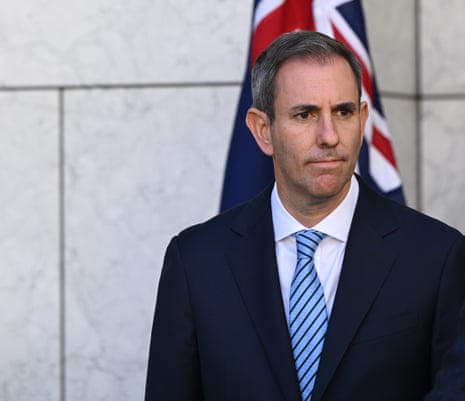
Labor MP says Australians ‘ripped off’ with card surcharges
Josh Butler
Labor MP Jerome Laxale has been leading the charge on ending surcharges for card transactions, which has now been removed by the Reserve Bank.
Laxale, the Member for Bennelong, said it was “a great result for consumers who have been ripped off at the checkout for too long”.
Digital payments shouldn’t cost consumers more than cash and Australia will get there on 1 October.
There’s more work to do on small business merchant costs, but this is a solid start.
Laxale had been pushing for change for more than a year, critical that the declining use of cash and rise of electronic payments meant Australians were being hit with fees just to use their own money.
The treasurer, Jim Chalmers, said Australians had been paying $1.6bn in surcharges per year, adding that the change would “help with the cost of living”.
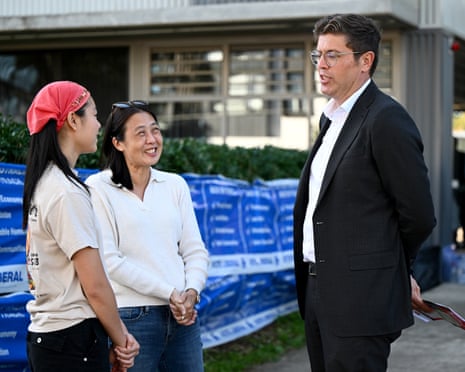

Luca Ittimani
Card surcharges to disappear if businesses do as RBA says
Consumers will no longer have to pay card surcharges if businesses pass on the savings from the Reserve Bank’s latest move.
About 16% of businesses charge surcharges and consumers pay about $1.6bn in card payment surcharges a year, the review found.
Businesses charge the extra to pay for access to payment services that process card transactions. The RBA will cap the fees for these services at a lower level.
The Reserve Bank will also let eftpos, Mastercard and Visa eliminate surcharges, with the expectations businesses would follow by 1 October.
They may increase their shelf or menu prices, baking in the cost of payment systems, lifting prices by a one-off 0.1%, the RBA estimated. The bank said this would be alright after surveying customers and finding they preferred to see the final price instead of being caught with a hidden surcharge.
If businesses keep surcharging anyway, the RBA could call for the Albanese government to pass new laws banning the practice.
Ending card surcharges will save consumers $1.6bn a year
The government says the Reserve Bank’s decision to ban card surcharges will save Australians $1.6bn while small businesses will save $910m.
Labor announced in 2024 it was prepared to ban debit card surcharges, subject to work by the RBA.
But the RBA has gone even further to ban credit card surcharges as well.
The treasurer will stand up shortly, no doubt to celebrate the news.
In a statement, the government said:
People shouldn’t be punished for using a credit or debit card. Australians should be able to use debit and credit cards without being penalised, and that’s what this change will help to deliver.
Tom McIlroy
Hastie attacks One Nation over Iran war stance
Coalition frontbencher Andrew Hastie has criticised Pauline Hanson’s position on the war in Iran, saying the One Nation leader is recklessly following Donald Trump.
Speaking to reporters in the press gallery corridor earlier today, the shadow minister for industry said:
Twice now she has supported the war, unreservedly, even suggesting we should send young Australians to the war.
How does that battling Australians who are already dealing with a massive cost-of-living crisis?
It sounds like she’s got her priorities wrong. It’s Maga first, not Australia first.