40 minutes ago
China has cancelled most of the overseas coal capacity it planned in 2021, a new report says. But loopholes and energy security shocks are still keeping coal investments alive across Southeast Asia.
Unitednations,Sep 26, 2026 11:40 IST

Five years after Chinese President Xi Jinping told the UN General Assembly that China would stop funding overseas coal power plants, a new report says Beijing has cancelled most of the coal capacity it had planned abroad in 2021. The report says 67 per cent of that planned capacity has been scrapped, offering a limited positive sign at a time when global climate commitments remain off track.
At the same time, experts say the shift away from coal remains slow and uneven. They have warned that Chinese companies are using regulatory loopholes to keep investing in coal projects overseas, even as energy security concerns after the Russia-Ukraine war and the Iran war have pushed parts of Asia, especially Southeast Asia, to rely more heavily on coal.
China was the world's largest overseas coal financier before Xi made the 2021 pledge. Li Shuo, director of the Asia Society Policy Institute's China Climate Hub, said, "This marked the first time Beijing was willing to extend its emerging climate ambition beyond its borders." China is currently the world's largest annual emitter of carbon dioxide, while the US remains the largest historic emitter globally.
Although China's coal use is slowly declining, it still leads the world in building new coal infrastructure at home. At the same time, it dominates the global electric vehicle market and is the world's largest producer of solar panels and wind turbines. Li said, "The rapid expansion of clean energy, both in China and increasingly abroad, since the announcement of the coal moratorium should encourage Beijing to further prioritize renewable energy in its international energy strategy."
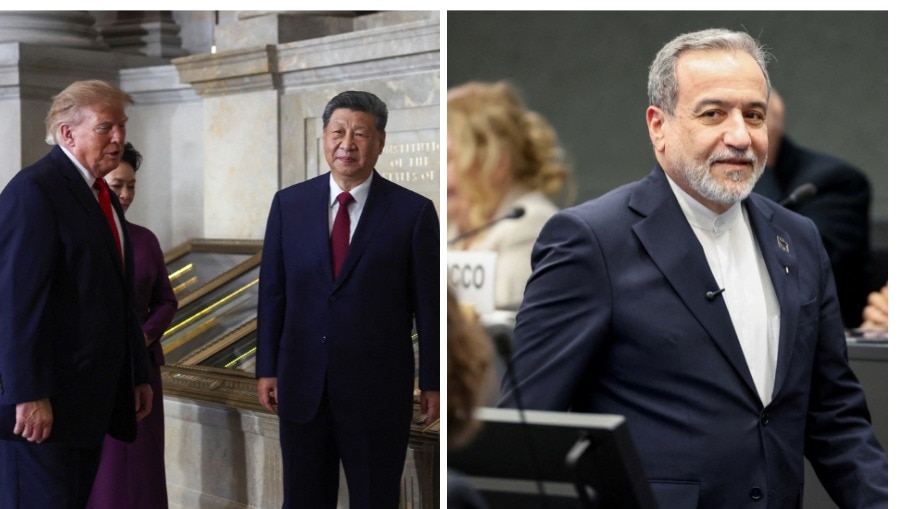
China's role matters because it is a major infrastructure funder in the Global South and helps shape the energy transition across Asia and Africa. Xi did not attend this week's UN meeting and instead chose a summit with US President Donald Trump, while Chinese Vice President Han Zheng was sent to New York and is scheduled to address the General Assembly on Saturday.
In 2021, the UN climate agency said coal had been "consigned to history" after nearly 200 countries agreed to phase down the fossil fuel. But two energy shocks, from the Russia-Ukraine war and the Iran war, have changed the picture. In Southeast Asia, often described as "China's backyard" and a major recipient of Chinese funding, governments have had to respond to rising energy insecurity. The region accounts for a fifth of the world's growing energy demand and had depended heavily on fossil fuel imports from the Middle East.
The closure of the Strait of Hormuz hit Southeast Asia first and hardest, pushing governments into what the report described as energy triage. Several countries increased coal use to get through the crisis, while also stepping up investments in rooftop solar, incentivising electric vehicles and exploring nuclear power. Even with renewable energy expanding quickly, coal remains central to Asia's energy mix. Li said, "The growing desire among countries in Southeast Asia to secure reliable energy supplies could bring about another round of coal fever," which "will continue to test the resolve behind the coal moratorium."
According to the report by the Centre for Research on Energy and Clean Air and People of Asia for Climate Solutions, China has cancelled 61.5 gigawatts of planned overseas coal projects since 2021. The report estimates that this avoided 6.4 billion tonnes of lifetime carbon dioxide emissions. Syahdiva Moezbar, an industry analyst with CREA in Jakarta, said China's partial delivery on the 2021 pledge was a positive development, but added that "coal expansion hasn't stopped because of the nature of the pledge itself, which still allows private Chinese companies to invest overseas."
Indonesia has seen strong growth in coal plants backed by Chinese companies to power heavy industries such as nickel and aluminium smelting without being connected to the national power grid, a model known as captive coal. The report said Indonesia remains the top destination for continuing Chinese coal investment, with 17.1 gigawatts of China-backed coal capacity planned. Vietnam and Pakistan are a distant second and third, with less than 4 gigawatts each in the pipeline.
Xiaojun Wang, executive director of PACS, said in a statement released with the report, "When commercial interests take precedence over China's broader green development commitments and the world's climate security, the benefits of China's remarkable clean-energy leadership are undermined." The Iran war energy shock has added to these pressures, with the Philippines, Thailand, Indonesia and Vietnam all increasing coal use.
While global coal demand is levelling off, Southeast Asia is moving in the other direction. The Energy Agency says the region will account for nearly 20 per cent of global energy demand growth through 2035 and that the crisis is prompting a reassessment of policy and investment strategies amid a strong focus on energy security. Li said the shift away from coal is "a two-party tango", requiring equal commitment from China and its partner countries. Five years after Xi's pledge, the report suggests progress has been made, but, as Li put it, "this saga is far from over."
With PTI Inputs
- Ends