 1 month ago
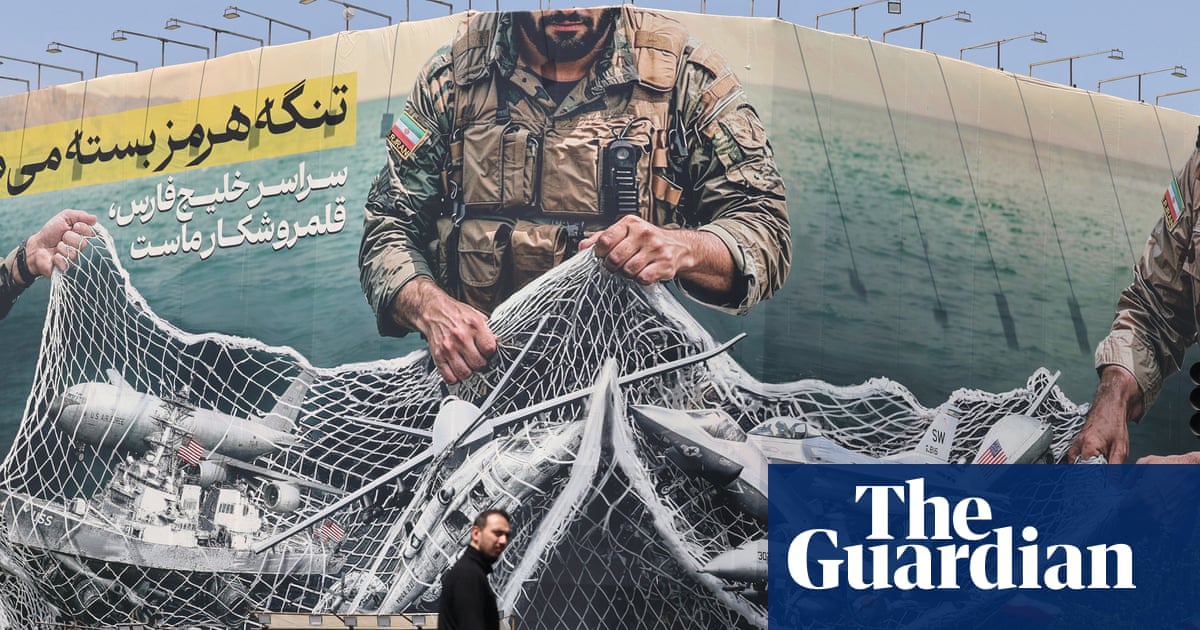
Civil infrastructure has been a major target during the ongoing war in the Middle East. From the very first day of the conflict, when a purported US missile strike on a girls' school in Minab killed 160 children, to Thursday's attack on a major bridge in Karaj, civilian infrastructure has been caught in the geopolitical crossfire.
And it's not just the US and Israel but also Iran, which has targeted residential areas, hotels and economic centres in countries that host American bases. With US President Donald Trump's doubling down on his threat to target Iran's power plants and Iran issuing a hit list of bridges across the Gulf, any relief on this front seems unlikely.
However, are these attacks on civilian infrastructure allowed under international law? The answer is complicated, not a simple 'no'.
WHAT INTERNATIONAL LAW SAYS
According to the 1949 Geneva Conventions, civilian infrastructure is protected against attack. Every object that is critical to protecting civilians comes under the umbrella term of 'civilian infrastructure'. These include power grid, water systems, crops, livestock, hospitals, schools, residential areas & transportation networks – all of which are critical to protecting civilians and come under the umbrella term of 'civilian infrastructure'.
Deliberately targeting them constitutes a war crime under international law. "In no event shall action against these objects be taken which may be expected to leave the civilian population with such inadequate food or water as to cause its starvation or force its movement," states the convention.
Additional protocols added to the 1949 Geneva Conventions in 1977 and 2005 put the onus on warring nations to distinguish between "civilian objects" and "military objectives".
This prohibition is also codified in the Rome Statute of the Criminal Court, which has the authority to prosecute individuals for genocide, crimes against humanity, war crimes and the crime of aggression.
THE GREY ZONE
However, an exception could be made if such infrastructure serves "military objectives". But such a term is prone to several interpretations, especially in the age of asymmetric warfare.
According to the Geneva Conventions, some infrastructure owned and used by civilians can count as a military objective. These "civilian objects", the convention says, must effectively contribute to military action by their nature, location, purpose or usage. Moreover, destroying them or capturing them must "offer a definite military advantage" to the other side.
A notable example of different interpretations of "civilian objects" could be traced back to the 2023-2025 Gaza conflict. The Israel Defense Forces (IDF) considered several medical facilities as military targets, alleging they were used by Hamas for command and control purposes.
The IDF repeatedly designated the Al-Shifa Hospital in Gaza City as Hamas's "main operations base", besieging it in November 2023 and March 2024.
During the ongoing conflict, Iran has warned that hotels in the Gulf would be considered "military targets" if they shelter US soldiers who have escaped from 13 US military bases rendered largely unusable due to Iranian strikes.
CIVILIAN INFRASTRUCTURE TARGETED BY IRAN, ISRAEL & US
On the war's opening day, a missile strike on February 28 hit a girls’ elementary school in Minab, killing over 160 children. media and human rights groups claim that the attack may have been intentional and possibly involved a US-made Tomahawk missile, though the US denied responsibility. Another strike near a military compound in Lamerd hit a school and sports hall, killing 21 people.
Several residential areas, financial institutions, transport hubs, universities, and healthcare facilities across Iran have been targeted, causing significant civilian casualties and infrastructure damage.
Iran’s retaliation began almost immediately after the US-Israeli airstrikes on February 28, with missiles and drones targeting Israel as well as Gulf nations hosting US bases.
On March 1, strikes on the Israeli town of Beit Shemesh killed at least nine people. So far, Iranian missiles have killed at least 19 people in Israel.
According to Human Rights Watch, Iranian drone strikes have hit several high-value civilian infrastructure like the Fairmont Hotel, The Palm Hotel, Dubai Financial Centre, Zayed Airport, Dubai Airport, Kuwait Airport, residential complexes and the Crowne Plaza Hotel in Bahrain.
CAN COUNTRIES GO TO ICC AGAINST SUCH STRIKES?
A case related to the current Middle East conflict is unlikely to end up in a war crimes court any time soon. This is because none of the Gulf states, Israel or Iran are members of the ICC. In fact, there is no other institution with clear jurisdiction over alleged war crimes in the region.
Political divisions within the UN Security Council, which can send cases to The Hague, also complicates the matter. It is generally believed that Russia and China, who have traditionally backed Iran, would veto any proposal to prosecute Iran while the US could come to Israel's rescue.
Even if the ICC issues warrants against political and military leaders for targeting civilian infrastructure, they are not easily enforceable.
ICC members (124 nations) are legally bound to enforce these warrants. However, not many countries have enforced these warrants. In fact, some of the biggest nuclear powers – the US, China, Russia and India – are not members of the ICC. In short, the international court's effectiveness is a function of political compulsions rather than legal obligations.
PAST INSTANCES OF ICC ACTION
In July 2024, the ICC accused Sergei Shoigu, the former Russian defence minister and leading Russian general, Valery Gerasimov, of war crimes for targeting Ukraine's power grid. Russia, however, denied allegations of war crimes, adding that it had launched a "special military operation" in self-defence.
Four months later, the ICC issued an arrest warrant for Israeli Prime Minister Benjamin Netanyahu, accusing him of "intentionally and knowingly depriving the civilian population in Gaza of objects indispensable to their survival, including food, water, and medicine and medical supplies, as well as fuel and electricity."
Taking a leaf out of Russia's book, Israel said it was targeting militants in Gaza and Lebanon in self-defence.
Long story short: Targeting civilian infrastructure is a war crime, but varied interpretations have led to legal lacunae which countries continue to exploit till date.
- Ends
Published By:
Aprameya Rao
Published On:
Apr 3, 2026 15:44 IST