3 weeks ago
Far from Isfahan, a decoy in the sky. India Today decodes the deception that appears to have cleared the way for America's rescue mission in Iran.
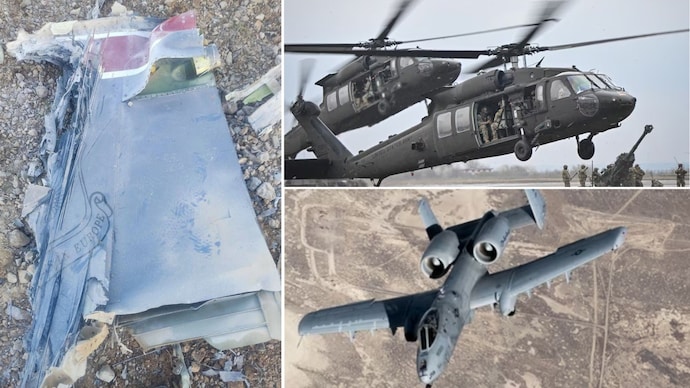
After one of the two service members from the downed F-15E was recovered, concern around the “missing” individual escalated rapidly.
New Delhi,UPDATED: Apr 6, 2026 20:06 IST
The last time the United States “acknowledged” that its fighter jets had been downed by enemy fire dates back to 2003, during Operation Iraqi Freedom. Now, in what can only be described as military magnificence, US forces have rescued two of their service members after their F-15E fighter jet was shot down by Iran on April 2 during what the CENTCOM called a combat mission.
By April 4, US forces successfully carried out the rescue operations, recovering both personnel safely in separate search and rescue missions.
Although it all appears simple on the surface, that is not how it unfolded. The proximity of key events to Isfahan’s uranium storage site, coupled with a parallel deception CSAR operation in southern Iran, suggests this was far more than routine. It elevates the mission into something highly sophisticated, even exceptional, yet still a curious case.
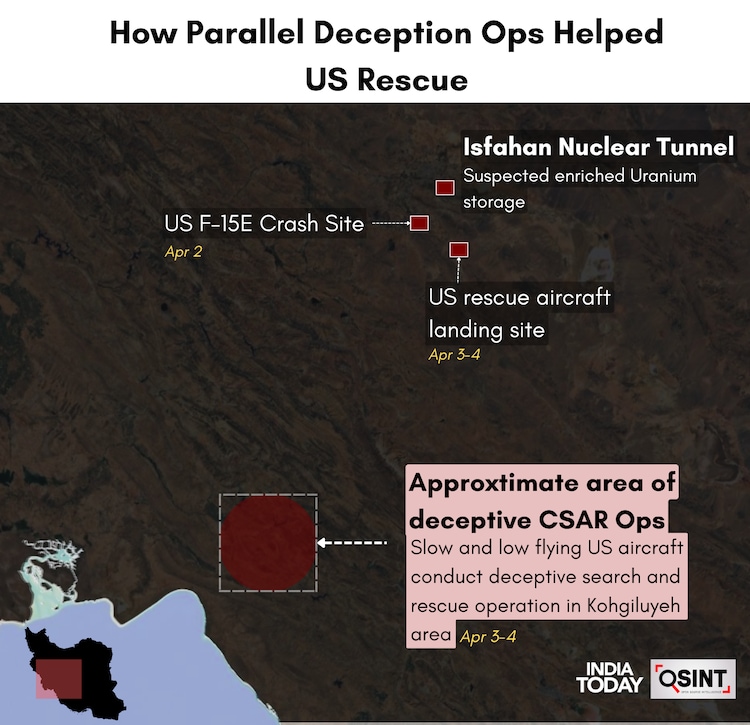
Nearly 200 kilometres south of the actual crash site, a US HC-130J appears to have flown low and slow, likely to create the impression of a search-and-rescue operation in an unrelated theatre, according to social media footage geo-located by the India Today OSINT team.
India Today’s Open Source Intelligence team geolocated multiple sites tied to the operation, including where the US F-15E was brought down, the landing zones where MC-130J aircraft deployed helicopters for extraction, and a separate location linked to a parallel deceptive effort. The sequence that emerges points to something far more layered than a routine rescue mission.
One site marks the F-15E crash, another the rescue zone, a third a deceptive CSAR manoeuvre, and the fourth, strategically significant Isfahan. Together, they form the geospatial trail which points to a carefully structured operation, shaped as much by intent as by execution, suggesting there is more beneath the surface.
Two of these sites lie very close to Isfahan, roughly 25 km from the city, long associated with a dense military belt and deeply buried nuclear-related facilities. The area is believed to house highly enriched uranium, protected by mountain overburden exceeding 1300 feet (or 400 metres), making it extremely resistant to conventional strikes and a potential candidate for ground-based operations.
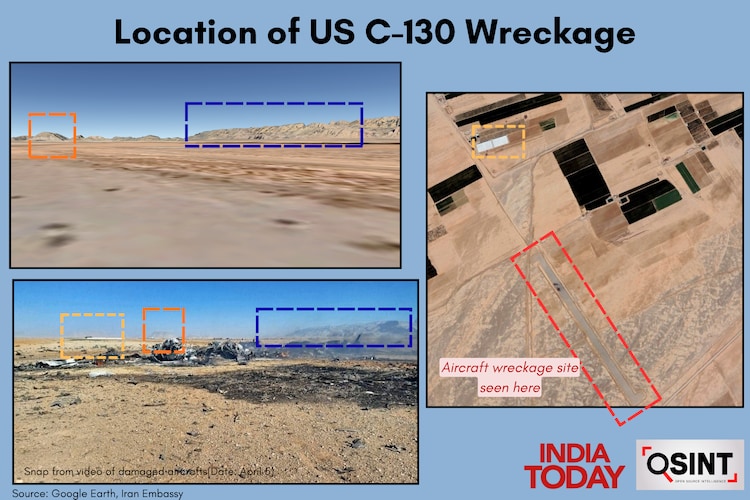
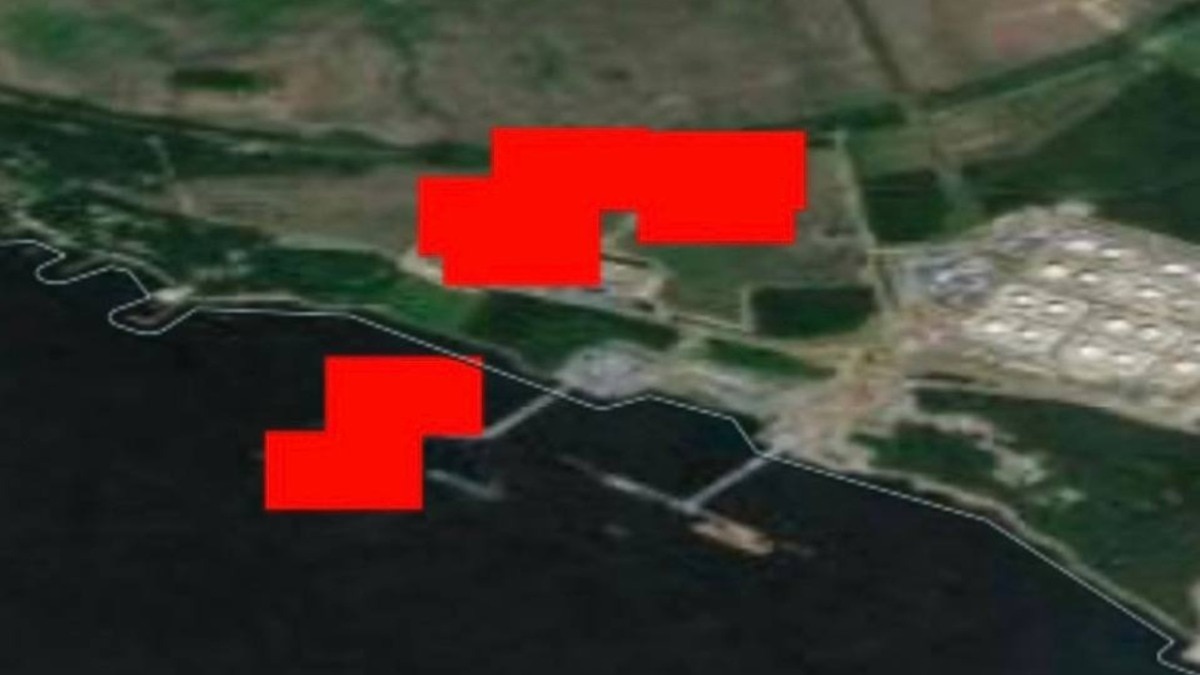
Matched against the mountain ridges, the geolocation places the site on a remote dirt airstrip just a couple of kilometres from the suspected uranium storage site. Satellite imagery accessed independently by India Today from April 5 appears to show burn marks on the same strip. The MC-130Js were likely destroyed to keep them out of enemy hands, after which the US military described the airstrip as unsuitable for transport aircraft landings.
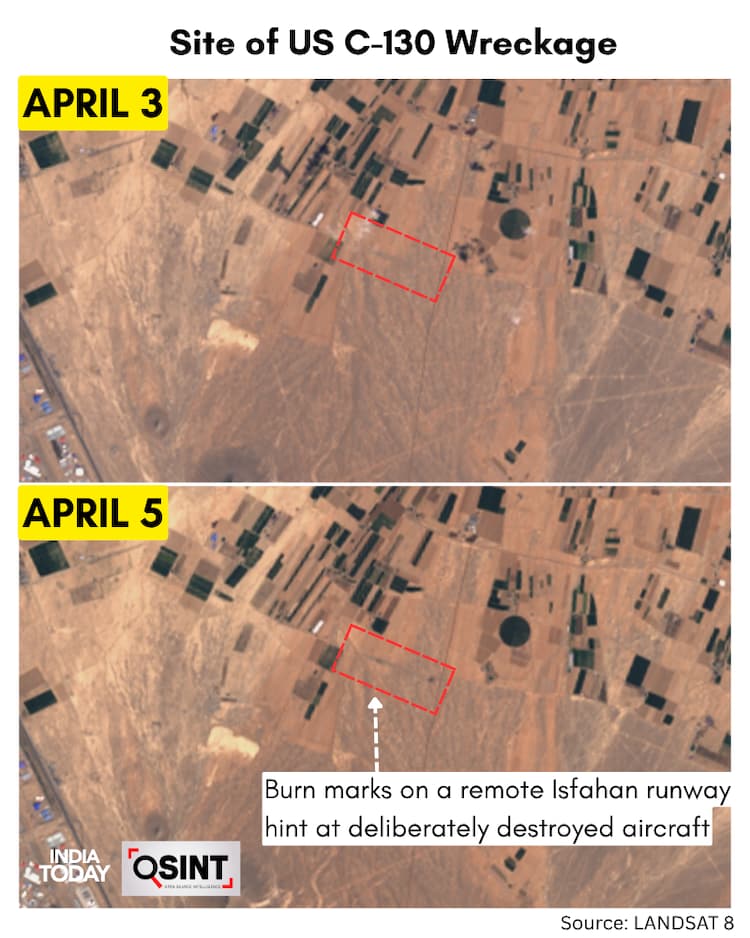
While there is hardly any evidence to suggest that this operation was an attempted ground invasion or a precursor to one, Isfahan appears central to Washington’s strategic focus, with breaching such a fortified site likely forming a key objective.
An operation wrapped in deception
“All wars are based on deception,” wrote Sun Tzu, the ancient Chinese military general and strategist. The United States appears to have applied that principle effectively.
After one of the two service members from the downed F-15E was recovered, concern around the “missing” individual escalated rapidly. However, this did not limit US operational thinking. As Tehran actively searched for leverage by tracking the weapons systems officer, a parallel information play unfolded.
This underscores the importance of the third location, Kohgiluyeh in Southern Iran, where helicopters were flown at a lower altitude and relatively slower, not for extraction, but to create a deliberate diversion.
Reports were seeded within Iran suggesting that the officer had already been rescued and was being moved to a safe location by road. At the same time, US helicopters and personnel were visibly conducting search efforts in areas where they knew he was not present. This created a credible but misleading narrative, buying Washington critical time while directing Iranian attention toward false leads.
Only after the second service member was safely recovered did the full extent of the deception become clear. This deception was executed with striking realism. Local broadcasts aired viral visuals of the activity, while state-backed channels announced rewards for citizens who could provide information on the “missing” service member.
Taken together, the sequence reveals both what has been openly acknowledged and what remains deliberately unspoken, with the latter carrying considerable strategic weight.
This is significant and presents a curious case. Was there some intent behind this sequence of events? None of it has been confirmed so far by any official source, and it likely never will be. Such is the nature of these operations. Yet, the proximity and the manner in which the operation was conducted indicate something larger. It may be a precursor to something like a potential troop insertion aimed at breaching the otherwise insulated fortress of Isfahan.
HOW DID US RESCUE THE TWO SERVICEMEN?
The pilot was recovered within hours of the F-15E being brought down, in a swift and coordinated search and rescue effort involving helicopters and close air support. The operation remained deliberately unconfirmed to protect the ongoing mission to locate the second crew member.
The real challenge, however, was the rescue of the weapons officer. A New York Times report suggests that the weapons systems officer remained stranded deep inside hostile Iranian territory after ejecting, having been separated from the pilot during the descent. He moved to higher ground, climbing nearly 7,000 feet along a ridge line and concealing himself in a crevice to evade detection while awaiting rescue.
His location was eventually confirmed through intermittent beacon signals, carefully used to avoid exposure. Once verified, a large-scale rescue mission was launched under the cover of darkness, involving Special Operations forces supported by helicopters and air assets.
- Ends
Published By:
bidisha saha
Published On:
Apr 6, 2026 20:06 IST