1 month ago
Veteran Awami League leader Ramesh Chandra Sen passed away in judicial custody after 18 months of declining health and denied bail. His death highlights ongoing concerns about the treatment of political detainees in Bangladesh's prisons.
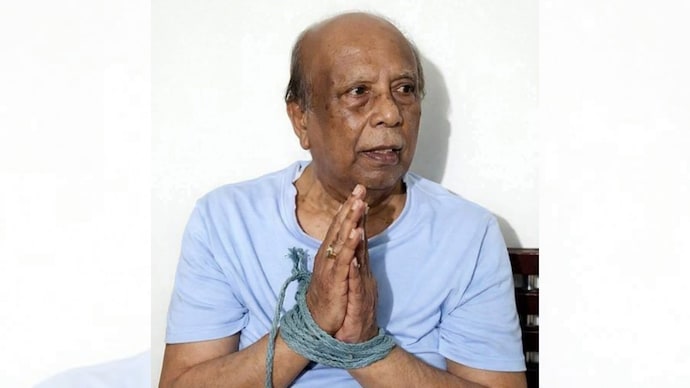
Ramesh Chandra Sen died in custody after prolonged illness and denied bail.
Bangladesh’s prisons have claimed another life.
Ramesh Chandra Sen, 86, a veteran Awami League leader, former minister, academic and parliamentarian, died in judicial custody on Saturday night after spending nearly 18 months behind bars, battling failing health and a series of legal cases.
His death has reopened questions about the treatment of political detainees and minorities in Bangladesh’s prison system.
Just weeks earlier, on January 11, former Awami League leader and Hindu artist Pralay Chaki had also died during treatment while in custody.
For Sen’s family, the loss was not sudden.
“He kept telling us he was getting weaker. He asked for treatment. He asked for bail. Nothing worked,” a relative said.
FROM PUBLIC LIFE TO PRISON CELL
Eighteen months ago, Sen was still a respected public figure.
A former member of the Awami League Presidium and Advisory Council, he had spent decades in politics and education. But his life took a sharp turn after he was allegedly attacked and humiliated by a mob and later taken into police custody without any clear charges.
Soon after, he was sent to jail.
According to his family, one case after another was filed against him to justify his continued detention.
“They never let him come out. Every time bail seemed possible, a new case appeared,” a close associate said.
HEALTH FAILING BEHIND BARS
Inside prison, Sen’s condition steadily worsened.
Relatives said the elderly leader suffered from multiple ailments and needed regular medical attention. Despite this, bail on health grounds was repeatedly denied.
The family alleged that he was given only minimal treatment and was deliberately kept in custody despite his fragile state.
“He was denied proper care. He was denied dignity. He was denied even basic human rights,” a family member said.
On Saturday night, Sen died in custody.
Officials later cited illness as the cause.
A FAMILIAR OFFICIAL EXPLANATION
Human rights organisations say such explanations have become routine.
In 2025 alone, at least 107 detainees died in custody in Bangladesh, most of them Awami League leaders and workers, according to rights groups.
In nearly every case, authorities blamed “heart attacks” or “sudden illness”.
Activists argue that these claims often go unverified due to the absence of independent investigations.
“Deaths in custody are treated as paperwork, not as potential crimes,” a rights activist said.
WHAT THE CONSTITUTION SAYS
Bangladesh’s Constitution is clear.
Article 31 and Article 32 place full responsibility on the state to protect the life and dignity of every person it detains.
“When the state locks someone up, it takes charge of their survival,” a senior lawyer said. “If someone dies inside, the state must answer.”
Yet, rights groups say proper probes remain rare.
JANUARY’S WARNING SIGNS
Sen’s death follows a worrying pattern.
Amnesty reported that at least 15 people died in custody in January alone.
Nearly 11 months ago, Pralay Chaki’s death had triggered similar outrage. His family had also accused authorities of ignoring repeated pleas for medical care.
No major accountability followed.
A WIDER POLITICAL CONTEXT
Since the July movement, more than 200 senior Awami League leaders and office-bearers are currently in jail, according to party sources.
Opposition leaders and rights activists say the custodial deaths cannot be seen in isolation.
“This is not about one man,” a rights defender said. “It is about a system where prisoners slowly fade away behind walls, unheard and unseen.”
For Ramesh Chandra Sen’s family, however, the story is painfully simple.
“He went to jail alive,” a relative said. “He never came back.”
- Ends
Published By:
Sonali Verma
Published On:
Feb 8, 2026