1 month ago
Last Updated:December 13, 2025, 10:09 IST
The professors helming the project stressed on the need to study classical languages as cultural bridges, saying Sanskrit is an integral part of Pakistani-Indian global heritage

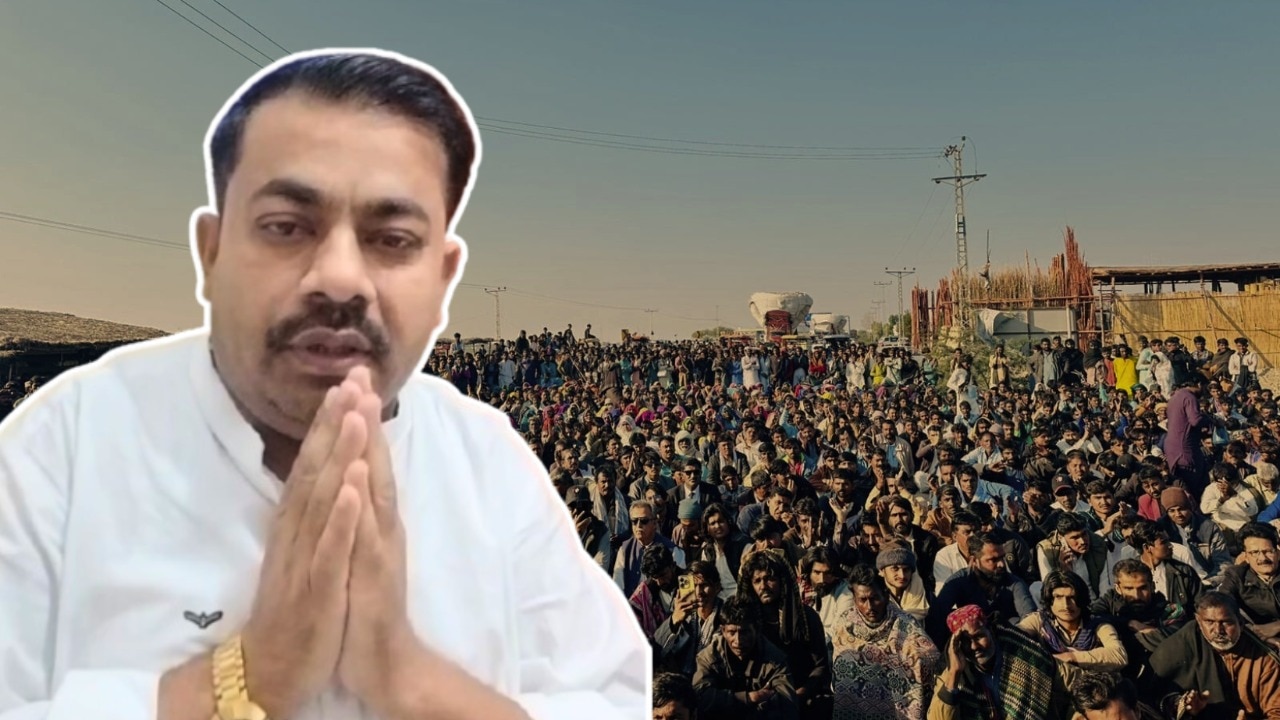
Lahore University of Management Sciences in Pakistan is teaching Sanskrit in its classrooms due to immense student interest with professors, Dr Ali Usman Qasmi and Dr Shahid Rasheed, at the helm of the project. (Image: @IndianTechGuide/X)
For the first time since the 1947 Partition of India, a university in Pakistan has resumed the teaching of Sanskrit – initially offered as a workshop, it has now expanded into a four-credit course.
Lahore University of Management Sciences (LUMS) is teaching Sanskrit in its classrooms due to immense student interest, with professors — Dr Ali Usman Qasmi and Dr Shahid Rasheed — at the helm of the project.
Both the academics stressed on the need to study classical languages as cultural bridges, saying Sanskrit is an integral part of Pakistani-Indian global heritage and vital for accessing ancient texts. They said the initiative aims to train local scholars to study the rich, but neglected, Sanskrit archive held at the Punjab University library and hopes to inspire future courses on works like the Mahabharata and the Bhagavad Gita.
The LUMS also plans to offer courses in Mahabharata and Gita. “Hopefully, this sets a momentum," Dr Ali Usman Qasmi, who is the director of the Gurmani Centre at the university, told The Tribune. “In 10-15 years, we could see Pakistan-based scholars of the Gita and Mahabharata."
This comes as a significant cultural and academic milestone. The Tribune reported that it began as a three-month weekend workshop that gradually evolved into a full four-credit university course after an overwhelming response.
Qasmi told The Tribune that the weekend workshop was open to all, including students, researchers, lawyers, and academics.
“After we saw the response, we decided to introduce it as a proper university course. Even though the number of students is still small, we hope it will grow over the next few years. Ideally, by spring 2027, we should be able to teach the language as a full-year course," Qasmi was quoted.
He stressed that the initiative aligns with the university’s broader language ecosystem, which already includes languages like Sindhi, Pashto, Punjabi, Baluchi, Arabic, and Persian.
Noting that much of the region’s literature, poetry, art, and philosophy date back to the Vedic age, Qasmi said it then becomes even more vital to read classical texts in their original language.
‘WE NEED TO OWN IT, IT IS OURS TOO’
Dr Shahid Rasheed, associate professor of sociology at Forman Christian College, is at the heart of this initiative. He took a sabbatical from his current occupation after Qasmi reached out to him.
Rasheed, who has studied other classical languages like Arabic and Persian, teaches the Sanskrit course at LUMS. He said his interest in the language started long before he started teaching it and, due to a lack of local teachers or textbooks, had to resort to learning it online under Cambridge Sanskrit scholar Antonia Ruppel and Australian indologist McComas Taylor.
He said classical languages contain much wisdom for mankind while noting that modern languages derive from classical traditions, separated only by a “veil".
“I mainly teach grammar. When I was teaching shubhashitas, the wisdom verses or shlokas, many of my students were fascinated to discover that so many Urdu words come from Sanskrit. Many didn’t even know that Sanskrit was different from Hindi. In the first week, they found it a challenging language. But once they grasped the logical structure, they started enjoying it. The pleasure of solving something difficult is immense," he was quoted.
Despite potential political sensitivities, both scholars believe the intellectual climate is shifting. Rasheed said Sanskrit is the “binding language of the entire region", insisting that “we need to own it".
“People ask me why I am learning Sanskrit. I tell them, why should we not learn it? It is the binding language of the entire region. Sanskrit grammarian Panini’s village was in this region. Much writing was done here during the Indus Valley Civilisation. Sanskrit is like a mountain – a cultural monument. We need to own it. It is ours too; it’s not tied to any particular religion," he was quoted.
Ultimately, he said, the goal is to foster regional understanding and reconnect with ancient traditions. If people are to come closer, he added, absorbing the rich classical traditions is essential and, if more Muslims in Pakistan took up Sanskrit, and more Hindus and Sikhs in India started learning Arabic, it could be a fresh, hopeful start for South Asia.
 Click here to add News18 as your preferred news source on Google.
Location :
Lahore, Pakistan
First Published:
December 13, 2025, 09:38 IST
News world 'Gita, Mahabharata Scholars In 10-15 Years': Pakistan University Resumes Sanskrit First Time Since Partition
Disclaimer: Comments reflect users’ views, not News18’s. Please keep discussions respectful and constructive. Abusive, defamatory, or illegal comments will be removed. News18 may disable any comment at its discretion. By posting, you agree to our Terms of Use and Privacy Policy.
Read More