 1 hour ago
The Houthis denied Saudi claims that a drone launched by the group was intercepted over Medina. The dispute heightens tensions as cross-border attacks threaten regional energy and shipping routes.
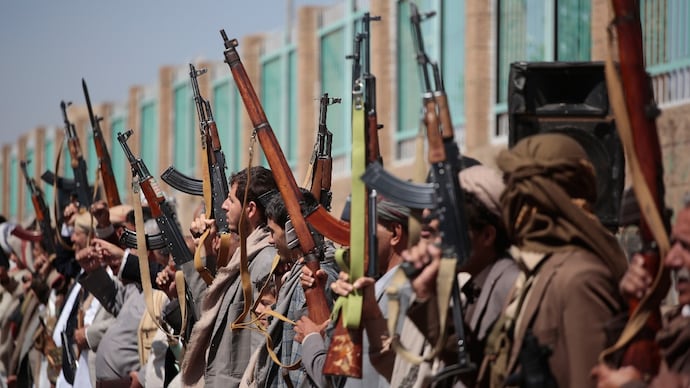
Houthi supporters carry their rifles while attending an armed tribal rally in Sanaa
Yemen's Iran-aligned Houthi group has denied launching a drone towards Saudi Arabia's Medina region after the Saudi-led military coalition said it intercepted and destroyed an unmanned aircraft over the area, escalating tensions amid a widening regional conflict linked to the US-Israeli war on Iran.
The Houthis rejected the coalition's account, accusing Saudi Arabia of fabricating claims of an attack. The latest exchange comes amid a series of cross-border strikes targeting Saudi oil infrastructure, military installations and airports, raising concerns about the spread of hostilities to another front in the region.
Medina is home to the Prophet's Mosque and is Islam's second-holiest city after Mecca. Millions of Muslims visit the city every year, particularly during the annual Haj and Umrah pilgrimages.
HOUTHIS REJECT SAUDI CLAIM OF DRONE ATTACK
Houthi military spokesperson Yahya Saree denied that the group had carried out any operation targeting Saudi territory.
"The Yemeni Armed Forces affirm that they have not carried out any operation directed toward the Saudi interior. The claim by the criminal Saudi enemy—that a drone was shot down in the airspace of Medina—is merely a continuation of their grand and egregious fabrications," Saree said in a social media post.
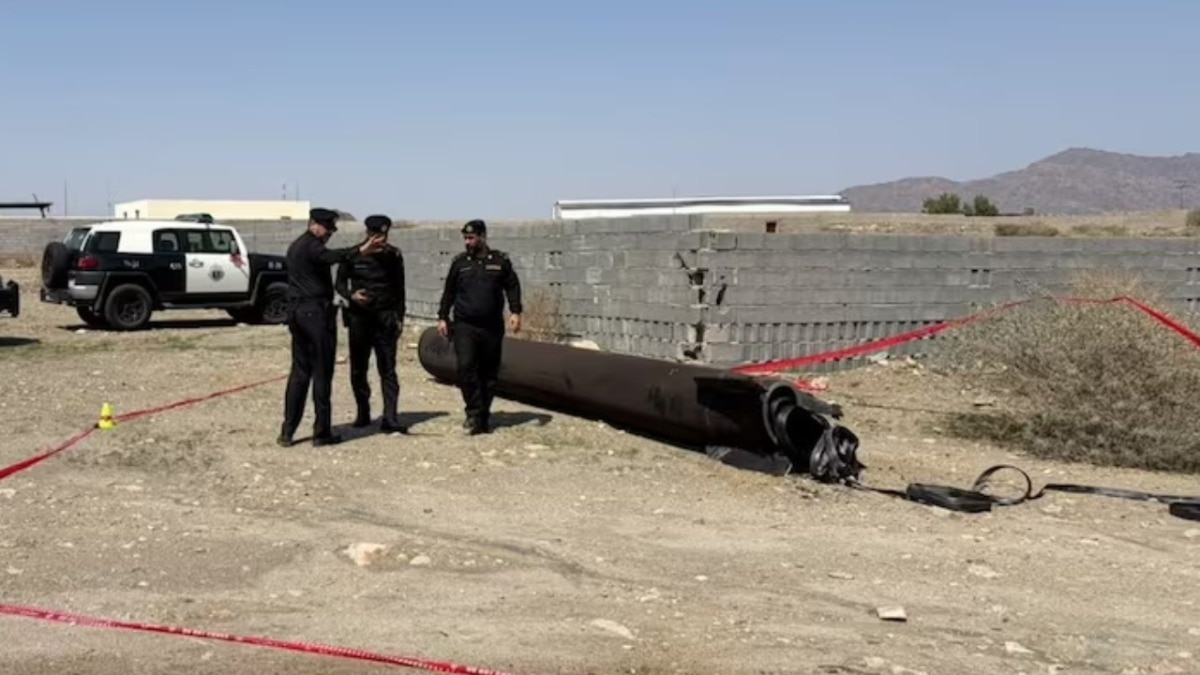
The Saudi-led coalition had earlier announced that it intercepted and destroyed a drone launched by the Houthis over Medina province.
The latest denial follows previous accusations by Saudi Arabia that the Houthis had attempted to target Mecca and Medina. The group has repeatedly rejected such allegations, maintaining that its military operations are directed at Saudi oil facilities and military installations and that it publicly announces attacks when they take place.
In an earlier escalation, Saudi Arabia's Civil Defence reported that shrapnel from two intercepted ballistic missiles had fallen in the Mecca and Medina regions. Debris was reported near Mecca as well as in Jeddah, Taif and Rabigh.
The Houthis denied targeting the two holy cities on that occasion as well.
SAUDI OIL FACILITIES AND AIRPORTS REPEATEDLY TARGETED
The latest incident follows a series of Houthi-claimed attacks on Saudi Arabia this month, including strikes targeting major oil installations and airports.
On October 3, the group claimed responsibility for a missile and drone attack on an Aramco facility in Riyadh. Another strike on October 13 triggered a fire at Saudi Aramco's headquarters in Dhahran. Saudi authorities reported no casualties, although people familiar with the damage said flames had spread across several floors of the building. The Houthis subsequently claimed further attacks on Aramco facilities in Dhahran and a refinery in Riyadh on October 14.
Saudi airports have also come under attack. A Houthi-claimed strike on Riyadh's King Khalid Airport on October 10 killed at least 12 people and injured 309, according to Saudi authorities. Two other attacks earlier that week killed four people and damaged a commercial aircraft.
Last week, another strike on King Fahd Airport in Dammam killed a Saudi citizen and an Indian national, while eight others were injured.
The Houthis have also warned airlines against using Saudi airspace, while exempting the airspace over Mecca and Medina.
RENEWED FIGHTING THREATENS 2022 YEMEN TRUCE
The latest confrontation has further undermined the relative calm established by a United Nations-brokered truce in 2022, which had largely halted cross-border attacks between the Saudi-led coalition and the Houthis.
The coalition backs Yemen's internationally recognised government, while the Houthis control the capital, Sanaa, and large parts of the country's north.
The renewed hostilities are unfolding alongside the wider US-Israeli war on Iran, with the Iran-aligned Houthis intensifying their military campaign against Saudi targets.
The group's location also gives it the ability to threaten critical maritime routes. Its positions near the Bab el-Mandeb Strait, a key passage connecting the Red Sea to the Gulf of Aden, make the escalation a concern for international shipping and energy supplies.
Saudi Arabia has increasingly depended on its East-West oil pipeline to transport crude to export terminals on the Red Sea as disruptions affect shipping through the Strait of Hormuz.
Further Houthi attacks on Saudi oil infrastructure could threaten this alternative export route, while activity near Bab el-Mandeb could create additional risks for vessels navigating the Red Sea.
MECCA AND MEDINA HOLD SPECIAL SIGNIFICANCE FOR MUSLIMS
Mecca and Medina are Islam's two holiest cities and hold immense religious significance for Muslims worldwide.
Mecca houses the Kaaba, towards which Muslims turn during their daily prayers and which serves as the focal point of the annual Haj pilgrimage. Medina is home to the Prophet's Mosque and attracts millions of pilgrims and visitors throughout the year.
The repeated allegations and denials over attacks targeting the two cities have added another sensitive dimension to the escalating confrontation between Saudi Arabia and the Houthis.
- Ends
With inputs from Reuters