1 month ago
Iran and Oman say they have agreed the coordinates for a new Hormuz shipping route. The proposed arrangement could place ships entering the Gulf under Iranian oversight, though key details remain unresolved.
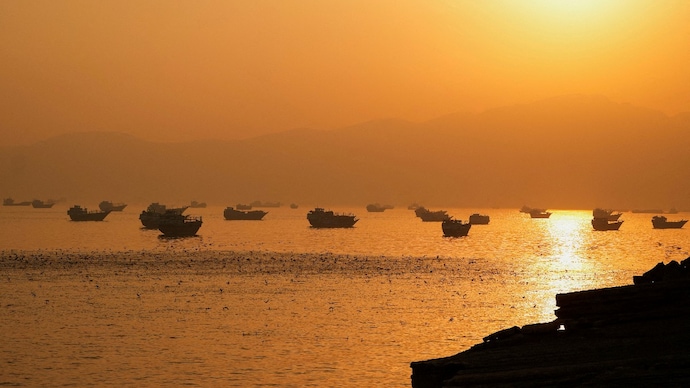
Under the proposed system, most of the designated shipping route would pass through Iran's territorial waters. (File Photo: Reuters)
The Strait of Hormuz is one of the world's busiest and most strategically important waterways. Before the US-Iran war, a large share of the world's crude oil and liquefied natural gas passed through the narrow sea passage connecting the Persian Gulf with the Gulf of Oman and the Arabian Sea every day. For decades, commercial ships from every country have been able to use the route without paying transit fees or seeking permission from any single nation.
That arrangement could now be on the verge of changing.
Iran says it has reached an understanding with neighbouring Oman on a new shipping route through the Strait of Hormuz. According to Iranian officials and regional sources, cited by news agency Reuters, the proposed arrangement would place ships entering the Gulf under Iranian oversight.
WHAT HAS IRAN AND OMAN AGREED?
Iranian Foreign Ministry spokesman Esmaeil Baghaei said Tehran and Muscat had agreed on the geographical coordinates of a new shipping route through the strait. According to him, both countries are now finalising a joint statement outlining the main points of the understanding.
Iranian Deputy Foreign Minister Kazem Gharibabadi described the talks as having reached "fundamental understandings".
"This progress is on the verge of being finalised," he said.
Iran has also said the proposed arrangement has been designed so that commercial ships would travel through Iranian territorial waters during both the inbound and outbound parts of their journey.
WHAT WOULD CHANGE FOR SHIPS?
At present, vessels entering or leaving the Persian Gulf use internationally recognised shipping lanes without having to seek approval from Iran or Oman. Under the proposed arrangement, however, the system could change significantly. According to Reuters, ships entering the Gulf would travel through waters controlled by Iran. That would effectively give Tehran oversight of inbound maritime traffic. One of the biggest questions still under discussion is whether Iran would exercise the same level of authority over vessels leaving the Gulf.
Iran's Deputy Foreign Minister for Legal and Affairs, Kazem Gharibabadi, said Tehran and Muscat were working on what he described as a "new model" for managing shipping through the Strait of Hormuz.
Under the proposed system, most of the designated shipping route would pass through Iran's territorial waters, while shorter stretches would run through Omani waters. Existing temporary shipping lanes, including the northern route near Iran's Larak Island and the southern route through Omani waters, would be phased out and replaced by the new corridor.
He said the new route would initially remain in operation for two to four months, although it could continue for longer depending on how the arrangement evolves.
WHY DOES IT MATTER?
The implications are enormous.
The Strait of Hormuz is often described as the world's most important oil chokepoint. Nearly one-fifth of global oil supplies move through the narrow passage. Any country exercising greater influence over shipping there would gain big strategic leverage over global energy markets.
Before the conflict between Iran and the US escalated earlier this year, commercial vessels moved freely through the strait without transit charges. If Iran ultimately gains oversight of inbound shipping, analysts say it would represent one of Tehran's biggest diplomatic and strategic victories in years.
It would also mark a major shift in the regional balance of power.
WHO WOULD INSPECT THE SHIPS?
That question has not yet been settled.
Regional officials told Reuters Gulf countries want inspections to remain under regional supervision rather than being carried out solely by Iran. Negotiators are also debating whether any payments linked to passage through the strait should be mandatory or voluntary.
Iran is seeking transit fees ranging between 5 per cent and 7 per cent of the cargo's value.
Oman is discussing significantly lower charges of around 3 per cent.
The US, meanwhile, is pushing for ships to continue using the waterway without paying any transit fees.
Some negotiators believe a compromise could involve making payments technically voluntary, although shipping companies may still choose to pay rather than risk delays or security concerns.
WHY IS THE DEAL NOT FINAL YET?
Despite the progress announced by Tehran, important differences remain. Regional officials cautioned that many operational details have not been resolved.
One Iranian source summed up the uncertainty by saying: "The devil is in the details. A single tweet from Trump could cause the whole thing to collapse."
Iranian officials have also made it clear that reopening the strait depends on Washington fully returning to its commitments under the memorandum of understanding reached in mid-June.
Gharibabadi said Iran had received messages indicating the US was prepared to honour those commitments, although he stressed no direct talks had taken place in recent days.
WHAT HAD TRUMP SAID?
US President Donald Trump has repeatedly said an agreement is close. Speaking to Fox News, he said negotiations were "moving along nicely" and described the latest discussions as "an all-day negotiation". He also predicted that the Strait of Hormuz "is going to be open very soon".
Days earlier, Trump said he had halted plans for fresh military strikes on Iran because negotiations were making progress. However, regional officials familiar with the talks have pushed back against speculations of an imminent deal.
His optimistic comment was a notable shift from his earlier hardline stance on the strait. Earlier in July, he proposed imposing a 20 per cent US "reimbursement fee" on cargo transiting the waterway and declared Washington would become the "Guardian of the Hormuz Strait".
However, at the time of writing this report, neither Trump nor officials from his administration had issued any statement on proposed Iran's Hormuz deal with Oman.
CONFLICT CONTINUES TO SHAPE TALKS
Diplomatic negotiations are unfolding against the backdrop of continued instability across the region.
The US has maintained military pressure on Iran for months, while Yemen's Iran-aligned Houthi movement has stepped up attacks on Saudi-linked shipping in the Red Sea and the Gulf of Aden. On Wednesday, the Houthis claimed responsibility for missile attacks targeting Saudi oil tankers. Saudi Arabia had not confirmed the incidents at the time of writing.
Oil markets have reacted cautiously to the latest diplomatic developments. Crude prices have fallen over the past two days on hopes that negotiations could reduce tensions. At the same time, continued threats to shipping have prevented a sharper decline.
The United Nations has also urged all sides to pursue diplomacy. Deputy UN spokesperson Farhan Haq said the organisation had not independently verified reports of an imminent Hormuz agreement but encouraged the parties to continue working towards a negotiated solution.
For now, the proposed Hormuz arrangement remains a work in progress. If finalised, it would fundamentally change how ships enter one of the world's most vital maritime corridors and could change the strategic balance across the Gulf for years to come.
- Ends
With inputs from Reuters
Published By:
Satyam Singh
Published On:
Aug 6, 2026 01:29 IST