1 month ago
Reza Pahlavi stepped up his campaign after the US-Israeli assault on Iran and said he was ready to lead a transition. The Islamic Republic's survival, Washington's distance and donor doubts have left his leadership claim under strain.
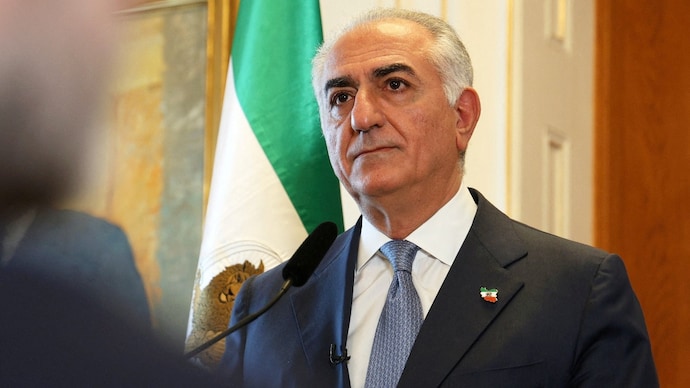
Reza Pahlavi, the exiled son of Iran's last shah, has long positioned himself as a leading figure in Iran's opposition movement. (File Photo: Reuters)
History rarely offers second chances. For Reza Pahlavi, it appeared to offer one this year.
After US and Israeli strikes pushed Iran into one of its deepest crises since the 1979 Islamic Revolution, the exiled son of Iran's last shah saw an opening he had spent nearly half a century waiting for. He toured Western capitals, met influential leaders, raised millions of dollars and declared he was ready to lead Iran once the Islamic Republic fell.
"The Iranian people have called on me to lead the transition after the regime is gone," Pahlavi wrote on X shortly after the conflict began on February 28. "I have accepted that responsibility."
But months later, the 65-year-old finds himself confronting an unwanted reality. The Islamic Republic has survived. Washington has shown little appetite for backing him. Wealthy supporters have begun questioning his leadership. And despite being the most recognisable face of Iran's opposition, Pahlavi is still struggling to convince that he is the person who can unite it.
THE MOMENT HE WAITED FOR
Pahlavi's campaign gained remarkable momentum after the war flared up following joint US-Israeli assault on Iran.
At the Conservative Political Action Conference (CPAC) in Texas, he received a 45-second standing ovation from an audience filled with Donald Trump supporters and Iranian-Americans waving Iran's pre-revolution flag. For his supporters, it felt like history was turning in his favour.
Then came a reality check.
Days later, Trump declared on social media that the US was "blasting Iran into oblivion" and back to the "Stone Ages". Some of Pahlavi's biggest financial supporters expected an immediate condemnation. It never came.
Soon afterwards, Trump himself poured cold water on speculation that Washington saw Pahlavi as Iran's future leader.
"He seems very nice, but I don't know how he'd play within his own country," Trump told Reuters. Not once or twice, but on multiple occasions, Pahlavi downplayed opportunities to project him as Iran's next leader if US succeeded in its bid for regime change. His message became even clearer after the US reached a ceasefire agreement with Iran. The deal made no mention of regime change, and Vice President JD Vance dismissed that Washington intended to install Pahlavi as Iran's next leader.
"The President of the United States never said that his goal was to install Reza Pahlavi to become the new leader of Iran," Vance said.
For a movement that had hoped the war would change Iran's future, it was a sobering reminder that the White House had different priorities.
THE BIGGEST QUESTION: CAN HE UNITE THE OPPOSITION?
Pahlavi insists his campaign has never been about personal ambition.
"I'm not the destination, I'm a bridge to the destination," he told Reuters, saying his role as leading Iran through a democratic transition before allowing its people to decide their future. He says he is in touch with networks inside Iran and believes the country's rulers are closer than ever to collapse.
But critics belive his greatest weakness is not a lack of recognition -- it's a lack of unity.
Over the years, several attempts to bring together Iran's fractured opposition have collapsed. Republicans, monarchists, secular activists, ethnic groups and former regime critics all share the goal of ending the Islamic Republic, but often disagree over what should replace it and who should lead that transition.
According to Reuters, even some of Pahlavi's allies believe he has struggled to bridge those divisions. Others questioned whether he had done enough to distance himself from supporters accused of intimidating fellow dissidents or using inflammatory rhetoric against rival opposition figures. Pahlavi rejects those criticisms. He said he condemns violence, has spoken to close aides about their conduct and remains committed to building a coalition that includes people from across Iran's spectrum.
A FAMOUS NAME, BUT IS IT ENOUGH?
There is little doubt that Pahlavi is the best-known Iranian opposition figure.
Even after decades in exile, the Pahlavi name continues to carry weight among many Iranians who look back on the pre-1979 era as a period of greater stability and prosperity. A Reuters-cited survey found that nearly half of respondents viewed him favourably. Supporters see him as a familiar figure who could provide stability during a turbulent transition.
Critics see something different.
Some question whether a man who has spent almost half a century in exile can truly understand modern Iran. Others believe he lacks the political instincts needed to navigate the country's deeply divided opposition.
Pahlavi dismisses such assessments. He says he deliberately chose a life of political activism instead of pursuing business or a private career after his father died in exile.
"I decided to stay in it for the sake of my country," he said.
DONORS BEGIN TO LOSE FAITH
Pahlavi's campaign also attracted support from some of the most influential figures in the Iranian-American business community.
Following last year's war, prominent executives formed a private WhatsApp group to discuss Iran's future. Several eventually donated more than $3 million to Pahlavi's campaign, believing he could become the face of a democratic transition, reported Reuters.
Among those who contributed was Uber CEO Dara Khosrowshahi, whose spokesman said the donation was intended primarily to help cover Pahlavi's security costs.
However, that enthusiasm gradually faded.
Some donors became frustrated that Pahlavi ignored their advice to unite opposition groups more effectively and respond more forcefully to controversies involving his supporters.
Pahlavi, however, insisted financial support would never dictate his political decisions.
"I'm not going to change the mission based on the benefactor's expectation," he said.
STILL WAITING FOR HIS CHANCE
If the war was meant to be Reza Pahlavi's moment, it ended without the ending he had imagined.
The Islamic Republic survived. Washington chose diplomacy over regime change. And the man who has spent nearly half a century preparing for Iran's next chapter is still waiting for the country -- and the world -- to believe he should write it.
Nearly five decades after leaving Iran, Reza Pahlavi is the opposition's most recognised face. But as the war has shown, recognition is one thing. Convincing a divided movement that he is its natural leader is another.
- Ends
With inputs from Reuters
Published By:
Satyam Singh
Published On:
Jul 29, 2026 03:24 IST