1 hour ago
India and Indonesia agreed on BrahMos and Astra missile supplies and a joint Sabang Port push. The moves deepen defence and maritime cooperation as both sides back a free Indo-Pacific and zero tolerance for terrorism.

Jakarta,UPDATED: Jul 7, 2026 20:20 IST
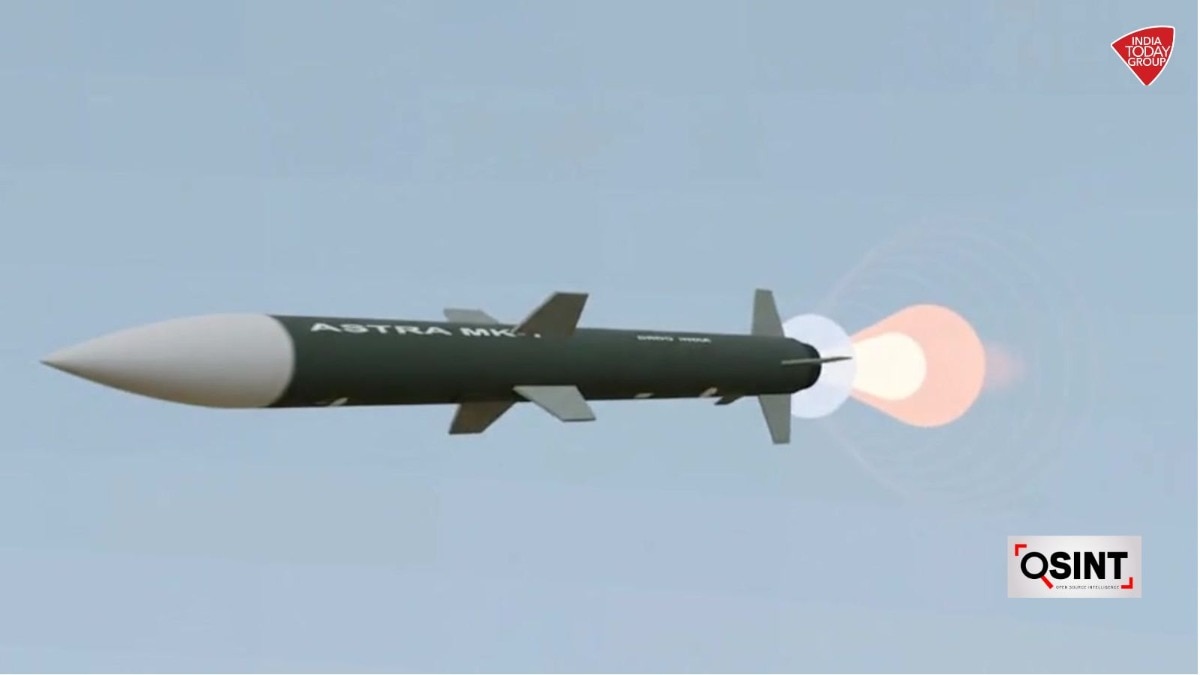
India and Indonesia on Tuesday agreed on the supply of BrahMos supersonic cruise missiles and Astra air-to-air missiles, widening defence ties as Prime Minister Narendra Modi and President Prabowo Subianto pushed for a deeper bilateral partnership for a free and peaceful Indo-Pacific. The two sides also signed 14 agreements covering critical minerals and steel supply chains, maritime security, medicines, education, outer space, research and innovation, telecommunication and food security.
The leaders also decided to jointly develop the strategically located Sabang Port, which overlooks the Strait of Malacca and is around 100 miles from India's Great Nicobar Port project. They called for a "zero-tolerance" approach to terrorism, backed stronger maritime cooperation, and discussed global challenges, with Modi saying India believed in navigating "global turbulence" through dialogue and diplomacy and continued to support a two-state solution to the Palestine issue.
Modi, who arrived in Jakarta on Monday on the first leg of his three-nation tour that will also take him to Australia and New Zealand, held talks with Prabowo under the framework of the India-Indonesia Comprehensive Strategic Partnership of 2018. After the talks, Modi said, "A golden era is now at the threshold for our two nations."
The agreements included one on the supply of an unspecified number of BrahMos missiles and another on Astra beyond-visual-range missiles. The two defence export deals are estimated to be worth over USD 600 million. It is perhaps the first time two Indian defence export deals were announced in the presence of the prime minister. Both weapon systems played a major role for the Indian military during Operation Sindoor last year. India had earlier signed similar BrahMos deals with Vietnam and the Philippines. BrahMos Aerospace Pvt Ltd, an India-Russian joint venture, produces the supersonic cruise missiles.
On maritime links, Prabowo said, "I express my support for the development of ports in the Andaman and Nicobar Islands, as well as the development and expansion of Sabang Port in Aceh, as a strategic link between Sabang Island and the Andaman and Nicobar Islands in India." Modi said the growing trust between the two countries was strengthening cooperation in defence, security and the maritime domain. "Today, we agreed to further enhance collaboration in defence exchanges, disaster management, and industrial cooperation," he said. "Our two Coast Guards will now work together to enhance maritime safety and security in the Indian Ocean. As two close maritime nations, we have also decided to deepen our cooperation in the blue economy, port development, and maritime trade," he added. Indonesia will also deploy a Liaison Officer at India's Integrated Fusion Centre – Indian Ocean Region.
The missile pacts and the decision to implement an agreement on maritime safety and security came amid rising concerns in South East Asia over China's growing military muscle-flexing in the South China Sea and beyond. Without directly referring to China, the two leaders underlined the importance of respect for sovereignty and territorial integrity, adherence to international law including the 1982 UN Convention on the Law of the Sea, freedom of navigation and overflight, and refraining from the threat or use of force. According to the joint statement, Prabowo appreciated India's consistent support for ASEAN unity and ASEAN centrality in the evolving regional architecture for regional peace, stability and prosperity. Both leaders also identified defence industry collaboration as a priority area, including joint production of equipment, sourcing of defence equipment, cooperation in ship-building and the establishment of MRO facilities.
On trade and technology, India decided to invest in the manufacturing of steel, nickel and rare earth permanent magnets in Indonesia, which are key inputs for electric vehicle motors, wind turbines and smartphones. Modi said, "In today's world, supply chain resilience in technology has become critically important. We have also concluded an important agreement to strengthen supply chain resilience in the areas of critical minerals and steel." He added, "In addition, our companies are embarking on a new phase of partnership in stainless steel and rare earth magnets." Modi also said India's Unified Payments Interface would soon be integrated with Indonesia's payment system to improve the ease of doing business and travel between the two countries. He announced that a campus of IIM Bangalore would be set up in Indonesia and said, "Our Comprehensive Strategic Partnership, established in 2018, is reaching new heights today. We are making significant strides across every domain of cooperation, including development, security, technology, culture, and education." He added, "I am confident that today marks the beginning of a golden new chapter in the India-Indonesia partnership. This new chapter will have a profound and positive impact on the world of the 21st century and on humanity as a whole."
The two sides also agreed to step up cooperation in the space sector, blue economy, maritime trade and port development. Modi said, "We have taken important decisions today to advance joint research, technology sharing, and capacity building in the space sector." On security, the leaders called for a "zero-tolerance" approach to terrorism, demanded action against globally proscribed terrorists and welcomed the early conclusion of an agreement on counter-terror cooperation to be signed in the "near future".
The talks also covered West Asia. The joint statement said the two leaders expressed deep concern over the situation in the region and its global effects. They welcomed the Memorandum of Understanding signed by the US and Iran on June 17. "They underlined the importance of de-escalation and reiterated that all issues must be resolved through dialogue and diplomacy," the statement said. Modi said, "In this period of global turbulence, India believes that the role of dialogue and diplomacy has become more important than ever before," and added, "On the issue of Palestine, we continue to support a two-state solution and the pursuit of lasting peace." The statement also said the two sides shared the view that freedom of navigation and the global flow of commerce, including transit passage through the Strait of Hormuz, must be respected in line with international law and the provisions of UNCLOS.
Modi also referred to people-to-people ties, saying the two countries would celebrate the centenary of Gurudev Rabindranath Tagore's historic visit to Indonesia. He added that Indonesia's nation-building journey owed much to the visionary educator and its first Minister of Education, Ki Hajar Dewantara. Overall, the visit saw India and Indonesia widen defence, maritime, trade, technology, education and space cooperation, while also setting out common positions on terrorism, regional stability and dialogue-led diplomacy.
With PTI Inputs
- Ends
Published By:
India Today Web Desk
Published On:
Jul 7, 2026 20:20 IST