 1 month ago
The end of the conflict and the expected easing of energy-related disruptions could provide a significant boost to emerging markets, particularly major oil importers such as India. According to Ed Yardeni, President of Yardeni Research, lower energy risks reinforce the global bull market narrative. At the same time, Arvind Sanger, Managing Partner of Geosphere Capital Management, believes the investment themes that dominated before the war, including artificial intelligence (AI) and emerging market (EM) growth, could regain momentum as uncertainty fades.
For India, the removal of energy-price pressures comes at a time when valuations have become more reasonable after a period of underperformance. While both experts see scope for renewed investor interest in Indian equities, they stress that sustained outperformance will depend on improving domestic fundamentals, economic growth trends and the country's ability to attract capital in an increasingly competitive global market.
This is an edited transcript of the interview.Q: There was uncertainty on when the deal would happen, when the war ends. Now, for all practical purposes, and if you look at the price action as well, it looks like the deal is here. So, what happens next?Yardeni:
Markets are clearly endorsing the idea that a deal is going to happen and that it will be signed on Friday. This takes a lot of pressure off many oil-importing countries. On a global basis, this certainly benefits emerging markets and some developed economies that import a lot of oil, such as Japan, South Korea and Taiwan.
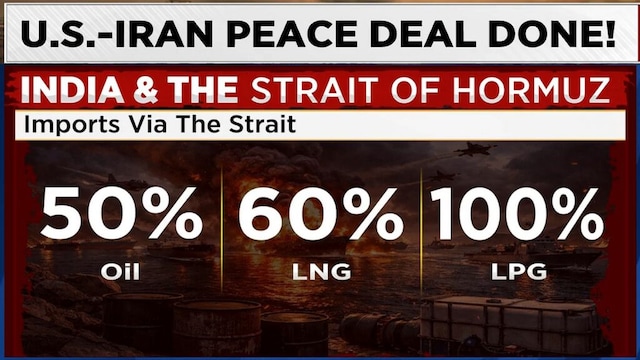
This is really a signal that the global bull market continues. Leadership may shift back to the foreign stock markets after we saw some leadership in the United States during the war. The war made the US look more attractive because we are oil exporters, while most of the rest of the world imports oil. Of course, many oil flows were affected by the situation around the Strait of Hormuz.
Q: It was perhaps inevitable that this would happen at some point. We just didn't know when. For India, this is certainly a big macro relief, given the country's dependence on energy supplies moving through the Strait of Hormuz.Sanger: It definitely is. But let's think about the world that existed before this war began. Emerging markets and Europe were hugely outperforming the US. This war created a huge diversion, and the US, as one of the energy superpowers, became a winner.
What has happened in the background is that AI has moved further along. At the beginning of the year, the trade was to buy the AI winners as well as European and other emerging and developed markets. I think that trade can reappear. The US still has the AI play, but I think the Indian market and other emerging markets should benefit.
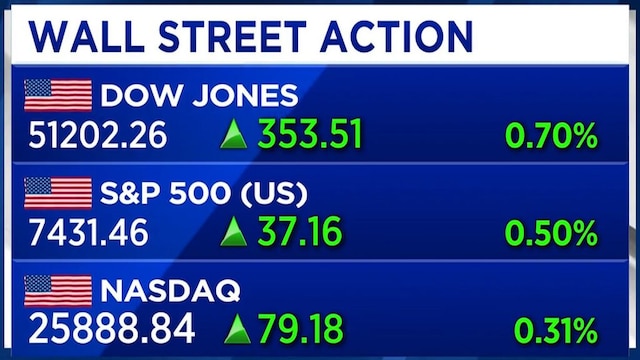
India had already suffered somewhat in the early part of the year, even before the war, and was lagging. The question now is whether enough money has left India and whether India has underperformed enough to become relatively attractive again. We also need to see how the growth story evolves once concerns around rising energy prices and shortages disappear.
So, I am hopeful, but I would also be cautious and watch how Indian fundamentals play out beyond the initial relief rally and in actual economic data.
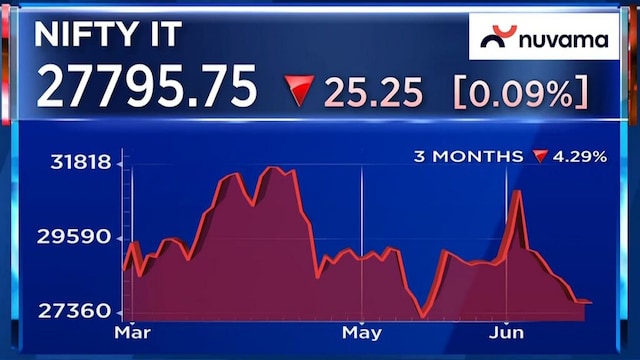
Q: Fundamentals were impacted largely because of raw material prices. Demand wasn't really the issue. In fact, consumption was beginning to improve because of GST-led tax cuts and other government measures. Companies continue to report volume growth, and now there could also be price growth. The main concern was margins. Given India's underperformance, foreign institutional investor (FII) outflows and improving fundamentals, is there a case for India to outperform from here?Sanger: I think so. Financials and several domestic consumption-oriented sectors look interesting. I remain somewhat sceptical about sectors such as IT, which face structural headwinds, but many domestic-facing sectors could perform well. Those sectors would be important for the overall index to outperform.
Q: What do you make of how emerging markets should react to this news and the AI trade? India has already underperformed, and policymakers have taken steps to support the rupee. Do these factors create incremental positives for India?Yardeni: Emerging markets clearly benefit from the end of the war. Oil-producing emerging markets can once again sell freely into global markets without concerns around disruptions in the Strait of Hormuz, while oil-importing countries also benefit.
India clearly stands to gain because a tremendous amount of its energy supplies moves through that route. But at the end of the day, this mainly brings us back to where we were before the war, and India wasn't performing particularly well even then.
Part of the reason is that India had several years of strong outperformance. Investors then concluded that progress on reforms had not been as significant as they had hoped, and they shifted capital elsewhere.
At this point, India is not really competing with China, whose market returns have also been relatively weak. The real competition is the AI trade. Within emerging markets, investors can continue to play AI through countries such as South Korea and Taiwan.
Q: The SpaceX debut happened successfully. Any implications from here? How do you think the market behaves?Yardeni: I have been talking about this decade as the "Roaring 2020s," and I can't think of a better example than the SpaceX deal. At roughly 100 times revenue, it's extremely expensive, but there was no problem selling the deal.
A $75 billion valuation isn't huge when you consider that the total market capitalisation of US stocks is around $100 trillion. It's a drop in the bucket. However, once insiders can sell more shares, we are potentially talking about a much larger amount of stock entering the market, which could create volatility.
Right now, investors are buying into the idea that the company could make significant money through projects such as space-based data centres and even future space colonisation. Personally, that level of excitement and valuation makes me a little nervous. It suggests at least a degree of irrational exuberance.
Q: The US now accounts for about 65% of the MSCI All Country World Index. Two years ago, we already thought that was extreme, and it has become even more so. Is this trend here to stay?Sanger: No. These kinds of extremes often occur near the top of bull markets. Metrics such as US market capitalisation relative to gross domestic product (GDP) and the US share of global market capitalisation are at very elevated levels.
I don't know what will eventually burst this bubble, but the US market is clearly priced for perfection. As Ed mentioned, SpaceX's valuation is nosebleed territory.
I am always surprised when the Magnificent Seven are described simply as technology companies. I primarily invest in asset-heavy businesses, and asset-heavy businesses generally don't trade at 25-30 times earnings regardless of growth rates. Many of these companies have evolved from asset-light to increasingly asset-heavy models.
Watch the full conversation here

Eventually, I think the market will realise that not everyone will capture the enormous opportunity investors currently envision. There are also competitors such as Anthropic and OpenAI. Some companies will inevitably emerge as losers while vast amounts of capital continue to be invested.
These are historically high valuation multiples. I feel much more comfortable allocating capital to emerging markets, Europe and other regions where valuations and expectations are far less stretched than in the US.
Q: And that includes India as well?
Sanger: Yes. India is beginning to be included in that group because it has effectively become cheaper by going nowhere for a while. At the same time, markets such as Korea and Taiwan have moved up significantly.
Catch all the latest updates from the stock market here