 1 month ago
India remains one of the most attractive destinations within emerging markets for long-term investors, according to William Lee, Chief Economist and Managing Director of Global Economic Advisors.
While short-term capital flows may be influenced by market cycles, currencies and technology trends, he argues that India's democratic framework, infrastructure development and improving strategic position are likely to support a gradual shift in global investment interest toward the country over the coming years.
Lee says investors should look beyond short-term trade developments and focus on the broader trajectory of US-India relations.
He believes growing strategic cooperation between the two countries, including technology transfers, defence partnerships and energy collaborations, signals a strengthening long-term relationship that could encourage greater private-sector investment into India.
 This is an edited transcript of the interview.Q: You recently wrote about Marco Rubio, the United States Secretary of State's visit to India. At the same time, discussions around a US-India trade framework agreement appear to be nearing completion, with both sides indicating that most of the work has already been done. What are your thoughts on the progress of the deal and its significance for US-India relations?
A: I think it's important for US-India relations not to look at these trade deals in isolation. Look at the trend. I like to say, ignore the weather reports and look at the climate reports.
The climate is one where the US is clearly strengthening its strategic relationship with India. Technology transfer, the production of jet engines and fighter jet engines, as well as small modular nuclear reactors, are very clear indications that if you follow the money, strategic asset transfers from the United States to India are leading the way for further private-sector investments into India.
Also Read | BofA sees FY27 earnings growth slowing to 8.5%; capex outlook stays strong
That's the full story. That was the gist of a report I wrote for our clients, many of whom were expressing interest in investing in Asia and trying to decide between China and India. I wrote a very pro-India piece because I think when it comes to setting up long-term investment facilities, India has a lot of things going for it.
The deals that Rubio was talking about are hallmarks of the growing strategic relationship. As I said, the weather report changes day by day. You can have tariffs and all sorts of trade problems, but when you follow the money and where the strategic assets are going, that's a very clear sign that US-India relations are getting better.
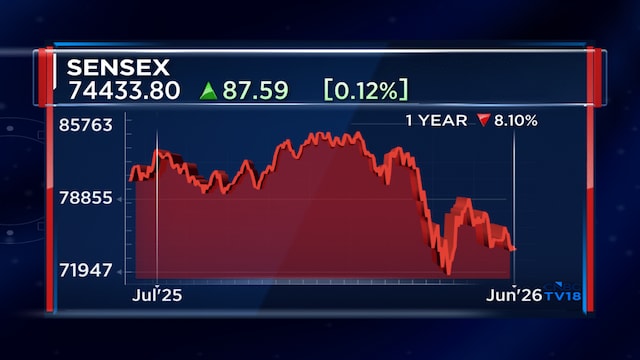
Q: The weather is hot when it comes to long-term FDI and strategic money coming into India, but it's very cold when it comes to capital markets. We're seeing outflows from Indian markets and losing out to other Asian peers. What's your climate check on that, and is there any sign of it changing?
A: That's why the building of infrastructure in India is so important.
You're right. On this show, I have advocated to many of your investors that if you want to put money to work, put it to work in the most efficient place. The United States is where I tend to favour investments, not emerging markets.
But if you do want to diversify into emerging markets, India has all the right attributes.
The loss to other investors partly comes from the artificial intelligence (AI) trade that we're in. I think Jensen Huang just turned the page on the AI trade when he talked about local computing, where smaller language models and the ability to do more computing locally take a lot of the pressure off having these hyperscaler facilities.
That's a very important shift in how to understand the AI revolution. To me, it means a wider spread of technology and greater ability for companies in India to make use of AI technologies without having to build massive hyperscale computing facilities.
Q: Your take on the currency moves globally? The Indian rupee has weakened a little, while the Chinese yuan has shown some strength. Could this give India's exports an advantage over China? Do you see India getting a larger share globally?
A: That's part of the weather report. I am asking you not to pay so much attention to currency fluctuations. They will affect portfolio investments for sure. If you're a bond investor doing swaps and derivatives trades, then absolutely focus on what the currency is doing.
But if you're interested in making longer-term strategic investments that will mature over a three-, five- or even 10-year horizon, then you want to look at the fundamentals.
Also Read | Foreign investors still backing quality Indian IPOs: Citi
When you compare the strengths that China offers and the uncertainty that China presents with the democracy and the forces gathering in favour of India, I think the balance of investment positions is going to slowly shift toward India.
People continue to discover how difficult it is to conduct adequate due diligence in China and obtain the information needed to make clear investment decisions.
Q: It didn't sound like advocacy for India when you said you would advise investors to invest in the US and not in emerging markets.
A: Short-term money, but as I said, if you choose to diversify into emerging markets, India is certainly at the top of the list.
Q: Bitcoin is moving higher while many assets are rallying. In India, there is still a regulatory gap and uncertainty around crypto. As a signal of risk sentiment, what does Bitcoin represent today?
A: Bitcoin is well off its historic highs, and nowhere near the 90,000-plus levels it reached a few months ago.
I think, rightly so, the Bitcoin bubble has moved on. However, the technology behind Bitcoin is being implemented by almost every bank I know of to make cross-border transfers more efficient and cost-effective.
The technology is clearly being adopted, and that's where Ether really comes into its own.
Watch the full conversation here

But the infrastructure isn't fully there yet, and acceptance has not spread widely enough outside established institutions such as global banks that are using crypto technology for transfers.
So, I would say Bitcoin is still a case yet to be decided. If you want to be speculative about it, buy some Ether. But I would invest in some shares in India before I buy Ether.
Catch all the latest updates from the stock market here