 4 weeks ago
Matt Orton, Chief Market Strategist at Raymond James Investment, remains constructive on Indian equities, saying the country is well placed to benefit as global investors diversify beyond US technology and semiconductor stocks.
He believes India's low correlation with US markets, improving foreign inflows and supportive fundamentals make it an attractive market, provided crude oil prices remain under control.
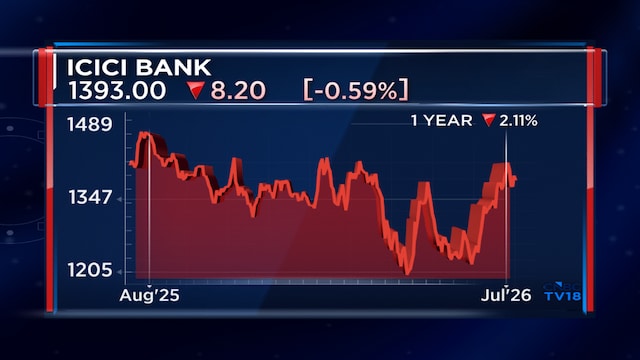
Along with his positive view on India, Orton also highlighted his preferred stock picks. He continues to favour ICICI Bank among financials, sees DLF as an attractive real asset play, and believes NTPC
offers a compelling buying opportunity after its recent correction, backed by strong fundamentals, earnings momentum and attractive valuations.
 This is an edited transcript of the interview.Q: So much has happened. We still don't know. It's Schrodinger's Strait, as we say. It's open and shut at the same time. Is the uncertainty better priced in this time, or could the impact escalate further because, while there is diminishing marginal utility, increased uncertainty means markets may not be any better prepared than before?
A: You are right. I think that latter point is true. We're not better prepared, but we have a better understanding of the supply and demand dynamics that are playing out.
So, while it's not surprising to see energy prices react to an escalation in the conflict, we know that, at least on the US side heading into the midterm elections, the desire to continue this conflict is wearing thin across both parties. I think there is political pressure to bring things to a close.
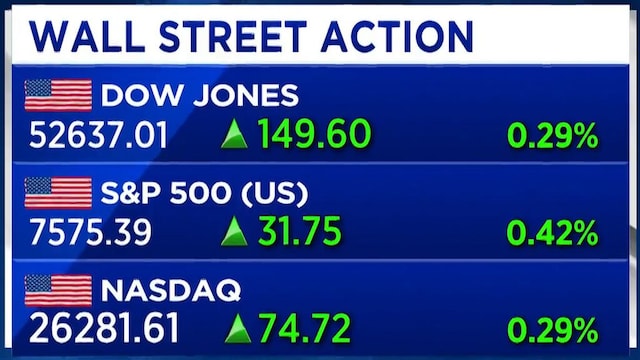
On the demand side, we have already seen expectations being revised lower, especially for 2027 and 2028. Chinese demand has been cut significantly from pre-conflict levels, and there are growing concerns about demand destruction driven by faster electrification, alternative energy sources and better energy efficiency.
I think all of that is playing out, and it is highly unlikely that oil returns to the levels seen before. Overall, that is constructive for markets as we head into the earnings season.
Q: The continued sell-off in the Kospi, which is heavily dominated by memory companies, is raising questions. Is this telling you something about the memory supercycle? Could this be the first signal that the cycle is beginning to weaken?
A: I think what is driving this is positioning, not fundamentals. I was in Europe last week, and this was a common question from many clients. What I've continued to emphasise is that positioning across the semiconductor complex became incredibly extended, and what we're seeing now is simply a reset.
Even though the Kospi is down around 25%, and US memory names like Micron, SanDisk and others are also down more than 25% from their highs, these remain crowded positions. We still haven't even reached the 100-day or 200-day moving averages.
So, I think there is still more positioning unwind that can take place. But this is not an indictment of the fundamentals.
I am hoping Taiwan Semiconductor's earnings later this week will reaffirm the strength of the fundamentals. That could help these stocks find a bottom, consolidate sideways and regain upward momentum as we move towards the end of the summer.
Q: You have remained positive on India. For the past 18 to 24 months, Indian markets underperformed, but now flows are turning around. Foreign institutional investors (FIIs) have become buyers again. Do you believe the pieces are coming together for India to outperform, provided crude oil prices remain under control?
A: I think that last point is critical—that crude oil prices don't run away. This is exactly what we've been discussing over the past few weeks. As investors look to diversify away from being heavily overweight semiconductors and growth stocks, they need markets that help reduce portfolio correlation, especially when stocks and bonds are moving together.
That means looking at different geographies and sectors, and I think Mahindra and Mahindra.
Watch the full conversation here

The correlation between MSCI India and MSCI US has been around 0.1 or even lower over the past year. The drivers of Indian companies are very different from those in the US and the broader emerging market universe.
India fits very well as a value play where the fundamentals remain positive, assuming oil prices don't surge. Valuations have also become reasonable enough for investors to be comfortable.
Along with India, I also like the United Kingdom, with its old-economy businesses, and Japan. Those are the three pillars I currently look at for international diversification.
Q: You have liked names such as InterGlobe Aviation, banking stocks and InterGlobe Aviation in the past. Have you added anything new recently?
A: We have spoken about financials before, with ICICI Bank being the name I continue to expect to outperform, and it has done well during the rebound.
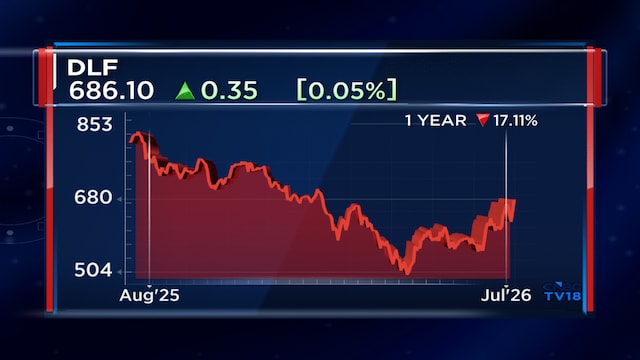
DLF is another stock I've been watching as a real asset play in India. It continues to look attractive and has been an outperformer.
I also think NTPC looks very interesting after the recent dip. The fundamentals remain strong, its diversification across the power sector is attractive, I expect earnings momentum to continue, and the stock is inexpensive. That's the name I like the most right now.
Catch all the latest updates from the stock market here