1 month ago
As the US and Iran inch closer to a possible peace deal, Tehran has fortified key sites housing its stockpile of highly enriched uranium by collapsing tunnels and planting explosive mines around entrances, according to a CNN report, citing five sources familiar with US intelligence.
The measures came weeks after US President Donald Trump publicly floated the possibility of deploying the American military to seize Iran's enriched uranium reserves. Intelligence sources said the new fortifications have made access to the estimated half-ton of highly enriched uranium far more difficult, dangerous and time-consuming.
The development added a new layer of complexity to the Trump administration's proposed deal with Tehran, under which Iran would hand over its enriched uranium to the US for destruction and removal from the country. According to a senior US official, both sides are edging closer to a deal, though conflicting accounts from Washington and Tehran have left the final terms unclear.
Experts warned that retrieving the uranium would now require extensive excavation and de-mining operations.
According to CNN, two sources familiar with US intelligence believe Trump's public remarks about potentially targeting Iran's uranium stockpile may have prompted Tehran to further fortify and conceal the material. Experts say that even if a deal is reached, retrieving the uranium could prove technically challenging and time-consuming.
A senior US administration official said on Friday that Washington and Tehran were edging closer to an agreement under which Iran would surrender its enriched uranium stockpile. The proposal envisages the material being destroyed on-site before being removed from the country.
Scott Roecker, a former head of nuclear material removal at the US Nuclear Security Administration, said the move could complicate efforts to verify Iran's compliance and potentially allow Tehran to claim that parts of its stockpile are inaccessible.
He said that if negotiators require Iran to move its entire stockpile of enriched uranium to a central location for verification and eventual disposal or dilution, Tehran would bear the responsibility of retrieving and declaring the full inventory.
However, Roecker warned that Iran could later argue that portions of its highly-enriched uranium (HEU) were inaccessible or impossible to recover.
Such a scenario, he said, would make it difficult to independently verify the completeness of Iran's declarations and could leave lingering concerns that Tehran might retain access to some of the material in the future.
Most of the uranium is believed to be stored inside collapsed tunnels at the Isfahan nuclear complex in central Iran, with additional material held at other sites. US military planners had reportedly considered an operation to seize the material in May, but deemed it too risky.
The CNN report said Iran has continued strengthening the sites since then, potentially in response to Trump's public comments about targeting the uranium stockpile. While a peace deal could be signed in the coming days, further technical negotiations are expected on the future of Iran's nuclear programme and the removal of the enriched uranium.
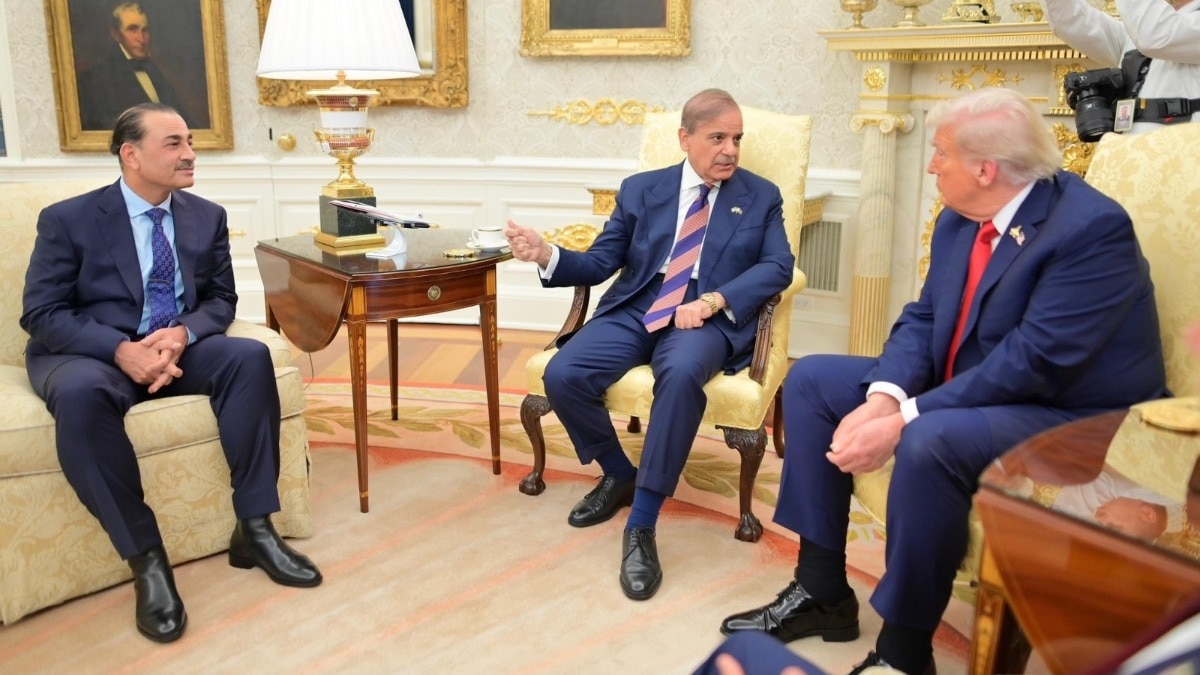
Earlier on Saturday, Pakistani Prime Minister Shehbaz Sharif said the US and Iran had agreed on a framework for a peace deal and that preparations were underway for an electronic signing within 24 hours, followed by technical-level talks next week.
Tehran, however, rejected Sharif's claims, saying a final agreement had not yet been reached and could be concluded in the coming days.
- Ends
Published By:
Prateek Chakraborty
Published On:
Jun 13, 2026 21:34 IST