1 month ago
Satellite images analysed by CNN show Iran has reopened most entrances to missile sites hit by the US and Israel. The repairs suggest Tehran retains substantial missile capacity despite months of strikes.
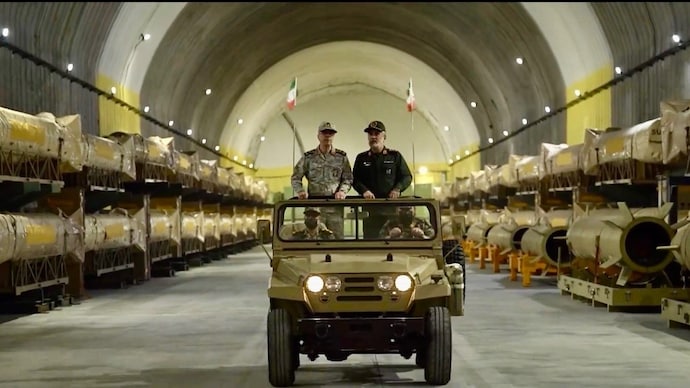
The bulk of Iran's missile stockpile was stored deep beneath layers of rock and likely survived the attacks. (Image: X)

UPDATED: Jun 1, 2026 00:45 IST
Iran has reopened most of the entrances to its underground missile facilities that were targeted during conflict with Israel and the United States, according to a CNN analysis of satellite imagery. The findings claims that Tehran still retains a significant missile capability despite weeks of bombing aimed at crippling its arsenal.
The US and Iran have yet to ink an agreement to end the war that has dragged on into its fourth month. US President Donald Trump, on Saturday, said that he is in no hurry to make a deal.
According to CNN, Iran has managed to clear and reopen 50 of the 69 tunnel entrances struck by US and Israeli forces across 18 underground missile sites. Satellite images reviewed by the network showed extensive excavation work at multiple locations, with bulldozers, loaders and dump trucks used to remove debris and restore access to buried facilities.
The analysts flagged that Iran's clean-up effort highlights a major challenge for military planners: blocking access to missile sites is far easier than destroying the weapons hidden beneath layers of rock and earth.
UNDERGROUND ARSENALS REMAIN LARGELY INTACT
During the conflict, the US and Israel targeted roads, tunnel entrances and missile launch infrastructure in an effort to limit Iran's ability to launch long-range missiles. Many entrances were buried under debris and access roads were cratered by repeated strikes.
However, the bulk of Iran's missile stockpile was stored deep beneath layers of rock and likely survived the attacks.
Sam Lair, a research associate at the James Martin Center for Nonproliferation Studies, said that Iran could continue launching missiles as long as it retains launch crews and launchers.
"There's nothing to prevent the launchers from being armed with the ample stockpile of missiles that the Iranians still have," Lair told CNN.
Experts estimate Iran may still possess around 1,000 missiles stored in underground facilities. Many of these sites were built over the past two decades specifically to withstand air strikes.
US President Donald Trump repeatedly identified the destruction of Iran's missile programme as a major objective during the conflict. In a March post on Truth Social, Trump listed the degradation of Iran's missile capabilities and launch systems among the main goals of the war.
SATELLITE IMAGES SHOW RAPID REPAIR EFFORT
Satellite photographs reviewed by CNN reveal a large-scale effort to restore damaged facilities since the ceasefire.
At several missile bases, construction crews were seen clearing rubble, filling bomb craters and rebuilding damaged roads. Some roads that had been heavily damaged by air strikes have already been repaved. One site near Isfahan showed evidence of repeated bombing during the conflict. Images later captured dump trucks and earthmoving equipment repairing the damage and reopening access points.
Another facility near Khomeyn showed at least 10 construction vehicles working simultaneously to restore one of the blocked tunnel entrances. Analysts say the speed of the repairs demonstrates how relatively simple construction equipment can reverse some of the effects of highly sophisticated military strikes.
The US and Israel also targeted Iran's missile production network during the conflict, including facilities linked to electronic components, rocket propellants and missile manufacturing.
After a ceasefire was reached on April 8, US Defense Secretary Pete Hegseth said Iran would have difficulty replacing destroyed launchers and rebuilding its defence industry. However, intelligence assessments indicate Iran has already begun restoring parts of its military infrastructure.
- Ends
Published By:
Satyam Singh
Published On:
Jun 1, 2026 00:45 IST