3 weeks ago
Italy is preparing to ban face-covering veils such as the burqa and niqab in schools and introduce a cap on the number of foreign students allowed in each class, Prime Minister Giorgia Meloni announced on Sunday.
The measures, which Meloni said would be brought before the Cabinet, link immigration, language skills and integration in schools. She also said parents of foreign students facing serious difficulties integrating into the Italian education system would be required to learn Italian.
Meloni announced the plans at an annual gathering of the youth wing of her Brothers of Italy party, where she used the issue to strengthen her government's position on migration and cultural integration.
WHAT EXACTLY IS MELONI PROPOSING?
"A measure will soon be presented to a Cabinet meeting to legally establish a maximum number of foreign students per class. It also requires parents of foreign students facing serious difficulties integrating into the school system to learn Italian and bans burqas and niqabs in schools," Meloni said, as quoted by Reuters.
She did not specify how many foreign students would be permitted in a single classroom. Arguing that large numbers of pupils who struggle to speak Italian could make integration more difficult, Meloni said the proposed limit was intended to address such situations.
"If there is only one child in a class who doesn't understand Italian, that child will likely be able to learn the language and integrate quickly with the help of classmates and teachers. However, if the number of children who don't understand the language becomes large - or even the majority - that is no longer integration; it is neglect," she added.
Students who are not Italian citizens account for 11.6 per cent of pupils enrolled in Italian schools, according to Fondazione ISMU, a research institution cited by Reuters.
The proposed measure would also specifically target full-face coverings in schools.
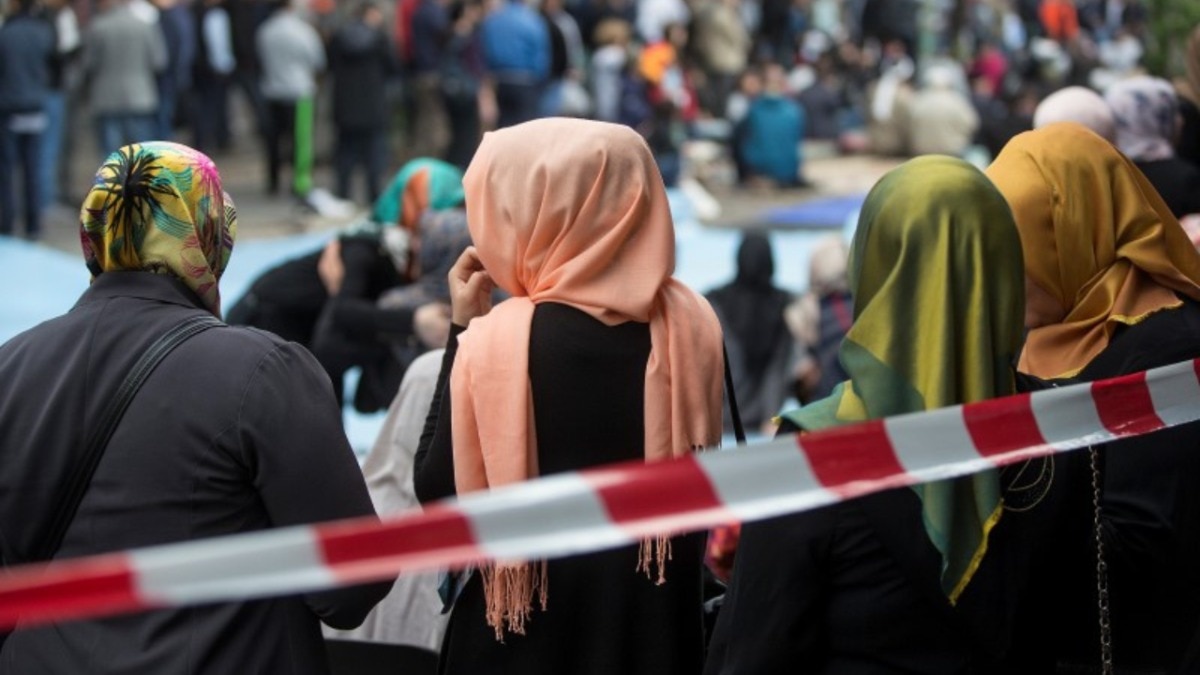
"You must go to school with your face uncovered, and in Italy no one, in the name of a real or supposed tradition, can decide that a young woman must hide herself," Meloni said. The proposal concerns the burqa and niqab, which cover the face. It should not be confused with the hijab, which covers the hair but leaves the face visible.
ITALY'S HARDER MIGRATION LINE
The measures bring education into the centre of Meloni's broader migration strategy, tightening rules around integration and language.
Italy's position in the central Mediterranean has made it a one of the major entry point for migrants crossing from North Africa. As a result, migration has been a politically sensitive issue, with successive governments grappling with irregular arrivals, asylum claims, border controls and the challenge of integrating newcomers.
Since taking office in 2022, Meloni's government has pursued tighter migration controls, including measures targeting people smugglers and changes to Italy's asylum and migrant reception system.
One of its most closely watched initiatives has been the agreement with Albania to establish Italy-run migrant facilities outside the EU. The original plan envisaged transferring some migrants rescued or intercepted at sea to Albania while their asylum claims were processed. Legal challenges disrupted parts of the scheme, and Italy subsequently moved towards using the facilities for migrants awaiting repatriation.
EUROPE GRAPPLES WITH MIGRATION CHALLENGE
The proposal also comes amid wider debate over religious clothing and the extent to which governments can restrict full-face coverings in public institutions.
Several European countries already have restrictions on full-face coverings. France has a nationwide prohibition on concealing the face in public, while Belgium, Denmark and Austria also have broad restrictions on face-covering clothing. Switzerland introduced a nationwide ban on face coverings in 2025.
The Netherlands has a narrower restriction. Since 2019, face coverings such as burqas and niqabs have been prohibited in and around educational institutions, healthcare facilities and government buildings, as well as on public transport. The Dutch government says the restriction applies to anyone and is not limited to religious clothing.
These measures generally target full-face coverings, rather than ordinary headscarves. That distinction is important because a hijab leaves the face uncovered, while a niqab covers the face apart from the eyes and a burqa covers the face and body.
- Ends
With inputs from agencies
Published By:
Satyam Singh
Published On:
Sep 20, 2026 19:26 IST