1 month ago
The North Korean dictator has one theory about survival in the modern world. Look at the history of American military intervention, and it is very difficult to prove him wrong.

UPDATED: Apr 2, 2026 21:34 IST
Kim Jong Un is a tyrant. He starves his own people, runs the world's most isolated dictatorship, and recently launched a missile from a naval destroyer just to make a point. None of that is up for debate. But here is the uncomfortable question nobody wants to answer out loud. What if he is right?
Kim's argument is simple. If you do not have a nuclear weapon, you are an open target for a US invasion. It sounds paranoid. It sounds like the kind of thing a dictator says to justify his own obsessions. Except when you look at the evidence, it is very hard to dismiss.
Iraq had no nuclear weapons. The United States said it did, invaded, and the CIA confirmed afterwards that no programme existed and no stockpiles were found. Saddam Hussein admitted as much after his capture. Iraq also happened to sit on ten per cent of the world's oil reserves. After the invasion, US aligned governance arrived and Western firms secured oil contracts. Over four thousand American troops died. Trillions were spent. But the job got done.
Libya is an even starker lesson. Muammar Gaddafi voluntarily dismantled his nuclear programme in 2003, shipping centrifuges directly to the United States after watching what happened to Iraq. The IAEA confirmed the programme was years away from producing a weapon. Gaddafi wanted sanctions relief and normalisation. What he got was a NATO bombing campaign in 2011. As rebels closed in, he reportedly cited his own disarmament as a reason for the West to stop. It did not stop. He was killed. His son said he regretted giving the weapons up.
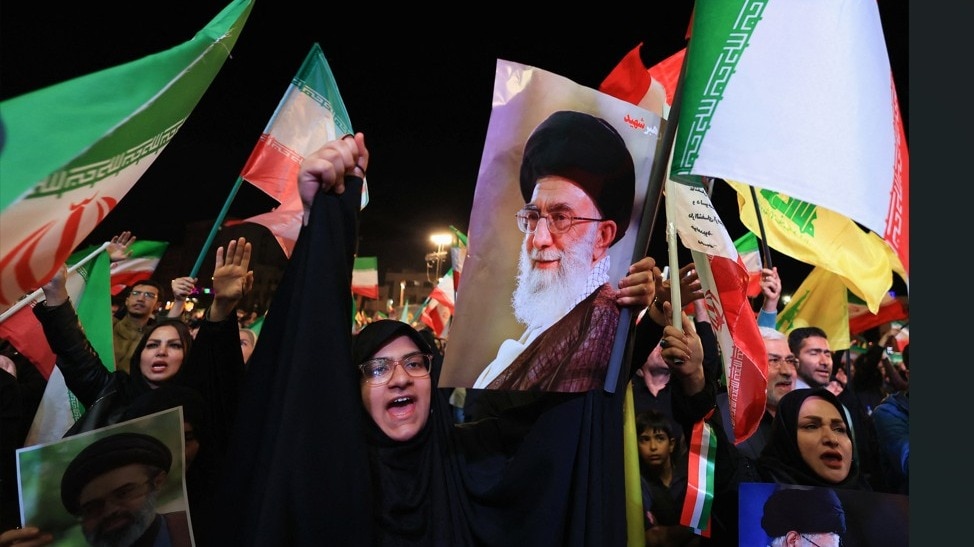
The pattern holds with Iran. The US-Israel war that began in 2026 targeted Iran precisely because of its nuclear programme. Iran never completed a weapon. It got struck anyway. A country that possessed operational nuclear warheads pointed at American cities would not have received the same treatment. That is not an opinion. It is simply how deterrence works.
North Korea understands this better than anyone. Kim watched the strikes on Iran and addressed his country's Supreme People's Assembly shortly after. The situation, he said, clearly proved that North Korea was right to reject American pressure and what he called "sweet talk" to give up its arsenal. He declared the country's nuclear status irreversible. Given everything that has happened, it is hard to call that an unreasonable conclusion.
India reached the same conclusion decades earlier and acted on it quietly. After China humiliated India in the 1962 border war and then tested its own nuclear bomb in 1964, India began its own programme in secret. Scientists worked at night to avoid American satellites. The 1974 test was publicly described as a peaceful nuclear explosion. The military intent was buried under civilian language. By 1998, India had tested again and faced US sanctions that eventually gave way to a civil nuclear deal in 2005. Today India holds roughly 135 warheads and the United States, the same country that deployed its Seventh Fleet against India in 1971, now thinks carefully before any interference. Nuclear deterrence works. India proved it.
The question then is what America's own behaviour has produced at a global level. The United States committed 1.7 trillion dollars over thirty years to replace its entire nuclear arsenal. The last arms control treaty with Russia expired in February 2026 with no replacement. Germany began discussions about developing its own weapons. South Korea's polls showed more than seventy per cent of the population wanted an indigenous arsenal. Saudi Arabia said openly it would seek nuclear weapons if Iran acquired them.
America did not intend to start a new arms race. But it demonstrated, repeatedly and very clearly, that nuclear weapons are the only reliable protection against intervention. The world took notes.
Kim Jong Un is brutal, dangerous, and wrong about almost everything. But on this one point, the history does not contradict him.
- Ends
Published By:
indiatodayglobal
Published On:
Apr 2, 2026 21:34 IST
Tune In