1 month ago
Malaysia has begun enforcing rules that bar children under 16 from holding social media accounts. The move adds to a widening global push for stronger child safety safeguards online.
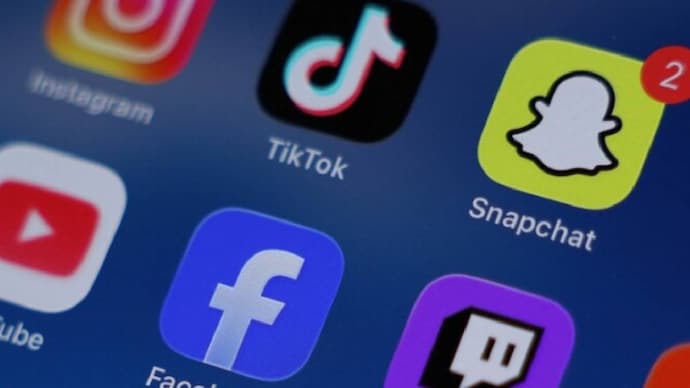
Companies that fail to comply with Malaysia's new law could face penalties of up to $2.5 million. (File photo)
Malaysia has become the latest country to restrict social media access for underage children. Beginning June 1, 2026, the Southeast Asian nation started enforcing regulations that prohibit children under the age of 16 from holding social media accounts.
The move places Malaysia among a growing number of countries that are implementing, testing, or considering age-based restrictions on children's access to social media platforms. The decision reflects increasing global concern that unrestricted social media use can negatively affect children's mental health, safety, cognitive development, and overall well-being.
Under the new rules, social media platforms with at least eight million users in Malaysia—including Facebook, Instagram, YouTube, and TikTok—must implement age-verification systems and prevent users under 16 from creating accounts. Existing users found to be below the age threshold will be given time to download their content before restrictions are imposed.
Companies that fail to comply could face penalties of up to USD 2.5 million.
The Malaysian government has clarified that the objective is not to block children from technology, but to protect them from cyberbullying, harmful content, online predators, addictive platform designs, and other digital risks associated with social media use.
CRACKDOWN ON SOCIAL MEDIA: A GLOBAL MOVEMENT
Governments worldwide are increasingly questioning whether children should have unrestricted access to social media platforms that are designed primarily to maximise engagement and screen time.
Australia
Australia has emerged as one of the strongest advocates of stricter social media regulation. It was among the first countries to introduce a nationwide ban preventing children under 16 from holding accounts on major social media platforms. The law places responsibility on technology companies rather than users. Companies that fail to comply can face fines of up to AUD 49.5 million per violation.
Brazil
Brazil has not imposed a blanket ban on social media use by children under 16. However, it requires users below that age to link their social media accounts to a parent or legal guardian's account.
Indonesia
Indonesia has begun implementing restrictions on social media access for children under 16, inspired largely by Australia's policy. Children below 16 are barred from holding accounts on what the government classifies as high-risk platforms. The regulation took effect on March 28, 2026.
Europe and Asia
The United Kingdom has launched public consultations on the possibility of banning social media access for under-16s. France has passed legislation restricting social media access for children under 15, while Spain is planning a nationwide ban for children under 16 and intends to enforce robust age-verification measures.
South Korea has introduced and proposed multiple restrictions aimed at reducing social media and smartphone addiction among minors. Thailand and Denmark are also moving towards implementing similar regulations.
The common thread across these countries is clear: governments increasingly believe that the current digital environment is not adequately designed to protect children.
WHAT RESEARCH SAYS
The rationale for restrictions is no longer based solely on parental concerns. A growing body of scientific research points to significant risks associated with excessive social media exposure during childhood and adolescence.
In 2023, the US Surgeon General's Office warned that social media poses a 'profound risk of harm' to young people's mental and physical health.
Studies have linked excessive social media use to increased anxiety, depression, low self-esteem, body image issues, obesity, insomnia, cyberbullying, poor academic performance, social isolation, and a higher risk of self-harm.
A study published in JAMA Psychiatry found that adolescents who spent more than three hours daily on social media faced a significantly higher risk of developing mental health problems.
Researchers from Stanford University and the University of Oxford have also highlighted the addictive design features employed by many platforms. Infinite scrolling, algorithm-driven recommendations, push notifications, and 'likes' are intentionally designed to keep users engaged for longer periods.
WHY INDIA NEEDS SIMILAR MEASURES
India has more than 900 million internet users and one of the world's largest populations of children and teenagers. Yet young users continue to enjoy relatively unrestricted access to social media platforms.
The scale of the challenge is enormous.
Millions of Indian children now receive smartphones before adolescence and spend hours daily on platforms such as Instagram, YouTube, Snapchat, and Facebook. For many parents, monitoring digital activity has become increasingly difficult.
Mental health professionals report rising cases of anxiety, attention disorders, sleep deprivation, social comparison stress, and digital addiction among children and teenagers. Schools have also observed declining attention spans and growing dependence on smartphones.
Cyberbullying remains a major concern. Unlike adults, children often lack the emotional maturity to cope with online harassment, public humiliation, or viral ridicule. The psychological consequences can be severe and long-lasting.
Teachers across India increasingly report students struggling to maintain focus for extended periods. But perhaps the strongest argument for stricter regulation is that social media companies are not neutral platforms. Their business models depend on maximising engagement and screen time. The longer a child remains online, the greater the advertising revenue generated.
This does not necessarily mean India should immediately impose a blanket ban on users under 16. However, policymakers should seriously consider measures such as mandatory age verification, parental consent requirements, default privacy protections, time-use restrictions for minors, limits on algorithmic recommendations, stronger content moderation, restrictions on direct messaging from strangers, and enhanced digital literacy programmes.
Critics argue that children need digital literacy rather than digital exclusion and warn that strict regulations could create privacy concerns or push teenagers towards unregulated online spaces. These concerns are valid.
However, supporters contend that child safety must take precedence over corporate convenience and that regulations can be designed to balance privacy, innovation, and protection.
Malaysia's decision marks another milestone in a growing international effort to redefine the relationship between children and social media. Whether other countries follow its lead remains to be seen, but one thing is increasingly clear: unrestricted social media access for children is facing growing scrutiny around the world.
- Ends
Published On:
Jun 2, 2026 12:29 IST