1 month ago
Trump agrees to suspend bombing of Iran for two weeks
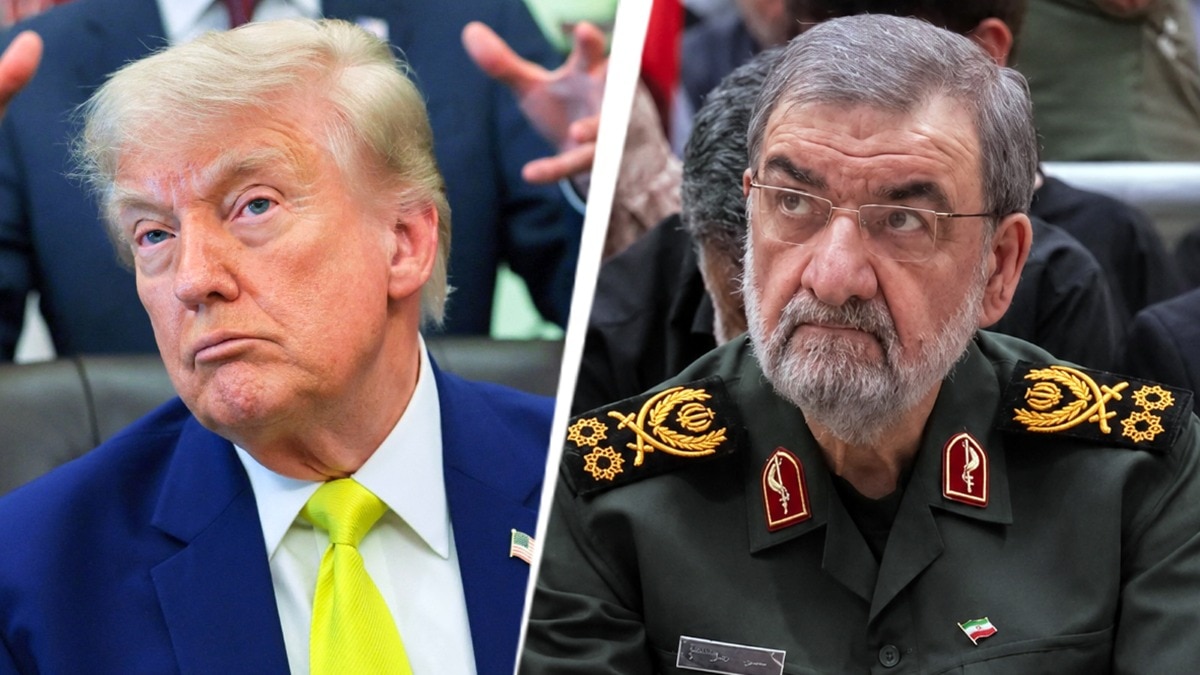
Donald Trump has announced that he will suspend his threatened bombing of Iran’s energy infrastructure and bridges for two weeks.
In a post on Truth Social he says that it is conditional on Iran reopening the strait of Hormuz calling it a double sided ceasefire. He goes on to say that he has received a workable ceasefire proposal from Iran.
The reason for doing so is that we have already met and exceeded all Military objectives, and are very far along with a definitive Agreement concerning Longterm PEACE with Iran, and PEACE in the Middle East.”
We’ll bring you more as it comes in.
Key events Show key events only Please turn on JavaScript to use this feature
An Israeli military official has said the country is still attacking Iran, even after White House officials briefed that Israel had agreed to the ceasefire.
Despite the provisional ceasefire, attacks have continued across the region.
Minutes after Trump said he had agreed to suspend a devastating attack on Iran by two weeks and was ready for a ceasefire, Israel’s military warned that Iran was firing missiles toward it.
Blasts were heard from Jerusalem and Jericho on the occupied West Bank, reporters in the region said.
In person talks have not been finalised, says White House
The White House is considering in-person talks with Iran but they have not been finalised, press secretary Karoline Leavitt has said.
“There are discussions about in-person talks, but nothing is final until announced by the President or the White House,” Leavitt said after Iran said it agreed to talks with the United States to begin Friday in Pakistan.
It remains far from clear what shape a future deal between the US and Iran could take. Iranian state media is saying that the ceasefire deal is built upon a ten point plan that they submitted to the US, which includes maximalist demands that the Trump administration has rejected in the past.
Danny Citrinowicz, a nonresident fellow at the Atlantic Council, has offered a sobering assessment of the outcome of America’s five week war, saying the conflict was launched with “sweeping promises: regime change in Iran, the dismantling of its missile and nuclear programs, and preventing it from threatening the Strait of Hormuz.”
“And where are we now?” he asks.
The regime is still firmly in power.
Its missile capabilities are damaged still intact
It still holds roughly 440 kg of uranium enriched to 60%.
And in return?
A ‘controlled’ reopening of the Strait of Hormuz, something that wasn’t even truly closed to begin with.
Let’s be honest: this is not a strategic victory.”
Authorities in Abu Dhabi are dealing with a fire at the Habshan gas processing facility, the Abu Dhabi media office said early on Wednesday, as Gulf states activated air defences following threats of missile and drone attacks across the region.
Attacks across the region have continued despite the declaration of a provision ceasefire between the US and Iran.

Lauren Gambino
US political leaders and many Americans breathed a sigh of relief on Tuesday evening, after Donald Trump announced a provisional ceasefire deal following threats to destroy Iran’s “whole civilization”.
“I’m glad Trump backed off and is desperately searching for any sort of exit ramp from his ridiculous bluster,” Chuck Schumer, the Senate Democratic leader, said on Tuesday night.
Several Republicans cheered the president’s decision, casting it as shrewd and tactical.
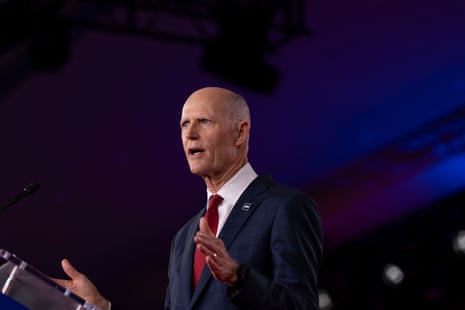
“Excellent news,” Senator Rick Scott of Florida said. “This is a strong first step toward holding Iran accountable and what happens when you have a leader who puts peace through strength over chaos and weak appeasement policies.”
Senator Lindsey Graham, one of the chamber’s loudest and most aggressive Iran hawks, said on Tuesday evening he shared the hope that “we can end the reign of terror of the Iranian regime through diplomacy”.
But he added: “We must remember that the strait of Hormuz was attacked by Iran after the start of the war, destroying freedom of navigation. Going forward, it is imperative Iran is not rewarded for this hostile act against the world.”
American journalist Shelly Kittleson, who was recently kidnapped in Baghdad, has been released, US secretary of state Marco Rubio has announced.
The U.S. Department of State extends its appreciation to the Federal Bureau of Investigation, the Department of War, U.S. personnel across multiple agencies, and the Iraqi Supreme Judicial Council and our Iraqi partners, for their assistance in securing her release.”
In a post on social media, Rubio said her release reflects the “Trump Administration’s steadfast commitment to the safety and security of American citizens, no matter where they are in the world.”
Kittleson, a freelance journalist, has for years built a respected journalism career across the Middle East, particularly in Iraq and Syria.
Rubio said on Tuesday that the US was working to support her safe departure from Iraq.
Mark Saunokonoko
Oil prices fell, bonds rallied and stocks surged as an apparent two-week ceasefire in the Middle East was seen as potentially paving the way for a lasting peace and resumption of Gulf oil and gas exports.
As his deadline came within two hours of passing, Donald Trump posted on Truth Social that he agreed to suspend bombing and attacks on Iran for two weeks.
On that news, US crude futures fell around 9% to $103 a barrel, S+P 500 futures leapt 1.6% and the US dollar fell broadly.
Futures pointed to broad gains for Asia’s stock markets, and 10-year US Treasury futures jumped about 15 ticks.
Details about the ceasefire are still very sketchy. However, Iran has said it would guarantee safe passage for maritime traffic through the vital strait of Hormuz for two weeks, announcing the pause would be used for talks with the US on ending the war, starting Friday in Islamabad.
Markets in Asia are about to start opening. We’ll stay on top of market movements through the day.
The US department of war has announced that a press conference will be held with secretary Pete Hegseth and the chairman of the joint chiefs of staff, Gen Dan Caine, at 8am EST on Wednesday.
Summary
It has been a dizzying two hours of diplomatic moves across the Middle East. Here is how things stand:
Donald Trump has pulled back on his threats to launch devastating strikes on Iran, less than two hours before a deadline he set for Tehran to capitulate or else a “whole civilization will die.” Trump said he was holding off on his threatened attacks on Iranian bridges, power plants and other civilian targets, subject to Tehran agreeing to a two-week ceasefire and reopening of the Strait of Hormuz, the waterway through which a fifth of the world’s oil is shipped during peacetime.
Iran’s Supreme Security Council said it had conditionally accepted a two-week ceasefire if attacks agains Iran are halted.
Iran’s foreign minister said passage through the strait of Hormuz will be allowed for the next 2 weeks under Iranian military management.
Iranian state media said negotiations with the US would be held in Islamabad to finalise details of an agreement, with the aim of “confirming Iran’s battlefield achievements”. Talks will begin on Friday 10 April and may be extended, state media reported. State media also reported that talks with the US do not amount to the end of the war.
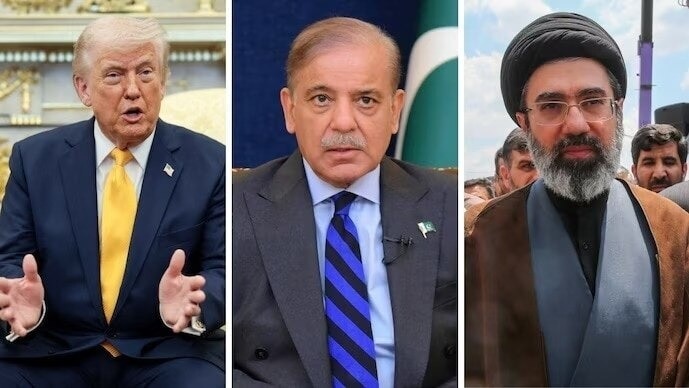
Pakistani prime minister Shebaz Sharif announced that Iran, the US and their allies agreed to an immediate ceasefire everywhere, including Lebanon. Sharif has been a key figure in attempting to reach a diplomatic solution between the two warring parties. In his statement, Sharif invited delegations to Islamabad on “Friday, 10th April 2026, to further negotiate for a conclusive agreement to settle all disputes.”
Trump said Iran had proposed a “workable” 10-point peace plan. According to Iranian state media, the ten-point proposal includes a number of conditions that the US has in the past rejected. Among them are controlled transit through strait of Hormuz coordinated with Iranian armed forces and withdrawal of all US forces from regional bases. The plan would also require the lifting of all primary and secondary sanctions, payment of full compensation to Iran and release of all frozen Iranian assets.
Iranian state media also said the 10-point plan for securing an end to the war would require Washington to accept its uranium enrichment program, a previous red line for the Trump administration.
Even as the ceasefire was proposed, missile alerts continued in the United Arab Emirates, Qatar and Israel.
Attacks are continuing across the Middle East. Missile alerts have sounded in Saudi Arabia, Bahrain and Kuwait, despite the US suspending its escalating attacks on Iran and agreeing to enter into talks.
Israel warned at least two rounds of missiles had been fired by Iran since Trump’s statement. Blasts were heard in Jerusalem and Jericho in the occupied West Bank, AFP correspondents said.
Pakistan says all parties have agreed to an immediate ceasefire
Pakistani prime minister Shebaz Sharif has announced that Iran, the US and their allies have agreed to an immediate ceasefire everywhere, including Lebanon.
Sharif has been a key figure in attempting to reach a diplomatic solution between the two warring parties. On Tuesday he requested that Donald Trump delay his planned escalation in attacks against Iran.
In his statement, Sharif invited delegations to Islamabad on “Friday, 10th April 2026, to further negotiate for a conclusive agreement to settle all disputes.”
It’s now more than an hour since Donald Trump announced he was suspending his escalated bombing campaign, but attacks continue to be reported across the region.
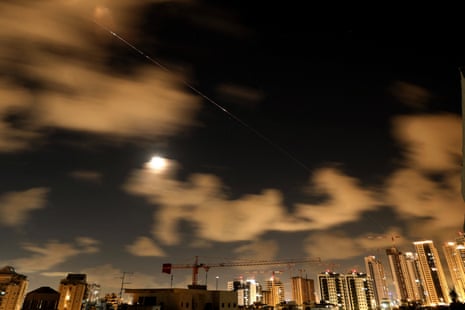
Israel has said it has detected an incoming Iranian missile barrage – the second since Trump’s announcement.
Meanwhile missile alerts are sounding in the United Arab Emirates.
Proposal to the US includes condition that Iran will continue uranium enrichment
Iran’s supreme national security council has said that the ten-point proposal sent to the United States included a condition that Iran would continue its enrichment of Uranium.
The security council said that Iran had been victorious and claimed that the US had accepted all of Iran’s ten point plan.
There has been no confirmation of that from the US side and Trump himself merely called the plan “workable.”
However Democratic senator Chris Murphy he leapt on those comments from Iran, telling CNN “who knows if any of that is true, but if this agreement gives Iran the right to control the strait that is cataclysmic for the world.”
It is just stunning that that’s where we have gotten to, that Donald Trump took a military action that has apparently, at least for the time being, given Iran control over a critical waterway that they did not have control over, before the war began.
What an error, what a miscalculation.”
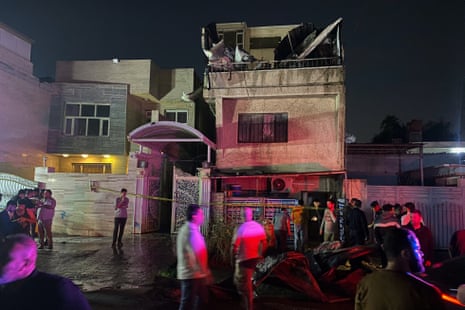
Minutes before Donald Trump announced he was suspending his plan to bomb Iran’s energy infrastructure, two civilians, one of them an eight-year-old child, were killed in Baghdad by a projectile crashing into their home.
“Three other civilians, including a woman, were wounded” in the western Amiriya district of the Iraqi capital, according to a source, speaking to the AFP news agency.
Passage through strait of Hormuz allowed for two weeks 'under Iranian management'
Iran’s foreign minister has said passage through the strait of Hormuz will be allowed for the next 2 weeks under Iranian military management.
Abbas Araqchi also said that Iran would halt its attacks, if attacks against it stop.
Donald Trump has for weeks been demanding that Iran reopen the strait of Hormuz, through which up to a fifth of global oil transits through. The closure has sent energy prices rising, causing chaos for the world economy.
Iranian state media says US talks 'do not mean end of war'
Iranian media is reporting that talks with the US do not amount to the end of the war.
Iran will only accept the war’s conclusion once details are finalised in line with the ten-point peace plan, state media is reporting.
According to state media, the ten-point proposal includes a number of conditions that the US has in the past rejected.
Among them are controlled transit through strait of Hormuz coordinated with Iranian armed forces and withdrawal of all US forces from regional bases.
The plan would also require the lifting of all primary and secondary sanctions, payment of full compensation to Iran and release of all frozen Iranian assets.
Iranian state media says talks will be held with the US on 10 April
Iranian state media has said negotiations with the US will be held in Islamabad to finalise details of an agreement, with the aim of “confirming Iran’s battlefield achievements”.
Talks will begin on Friday 10 April and may be extended, state media reported.
Iran’s supreme security council submitted the 10-point proposal to the United States via Pakistan.
The announcement on state TV was reportedly accompanied by a graphic flashing: “Trump’s humiliating retreat from anti-Iran rhetoric” and “Trump accepts Iran’s terms for ending the war”.