 11 minutes ago
Moscow accuses Estonia of acting 'on verge of unleashing open war with Russia'
Russia has accused Estonia of acting “on the verge of unleashing open war” claiming it was “tacitly providing its airspace for Ukrainian drones” to attack Russia and, erm, made “hasty accusations lacking any evidence” against Moscow.
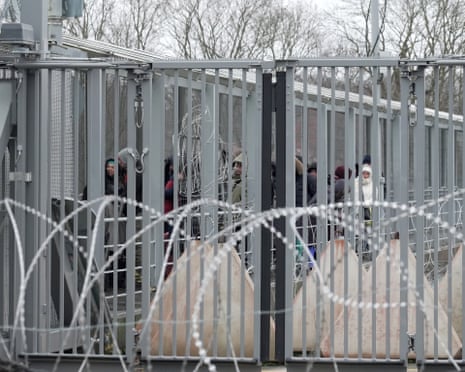
Estonia, just like other Baltic countries, has repeatedly denied any suggestions they allowed for Ukrainian drones to operate from its territory.
In a strongly worded statement containing several unsubstantiated allegations, Russia’s foreign ministry has said Estonia’s protests over a foiled arson attack on a defence plant near Tallinn, alongside its decision to close its border with Russia from 1 December, “reveal the rabid Russophobic nature of the Estonian regime.”
“Tallinn apparently isn’t seriously considering the consequences of such a move. Closing the state border would primarily deal another blow to the Estonian economy and would boomerang on both Tallinn itself and its EU and Nato allies,” Russia said in a statement.
The statement blamed Estonia’s decision as “the latest anti-Russian stunt,” saying it “adds to the numerous hostile actions undertaken by this Baltic state in recent years.”
In a particularly worrying part of the statement, Russia also once again attacked Estonia for what it said were “repressive measures” against Russian-speaking residents – a point repeatedly denied by Estonian authorities.
“The head of the Estonian diplomatic mission was informed that such an unjustified policy of cultivating comprehensive hostility towards our country will continue to have a destabilising effect on the situation in the region and negatively impact both the well-being of Estonian residents and the already dire economic situation of this Baltic country,” it said.
The statement concluded with the Russian side “reserving the right to take comprehensive political and diplomatic measures aimed at protecting Russia’s national interests and the legitimate rights of its citizens.”
Key events 6m ago Nato faces 'significant' threats, but 'doing what's needed' to deter aggression, Rutte says 10m ago Nato ready to defend every inch of its territory, Merz says after Russian security incidents 34m ago Moscow accuses Estonia of acting 'on verge of unleashing open war with Russia' 1h ago Ukrainian operation to sink Russian warship is the latest of Kyiv's daring long-range attacks 2h ago Two survivors pulled out from rubble after Russian attack kills 11 near Kyiv 2h ago Russia summons Estonia's charge d’affaires in Moscow 3h ago Kremlin warns of Baltic escalation after Ukraine strike on cargo ship 3h ago Russia's calls for return to pre-1997 European security order 'unacceptable,' Rutte says 4h ago 'Hundreds' of schools in Denmark, Germany received bomb threats 4h ago Albania denies Ukrainian drones that sank Russian warship were launched from its territory 4h ago 'We have to show Putin that his attempts to weaken our support will fail,' Rutte says 4h ago 'We are all targeted' and 'it won't go away anytime soon,' Nato's Rutte warns 5h ago Work underway to set up fourway peace talks with Russia, US, Europe 'before Christmas', Zelenskyy says 5h ago Ukraine 'keep finding ways to get back on our feet after every Russian attack,' Zelenskyy says 6h ago Morning opening: Ukraine claims responsibility for sinking Russian warship in Libya
Rutte and Merz also were asked about Estonia and the risk of escalation with Russia.
He didn’t really answer the question directly, but instead repeated his earlier comment that the idea of rolling Nato back to its pre-1997 borders was not going to happen.
“What could not happen is that we are forced to roll back Nato to the 1997 borders, or that we should have others to decide on our posture, others thanthe allies themselves.”
On Ukraine talks, he says the real negotiations with Moscow “still have to start,” but he praised the US attempts to make it happen.
Merz offered a brief comment on this, too, saying the reported Russian plans are “not new,” but “this doesn’t make it less shocking,” as he stressed “it shows how much Russia is ready to escalate.”
On broader eastern flank security, Merz said “we need to strengthen Nato’s defence at its borders,” adding he would raise the issue at this week’s European Council in Brussels.
Nato faces 'significant' threats, but 'doing what's needed' to deter aggression, Rutte says
In his statement, Nato’s Rutte praised Germany at length for playing its role in the alliance.
Speaking on the current security situation, he said:
“Let’s be clear out on this. The threats we face are significant, but we are doing what’s needed to ensure that we remain ready and able to deter aggression and defend our free societies.”
In the Q&A, he returned to the Polish incident last week, largely repeating his earlier line (12:29).
He was also asked about reported Russian plans to launched a nuclear-armed satellite.
“Nato is … assessing our, deterrence and defence situation, … but I can assure you, we will always make sure that we defend every inch of Nato territory. And that includes making sure that we are safe when it comes from, to the space element.”
Nato ready to defend every inch of its territory, Merz says after Russian security incidents
German chancellor Friedrich Merz has said that Europe is “ready to negotiate” with Russia on Ukraine, but stressed the importance of broader issues on security for Europe, demanding Russia “stop these dangerous provocations immediately.”
Speaking alongside Rutte, Merz specifically condemned the recent violations of Polish airspace, and the separate incident in the Baltic Sea, praising Finland’s reaction over the weekend.
He said: “Poland can build on our full solidarity and if necessary, Nato will, of course, defend every inch of allied territory”.
On the Baltic Sea, he said:
“None of us know one of us has an interest in an escalation in the Baltic Sea region. Stability and security in that area of utmost importance, and especially freedom of navigation must not be put at risk.”
Merz stressed that Nato is working towards “a stronger and more European” alliance, but “we do not do this to threaten anyone.”
“We do this to defend our freedom, our security and our prosperity, and to defend it in the future, to and protect these in the future.”

Jakub Krupa
Talk about timing: Germany’s chancellor Friedrich Merz and Nato’s Mark Rutte are just appearing at a press conference together in Berlin.
I will bring you the key lines here.
Jakub Krupa
It needs to be said that there is no evidence, at least available to us, that would confirm Russia’s version of events on most points covered in their statement.
Estonia has repeatedly denied on the record pretty much everything that Russia is alleging in its statement.
Moscow accuses Estonia of acting 'on verge of unleashing open war with Russia'
Russia has accused Estonia of acting “on the verge of unleashing open war” claiming it was “tacitly providing its airspace for Ukrainian drones” to attack Russia and, erm, made “hasty accusations lacking any evidence” against Moscow.
Estonia, just like other Baltic countries, has repeatedly denied any suggestions they allowed for Ukrainian drones to operate from its territory.
In a strongly worded statement containing several unsubstantiated allegations, Russia’s foreign ministry has said Estonia’s protests over a foiled arson attack on a defence plant near Tallinn, alongside its decision to close its border with Russia from 1 December, “reveal the rabid Russophobic nature of the Estonian regime.”
“Tallinn apparently isn’t seriously considering the consequences of such a move. Closing the state border would primarily deal another blow to the Estonian economy and would boomerang on both Tallinn itself and its EU and Nato allies,” Russia said in a statement.
The statement blamed Estonia’s decision as “the latest anti-Russian stunt,” saying it “adds to the numerous hostile actions undertaken by this Baltic state in recent years.”
In a particularly worrying part of the statement, Russia also once again attacked Estonia for what it said were “repressive measures” against Russian-speaking residents – a point repeatedly denied by Estonian authorities.
“The head of the Estonian diplomatic mission was informed that such an unjustified policy of cultivating comprehensive hostility towards our country will continue to have a destabilising effect on the situation in the region and negatively impact both the well-being of Estonian residents and the already dire economic situation of this Baltic country,” it said.
The statement concluded with the Russian side “reserving the right to take comprehensive political and diplomatic measures aimed at protecting Russia’s national interests and the legitimate rights of its citizens.”
Ukrainian operation to sink Russian warship is the latest of Kyiv's daring long-range attacks

Peter Beaumont
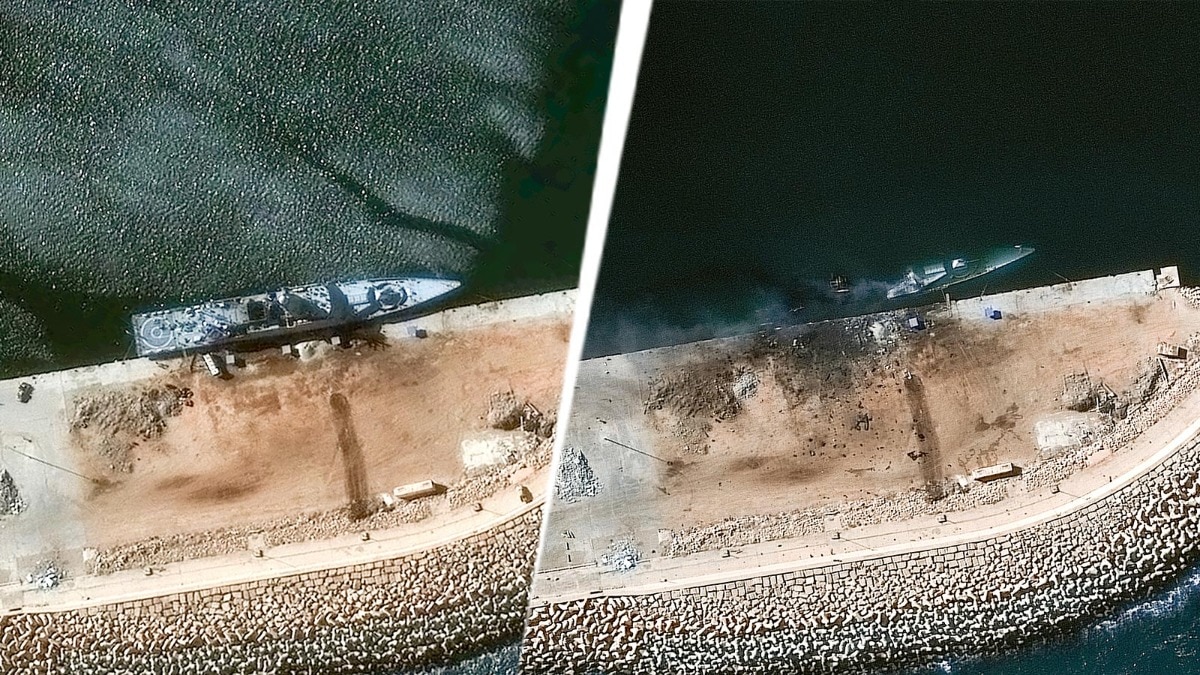
The operation to hit the Russian warship in Libya, conducted 1,500 miles (2,400km) from the frontline in Ukraine, was the latest daring long-range assault by Kyiv’s forces.
Last week Ukraine hit the Kerch bridge – a key supply line to Russian-occupied Crimea – and the Russian Baltic seaport of Kaliningrad.
Map showing Ukraine and LibyaMap showing Ukraine and LibyaResidents in Benghazi heard loud explosions and saw flames at the naval base early on Sunday. Civil defence units rushed to the site and extinguished the fire, authorities in eastern Libya said.
The Merkury had docked to refuel and take on supplies as part of a cooperation agreement between Russia and the eastern-based government in Libya.
Vladimir Putin had taken a personal interest in the ship. In 2019 he toured the St Petersburg yard where it was being built and backed naming it after a tsarist-era brig celebrated for fighting off two Turkish warships in the Black Sea in 1829.
At the 2023 Navy Day parade, the Russian president singled it out among 30 new vessels as evidence that Russia was “consistently building up the power of its fleet”. He hailed its St George flag as “a sign of the inviolability of our naval traditions” and said it was “gratifying” that the brig’s name had been revived.
Russian state media also talked up the ship. The news agency Tass called it the “newest missile corvette”, while the channel TV Tsentr claimed its stealth technology made it “invisible to radar”.
Two survivors pulled out from rubble after Russian attack kills 11 near Kyiv
Rescuers pulled a seven-year-old boy and a 79-year-old woman alive from the rubble of a residential building in the town of Dymer in Ukraine’s Kyiv region as the death toll from Sunday’s Russian attack reached 11, officials said on Monday, as reported by Reuters.
The survivors, who were trapped for 22 hours, were identified only as Davyd and Valentyna, emergency service spokesperson Viktoriia Ruban said, without providing their full names.
Doctors were treating the boy, who was rescued from the wreckage on Sunday, and his parents were with him, Ukrainian president Volodymyr Zelenskyy said on Monday in a post on Telegram.
Rescuers were combing the rubble of a residential building, after retrieving several bodies overnight.
Zelenskyy said the fate of two people was still unknown. Search operations had to be halted several times because of the threat of further Russian attacks and the danger from Shahed drones, he said.
Russia summons Estonia's charge d’affaires in Moscow
Russia’s foreign ministry has summoned Estonia’s charge d’affaires in Moscow, Russian state news agency Tass reported, after a suspected sabotage attack on a drone maker in the Baltic state. It comes after Estonia, a Nato and EU member, announced it would close its road border crossings with Russia on security grounds for at least six months.
In a post on X on Friday, the Estonian foreign ministry wrote:
Today, the Estonian government decided to close road border crossings with Russia from 1 December in response to Russia’s continued hostile activities against Estonia and Europe.
The decision follows Russia’s ongoing sabotage and hybrid operations across Europe. Closing the crossings will reduce opportunities for Russian intelligence services to recruit people, organise sabotage and circumvent sanctions, helping to protect the security of Estonia, the EU and the Schengen area.
Estonia – which shares a border of about 220 miles (338 km) with Russia – currently has five crossing points where travellers can enter or leave Russia, according to the government.
In other news, the EU has expressed disappointment in the collapse of the Cop31 talks in Turkey where countries failed to reach a major new deal to tackle the escalating climate crisis.
Earlier today, the commission spokesperson Anna-Kaisa Itkonen said:
The European Union did not support the final draft because the interests of a few were allowed to obstruct the ambition needed by many.
The EU is responsible for 6% of global emissions and therefore for us, it was important to bring the countries that are responsible for the 94% of global emissions on board.
The EU was unhappy with the final deal as it did not even directly mention fossil fuels, the key driver of global warming.
But the bloc faces accusations of hypocrisy for taking this posture at international climate summits while some of its member states have backed new fossil fuel infrastructure at home and give inadequate financial support for developing nations to adapt to the impacts of rising temperatures.
Amid this backdrop, the Cop31 summit became the longest-ever UN climate conference in history on Sunday, with talks stretching two days past their scheduled end time. Environment and climate correspondent Graham Readfearn joined Nour Haydar to unpick exactly what happened in our Full Story podcast:
Kremlin warns of Baltic escalation after Ukraine strike on cargo ship
Meanwhile, Moscow warned about worsening security in the Baltic Sea after a suspected Ukrainian drone strike on a separate Russian cargo ship at the weekend, AFP reported.
“It is indeed a very dangerous trend, the expansion of terrorist activity in the Baltic region... This is very dangerous. It is, of course, leading to an escalation of tensions in the region,” Kremlin spokesperson Dmitry Peskov told reporters.
On Saturday, Finland said it had detected a drone attack in international waters on a Russian cargo vessel that later began drifting towards Finnish waters.
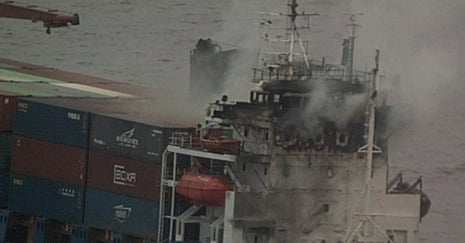
The ship, identified as the Sparta II, was anchored about 90 kilometres (nearly 50 nautical miles) east of Helsinki while efforts to put out a fire on board were under way, but was later towed towards Russian waters.
Peskov said Russia “would like to hope that the Baltic states will somehow use their influence” on Ukraine to “warn it against continuing such dangerous terrorist practices”.
Lying at the easternmost end of the Baltic along the coasts of Finland, Estonia and Russia, the Gulf of Finland is a key maritime passage for Russia, leading to the former capital, St Petersburg.
Russia's calls for return to pre-1997 European security order 'unacceptable,' Rutte says
Nato’s Rutte got a question on Russia’s demands to rewrite the European security order as part of the Ukraine peace settlement.
“We are all totally clear that the proposals Russia put forward in 2021, basically going back to … for Nato to basically move backwards from where we are now and to the 1997, borders are unacceptable. And there’s nobody in Nato who thinks this is a good idea.”
Rutte also gets pushed a bit on the Polish incident last week, as he says:
“It is clear that this is a dangerous incident. It comes from Russia. Whether it is intentional or not has to be decided, of course, by authorities. I will never speculate. I can only comment on that when we have the evidence coming out of, of the system, where Poland and other Nato allies work together to assess what exactly happened.”
Over in Berlin, Rutte is still diplomatically answering questions from national delegations and avoiding many any news.
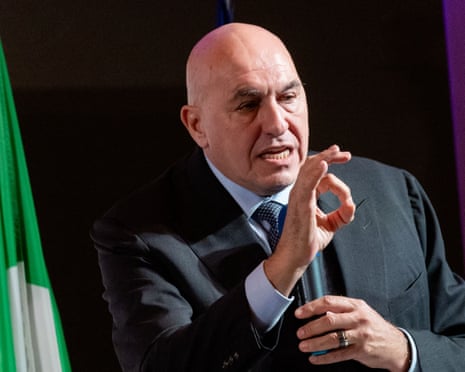
So far his most entertaining line was about making sure he never forgets to mention Italy as a key Nato ally, because he doesn’t want to fight Italy’s defence minister, Guido Crosetto.
“If I would ever forget about Italy, then the defence minister, Guido Crossetto, whom you don’t want to get into a fight with given his build, will remind me quite forcefully, I can assure you.”
'Hundreds' of schools in Denmark, Germany received bomb threats
Elsewhere, I’m also keeping an eye on reports from Denmark and Germany, where hundreds of schools have received emails containing bomb threats.
The German tabloid Bild reported that investigators do not consider the threats credible, as they are looking into where they came from.
The latest incidents come after weeks of similar scares across Europe, which have also disrupted some European flights.
I will keep an eye on this for you.
Meanwhile, Rutte is still answering questions at Nato’s parliamentary assembly – on the Arctic security and the expected review of US force posture in Europe, among others – but he’s bravely avoiding saying anything remotely new so far.
I will keep monitoring his speech.
Albania denies Ukrainian drones that sank Russian warship were launched from its territory
Meanwhile, Albania has strongly denied suggestions that the naval drone attack against the Russian warship in Libya originated from its territory.
“The reports in question are inaccurate and do not reflect the facts. Albania was not involved in this incident, and its territory was neither used nor made available for the launch or facilitation of such an attack,” Albania’s ministry of foreign affairs said.
It added:
“We categorically reject these allegations, which have been presented without verifiable evidence. We call on those responsible for disseminating them to correct the record and to exercise accuracy, due diligence and responsibility when reporting on matters of such sensitivity.”