 1 hour ago
Survivors in Nepal recounted climbing slippery hills as a flash flood destroyed border settlements. Their accounts underline the disaster's sudden force and the grim search for missing people.

Kathmandu,UPDATED: Aug 29, 2026 14:20 IST
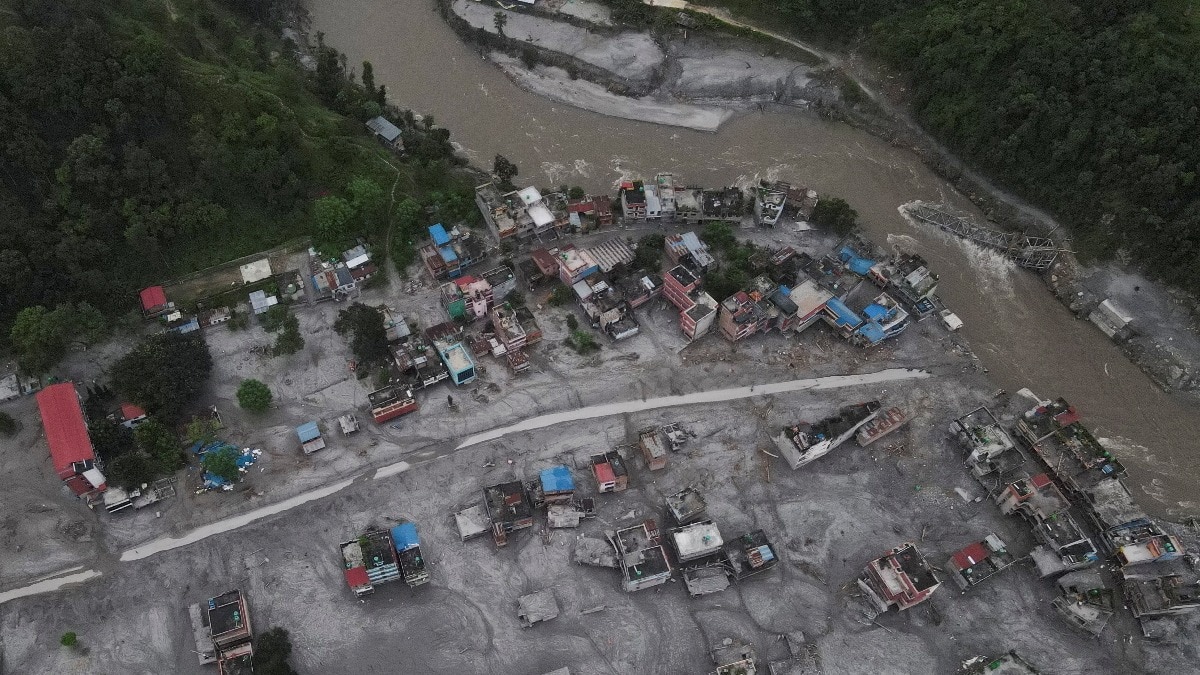
Survivors of the flash flood in Nepal have described a frantic scramble for higher ground as water, mud and stones tore through settlements, bringing down houses and sweeping people away. The accounts speak of people running in different directions, desperate climbs up slippery slopes, and families later searching for missing relatives.
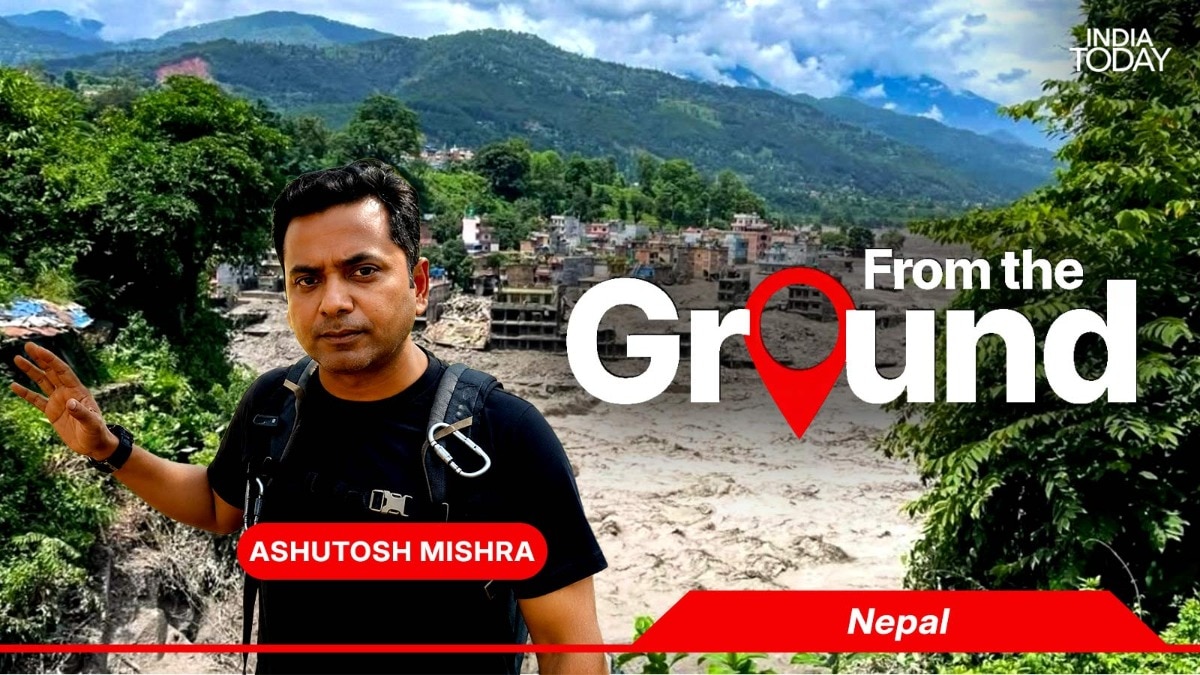
Among those who recounted the disaster were Dipak Tamang, who was in Timure on the Nepal-Tibet border when the flood struck on Wednesday, and Indian-American couple Anjana Raja and Pattabiraman Venkatesan, who were stranded before being rescued and airlifted to Kathmandu. A photojournalist who reached the affected areas soon after the flood described markets buried in mud and bodies being recovered far downstream.
Tamang, a resident of neighbouring Sindhupalchowk district, said he first thought the ground was shaking. He then saw a wall of water, mud and stones racing towards houses along the Bhotekoshi river in Timure market. Recalling the moments after he ran out of the house, he told Nepali news portal Onlinekhabar, "When I came out of the house and ran upward towards the hill, few houses had already collapsed due to the powerful flood." He added, "There was not much choice for me. Behind me was the flood and in front of me was a wall-like hill."
He said he ran towards the slope and struggled to climb what seemed like a wall, falling several times and grabbing thorny bushes and stinging nettles to pull himself higher. "It was my last race between life and death," he said. From the top of the hill, Tamang saw people, including his friends, being swept away. "I could do nothing when my friends were swept away by the wave before my eyes," he recalled. He later found an old go-down used for storing wood in the forest, where dozens of other survivors had taken shelter. He spent the night there without a bed as rain continued to fall and was rescued about 24 hours later.
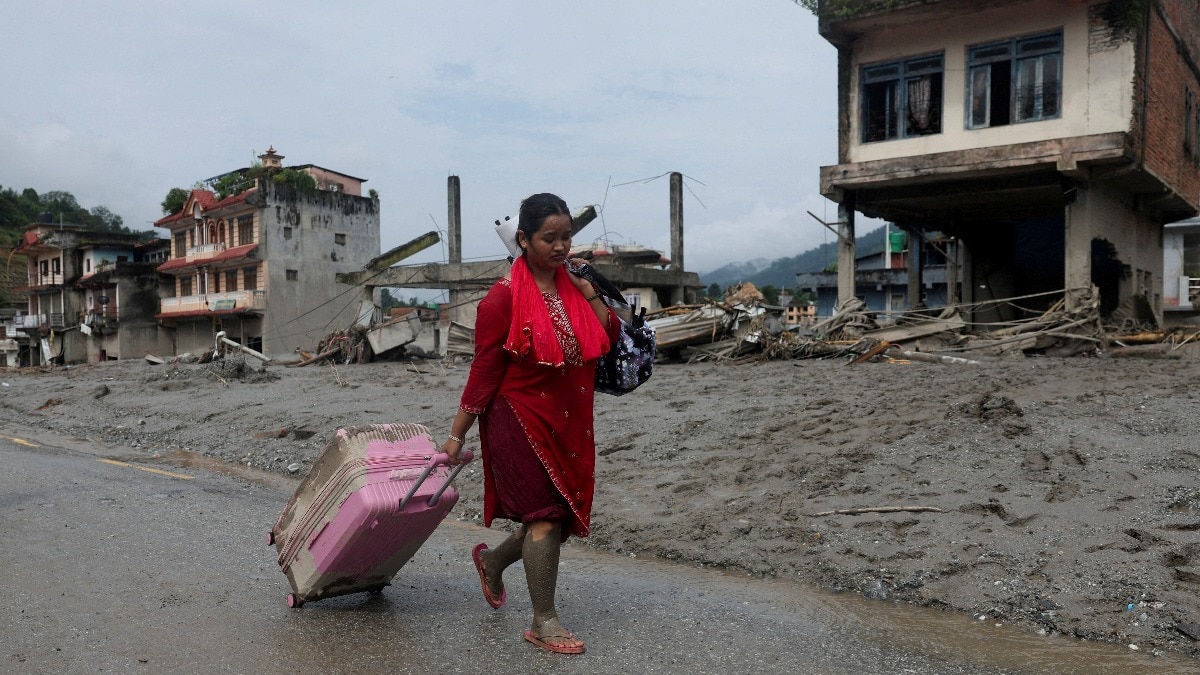
Photojournalist Amul Thapa, writing in Nepali daily Naya Patrika, said he left Kathmandu at around 10 am, about an hour after the incident, and reached Trishuli market a couple of hours later. He wrote that there had been around 50 to 60 houses in the market, but most were buried under mud, with only rooftops visible in some places. He said there was barely any distinction between the road and the houses. People were running through the upper market while others searched for loved ones missing in the flood, and about half of the market had been devastated. Thapa also heard people saying that some students from Uttargaya Boarding School had gone missing and later returned to their school after walking for six hours through the jungle. By Friday afternoon, he wrote, ambulances carrying bodies were moving in and out near the Chitwan Industrial Association in Chitwan, and some bodies swept away from Rasuwa had been recovered from the Narayani river.
Raja and Venkatesan also described the flood as they tried to escape. "I knew I was going to die," Raja told CBS News. Venkatesan said the approaching wall of debris was about 60 to 70 feet high and looked like a tsunami. "I could see this monster thing coming down. At that point I didn't know if it was water. I thought it was fire, forest fire, honestly," he said. Raja told ABC News that the torrent was a towering mass of water and mud. "It was water mixed with the mud that was a good 50 to 60 feet high," she said, comparing it to a serpent or a cobra's head staring at them. She said she grabbed her husband by the collar and shouted, "Run", before they jumped off their bus and sprinted towards higher ground as houses collapsed around them.
The couple said they did not know where they were going as they climbed. "We just blindly... climbed. We didn't even know what direction," Raja said. "There was no guide for us, there was nobody, we were just frantically running." She said the terrain was slushy and muddy and the rocks were slippery. When they reached a higher level, she saw the flood rise up the slope and push their bus. "I told my husband, 'That's it, we're gone. We're going to die'," she said. "I saw death right in front of my eyes." A guide later led them to a flat area at the top of a nearby mountain through narrow, slippery ground covered in mud, stones and rocks. "So tall up, I don't even know how we climbed," Raja said. Venkatesan called their survival "nothing short of a miracle" and said the experience had given them a renewed appreciation for life. "It strengthens my thoughts on life," he said. "Be good, do good, think good, and leave the rest to whoever is above us."
Together, the accounts from survivors and those who reached the affected areas later describe a disaster that unfolded with little warning, left homes and markets buried in mud, and forced people into a fight for survival as others searched for the missing and the dead.
With PTI Inputs
- Ends
Published By:
India Today Web Desk
Published On:
Aug 29, 2026 14:20 IST