4 weeks ago
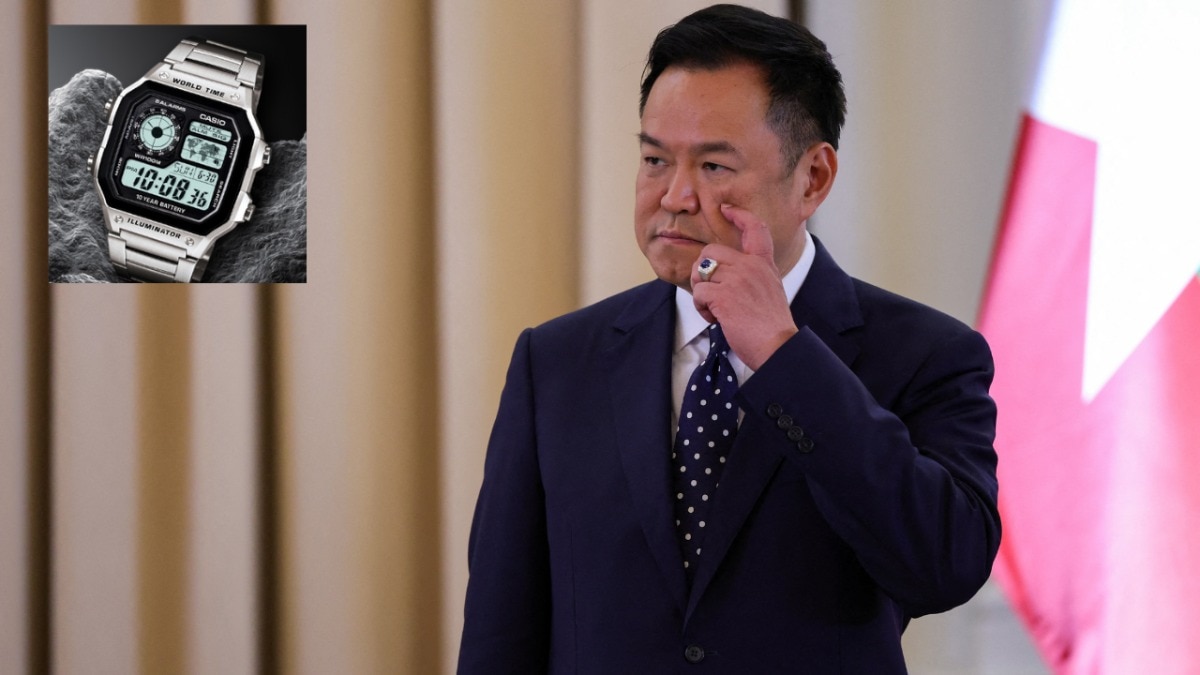
Foreign Minister Shisir Khanal told Parliament that Nepal's foreign policy will remain centred on sovereignty and national interests. He said the 'old baggage' remark did not refer to the country's history or its constitutional map.

Image used for representational purposes only

Kathmandu,UPDATED: Sep 15, 2026 19:28 IST
Nepal Foreign Minister Shisir Khanal on Tuesday told the House of Representatives that the government is fully committed to conducting foreign policy with the country’s sovereignty, territorial integrity, national security and long-term national interests at the centre. He also clarified that the expression “old baggage” was not aimed at Nepal’s dignified history, national heritage, sovereignty, territorial integrity, independence, the protection of national interests or the preservation of historical documents.
Khanal was responding to questions raised by lawmaker Sita Thapaliya, who sought clarity on what the phrase meant and whether it referred to decisions taken by previous governments. She also asked whether the decision to incorporate Nepal’s map, including Lipulekh, Kalapani and Limpiyadhura, into the Constitution was being described as “old baggage”, and what mistakes had been made in the foreign policies of past governments.
Replying to the questions, the minister repeated that the government remained fully committed to a foreign policy focused on Nepal’s sovereignty, territorial integrity, national security and long-term national interests. He said Nepal has always given high priority to relations with neighbouring and friendly countries and expressed the view that high-level visits play an important role in further strengthening bilateral ties.
Khanal said Nepal’s political map incorporating Lipulekh, Kalapani and Limpiyadhura, along with Parliament’s unanimous decision to amend the Constitution to endorse it, reflects the shared national resolve of the entire Nepali people. “This is our constitutional and sovereign document, which cannot be viewed as a ‘burden’ in any context,” he said.
Nepal and India have a long-running boundary dispute over Lipulekh, Limpiyadhura and Kalapani, with both sides claiming the areas. India maintains that the territories are part of Uttarakhand and has said the issue should be addressed through bilateral dialogue. In May 2020, Nepal’s K P Sharma Oli-led government included the territories, including Kalapani and Lipulekh, as inseparable parts of the country in its official map.
The minister said protecting the nation’s independence, sovereignty, territorial integrity, national unity, autonomy, border security and dignity remains the foremost and lasting responsibility of any government. He added that the current government wants to take ties with neighbouring and friendly countries in a transformative direction based on mutual respect, equality, trust and economic partnership, and that the Ministry of Foreign Affairs is focused on achieving economic prosperity through clear, mature and result-oriented diplomacy that places national interests above all else.
In sum, Khanal told Parliament that Nepal’s foreign policy will remain centred on national interests and made it clear that references to “old baggage” should not be read as questioning the country’s history, sovereignty or its constitutional position on the disputed map.
With PTI Inputs
- Ends
Published By:
India Today Web Desk
Published On:
Sep 15, 2026 19:28 IST