 1 month ago
Oil prices are likely to remain volatile until there is clarity on whether oil can flow normally through the Strait of Hormuz, according to Richard Yetsenga, Group Chief Economist at ANZ Research.
He believes oil in the $70s is too low if disruptions persist, while prices above $100 per barrel also fail to reflect the political realities, leaving the market caught between two extremes.
Yetsenga also believes investors are increasingly focused on the US Federal Reserve's credibility. While inflation is no longer worsening, it remains well above the Fed's 2% target, and he says the market wants to see stronger policy action rather than just reassurance that the inflation goal remains unchanged.
This is an edited transcript of the interview.
Q: How are you reading the possibility of a deal between the US and Iran? What signals are you picking up on the macro front?
A: It's another whiplash moment, isn't it? It wasn't that long-ago Brent was around $70 per barrel, then it went to $100, and now it's back near $78.
All we can do is go by the messaging we're getting from the US side, even though history suggests there has probably been a bit of over-optimism about what was about to be achieved.
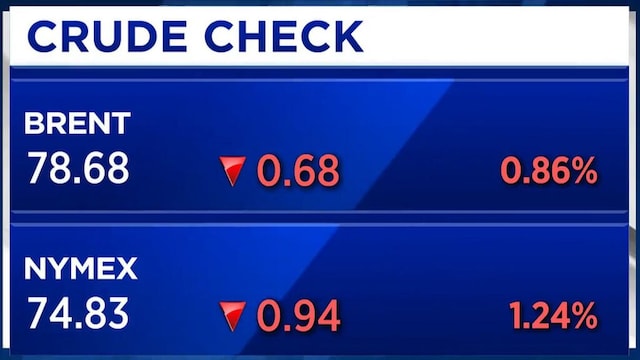
At the end of the day, this is all noise. The supply-demand balance in the oil market needs oil to start flowing through the Strait (Hormuz) at some point. Until that happens, I think oil in the $70s is too low.
Equally, oil above $100 doesn't reflect the political realities both sides are dealing with. We've touched both ends of that range, and so far, we still don't have an agreement that's concrete enough across a number of issues to stop this ping-pong.
Q: What's your fair value for crude prices? If the $70s are too low, where should oil trade given the geopolitical tensions? What does this mean for US inflation and bond yields?
A: I have some sympathy with that view. Back to oil, I think the market is really struggling to identify fair value because we're dealing with a serious binary event: is the Strait open or not?
Despite comments about some ships moving through, it's effectively closed. If it stays closed, that probably supports oil in the $90s. If it's open, oil around $80 seems more appropriate.
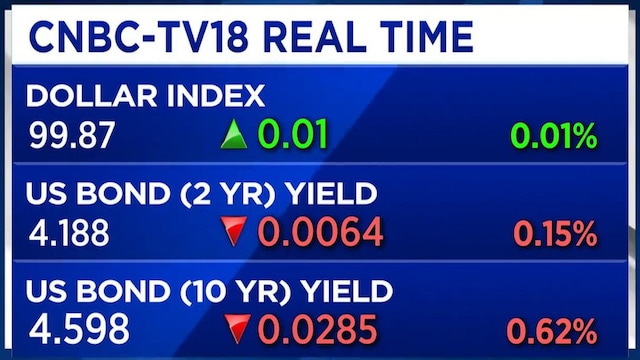
Even during the optimism when oil fell back to around $70 a month ago, global bond yields did not retrace the moves they had made during the conflict. Tightening pressure didn't disappear.
In fact, since the new Fed Chair came in, the market has continued to price tighter Fed policy regardless of where oil prices are. That suggests investors are concerned the oil price shock may have unleashed inflationary pressures that will eventually require central bank action.
Q: What odds would you put on getting a real US-Iran deal this time? 50-60%?
A: I think we will eventually get a deal because the global economy won't function otherwise.
But on whether it happens this time around, I have no view. I could toss a coin for you.
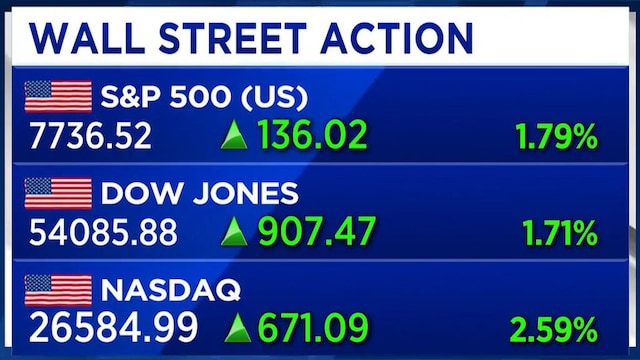
Q: The US economy remains strong, large technology stocks are back and the Nasdaq is at record highs. What else are you watching?
A: All of that brings the focus back to the new Fed Chair and his transformation of the Fed.
He certainly talks a lot about many things, but less about what the economy is actually doing, where inflation is heading and what that means for Fed policy.
He talks about Fed communication, the balance sheet, what the market should price and whether markets should focus on the Fed.
What concerns me is that the market is drifting away from the Fed's core macro objective, which is 2% inflation.
We haven't been at 2% for five years. The recent data don't suggest inflation is getting worse, but they also don't suggest we're moving back to 2%.
Yet the Fed Chair remains confident that 2% is still the target while saying very little about policy.
Q: If inflation hasn't returned to 2% for years and there is now speculation the Fed may move away from that target, why is the market reacting so strongly?
A: I think you answered your own question. There's a suspicion that the Fed wants to move away from the 2% target. I would be surprised if that actually happened.
Ultimately, central bank statements are like fiat currency—they may or may not retain credibility. What really matters is achieving the inflation target.
The market will give a credible central bank some time if it temporarily misses its target. But eventually, that credibility starts to erode if policymakers don't act to bring inflation back.
I think the market is simply saying it wants to see something more than what it has seen so far.
Watch the full conversation here

Q: Do you expect the Fed to raise rates later this year? If yes, by how much and when?
A: I don't have a rate hike in my forecast because I don't think the Fed will hike, and I don't think it wants to hike.
For that reason, I think the market will remain concerned about the Fed's commitment to its inflation target.
Catch all the latest updates from the stock market here