 1 hour ago
Albanian Prime Minister Edi Rama is facing massive pressure as student protests over education and living costs turn violent, with demonstrators demanding his resignation. Rama has rejected calls to quit, arguing that the unrest threatens Albania's European Union membership ambitions, even as clashes with police intensify.
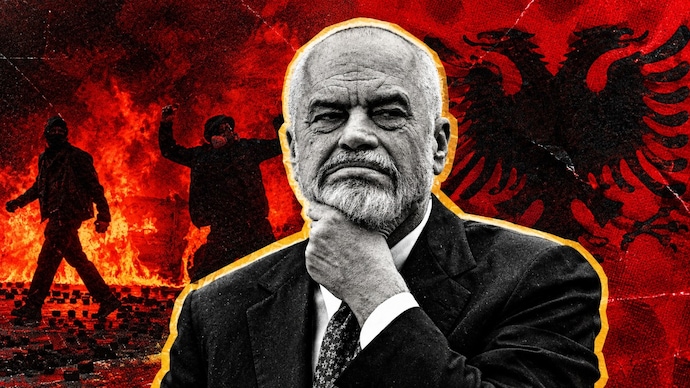
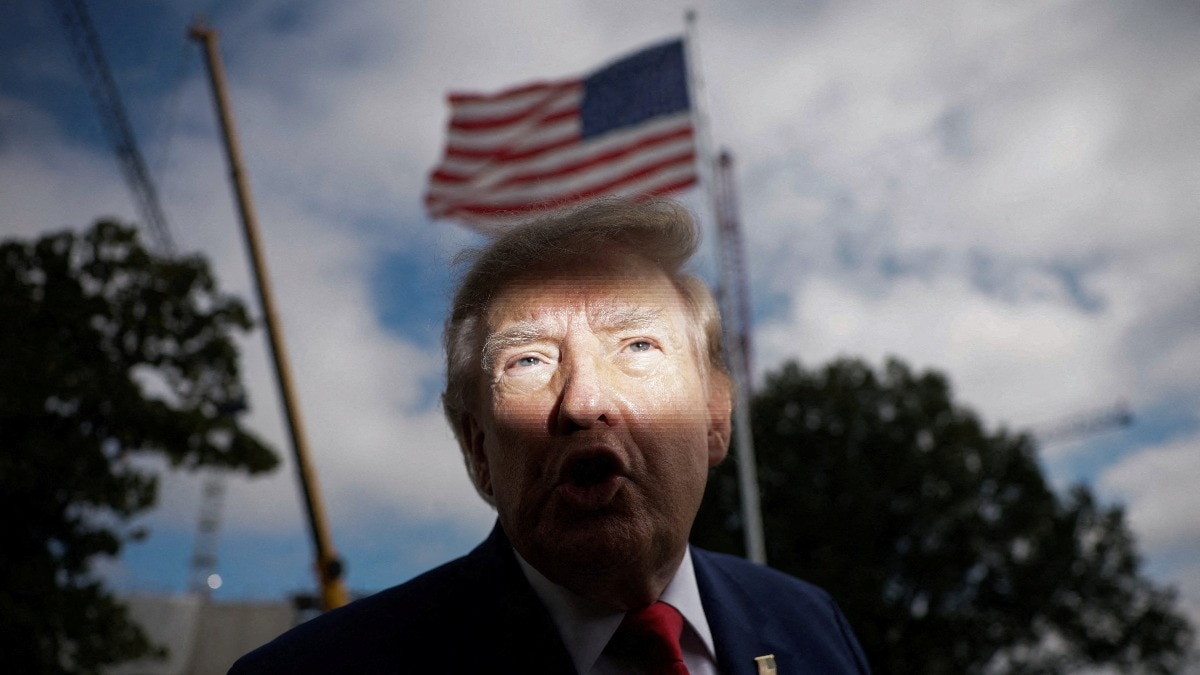
Albanian PM Edi Rama, who has been in office for 13 years, is now the main target of protesters' anger. (Images: Reuters/ AI-edit)
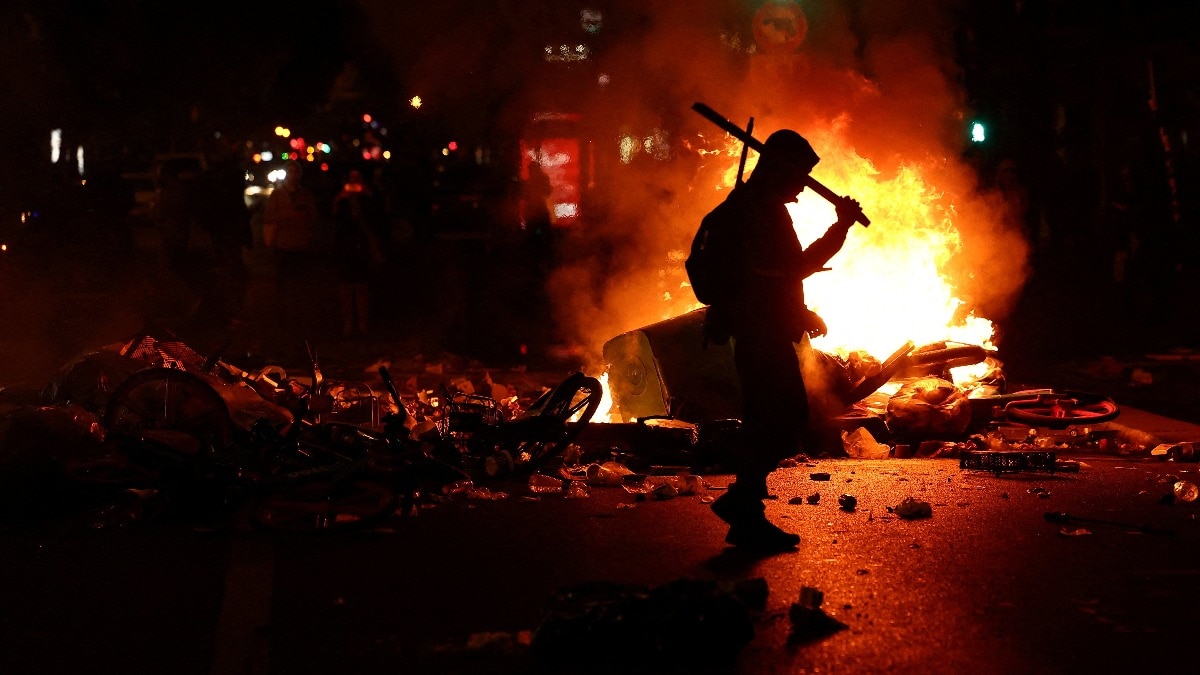
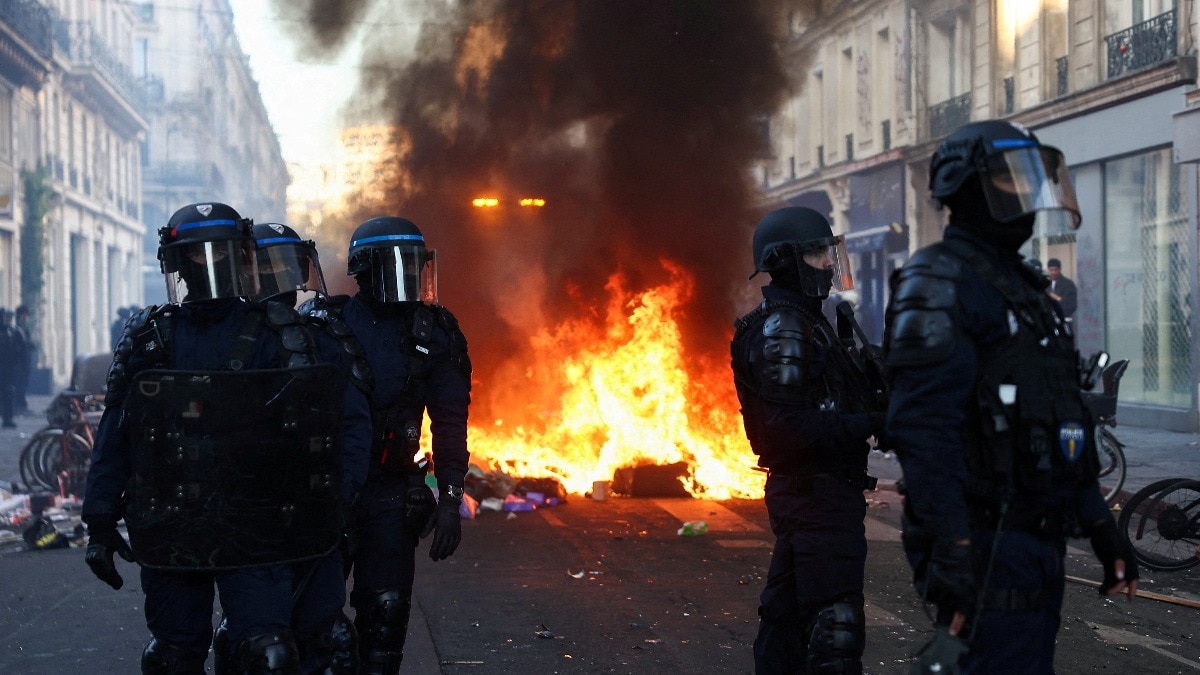
Burning buildings, clashes with riot police and chants demanding Prime Minister Edi Rama's resignation have brought Albania's capital, Tirana, to a standstill. What began as student-led demonstrations over education costs and poor university conditions has grown into a wider anti-government movement, with corruption, unemployment and the cost of living fuelling public anger against PM Edi Rama.
As the protests entered their sixth day on Sunday (October 18), Rama refused to resign, arguing that the unrest threatened Albania's ambition to join the European Union (EU) rather than his government.
The protests initially brought together students frustrated with the education system. Later, demonstrators who have spent months opposing government policies and alleged corruption joined in the agitations, according to The New York Times (NYT).
Albanian students complained about the high cost of higher education, inadequate university conditions and poor employment prospects after graduation. Their demands have since merged with wider public anger over the cost of living and calls for Rama to step down.
The unrest also has roots in opposition to a proposed luxury tourism development linked to Jared Kushner, US President Donald Trump's son-in-law, and investors from the Gulf countries, Reuters reported.
The project, estimated to cost more than $4 billion, has faced opposition from environmental groups concerned about construction near protected coastal areas, including the village of Zvernec and the Sazan island. The project sparked months of demonstrations before the student protests intensified. These protests were largely peaceful.
The agitation has since expanded beyond its original demands, turning into a broader challenge to Rama's government, which has been in power since 2013.
A wave of student-led and youth-driven protests have engulfed several parts of Europe, including France, Portugal, Italy, Spain, Belgium, and Albania.
CLASHES, ARRESTS AND A GOVERNMENT LED BY RAMA UNDER PRESSURE
On Sunday, hundreds of protesters gathered outside Albania's Education Ministry, chanting "Rama resign!" and throwing rocks at riot police. Security forces responded with tear gas, water cannon and rubber bullets, the German broadcaster Deutsche Welle reported.
The protesters also set fire to offices at Albania's High Court in Tirana on October 17, Albanian Daily News reported.
Earlier demonstrations in Tirana witnessed protesters setting fires, smashing windows of government-linked buildings and damaging banks and ATMs. The unrest spread beyond Tirana to other cities, including Durres, Korce and Vlore.
The police response has also drawn scrutiny. Authorities suspended officers accused of using excessive force after videos showed police pushing a student who reportedly suffered a spinal fracture, according to the NYT.
The PM Rama-led government has faced criticism over the handling of the demonstrations even as it condemned attacks on public property.
The scale of the unrest has added pressure on Rama, but the protests have not forced him to reconsider his position. He said during a live address through his Facebook account that governments should be changed through elections, not street demonstrations.
WHY ALBANIAN PM EDI RAMA LINKING PROTESTS TO EU MEMBERSHIP
PM Rama has sought to frame the demonstrations as a threat to Albania's European future rather than a direct challenge to his leadership.
"I am not being challenged, the government is not being challenged, a government majority or a winning party in the elections is not being challenged, but a path is being challenged, a mission is being challenged," he said in a Facebook address on Sunday.
He asked Albanians whether they wanted the unrest or European Union membership, arguing that the violence could undermine the country's ambition to join the bloc by 2030.
Rama also called the protests the "work of an outside hand".
The European Commission has condemned the instances of violence in Albania while reiterating support for the right to peaceful protest. This leaves Rama facing a difficult balancing act of restoring order without further inflaming public anger, while protecting the agenda of integration into the EU, which his government has made a central objective.
For now, the protests against Albania's PM Rama reflect a mixture of student frustration, economic insecurity and longstanding opposition to the government.
Whether the protests would turn into a lasting political challenge to Rama is uncertain. But the escalation has put his administration under renewed pressure, with demonstrators showing little willingness to abandon their demand for his resignation.
- Ends
(Written by Avinash Kateel)