 1 month ago
The global rush into artificial intelligence (AI) investments continues to gather pace, even as investors debate whether current valuations can be sustained, according to Cameron Brandt, Director of Research at EPFR Global.
Brandt said technology-focused funds saw another weekly inflow record, while large amounts of capital also moved into AI-linked markets such as South Korea and Taiwan.
While concerns remain about how AI infrastructure investments will be financed and whether companies can generate adequate returns, investors have not stepped back from the theme. Despite questions around funding requirements and power infrastructure, “if you look at the numbers, it's still rocketing higher,” he said.
Brandt also noted that anticipation around potential IPOs such as SpaceX, OpenAI and Anthropic is influencing fund flows. Beyond technology funds, telecom-focused funds have also seen increased interest as some investors view SpaceX primarily as a telecommunications play through Starlink.
Brandt said the latest wave of AI enthusiasm is working against India's investment case. “AI is not a friend to the investment case for India at the moment,” he said, adding that India could benefit later as AI applications become more widely adopted.
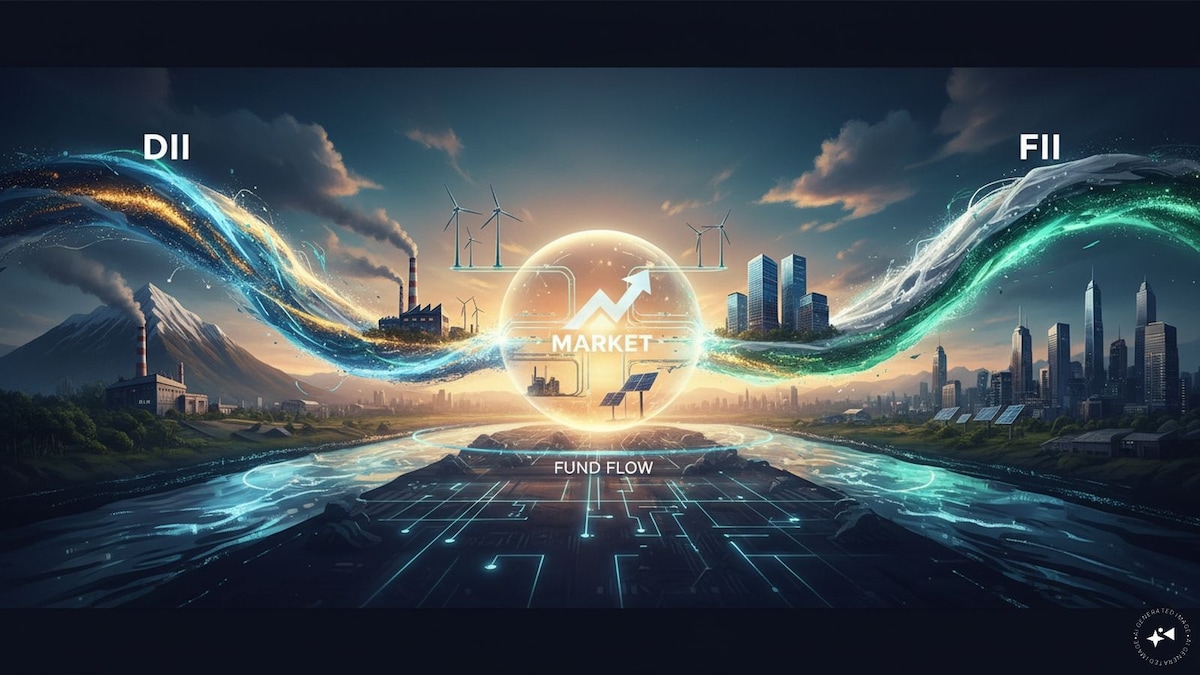
India saw foreign fund outflows of $770 million in the latest week (June 4 to 10), with focused funds accounting for $460 million of that, according to Elara Capital's June 12 Global LIquidity Tracker.
The broader picture is more concerning. India's relative performance against global emerging market funds has now fallen to record lows on both one-year and three-year horizons. Historically, Elara noted that such extremes have tended to coincide with major turning points in relative performance.
Much of the underperformance since June 2025 reflects the global shift of capital toward AI-linked opportunities in markets like the US, South Korea and Taiwan, the Elara note stated.
This is an edited transcript of the interview.Q: US President Trump, whether he says one thing or another, all of that notwithstanding, it seems like the market has begun to contend with this sort of volatility. What it hasn't begun to contend with is the likelihood of an AI sell-off after this massive up move that we've seen. Do you think there is a risk that, increasingly, the gains that we see on AI-related moves will come off, and maybe at some point they will start to unravel? Is that something that the Street has any preparation for?A: I would say that the Street is getting more aware of the possibility, but they haven't gotten off the horse yet. The technology sector funds that we track just set another weekly inflow record, and large sums poured into funds dedicated to the major emerging-market AI plays, Korea and Taiwan.
But there's no shortage of commentary and discussion around where the capital to fund the AI rollout in the US is going to come from, whether the borrowers will be able to make sufficient returns on that capital, and whether the electric grid and power upgrades needed to run the infrastructure can be brought up to speed in digital time. So, if you listen to the narrative, you'd think people had already reached that conclusion. If you look at the numbers, it's still rocketing higher.
Q: Based on the funds that you track, etc., and all these big IPOs in the US - SpaceX, OpenAI, and Anthropic - are you able to see any movement across the flows that you track, with people making space to sort of put money into those kinds of opportunities at all?A: A little bit. Certainly, one interesting thing is that outside of the technology sector funds being pumped up partly in anticipation of those IPOs, sort of the second-strongest reaction has been in the telecom space. A significant minority of investors here see SpaceX as primarily a telecom play, Starlink 3.0. So, we've certainly seen some movement, most of it where you would expect, in the technology fund sector, but there has also been a noticeable bump in flows into telecom-dedicated funds.
Q: What about gold? Gold was glittering just in the month of January at around $5,500 per ounce. That came down to $4,100 per ounce just overnight. When I saw gold correct in that sort of manner, well, that's telling you anything can happen. What's the flows' position throughout that? Have you seen some shift away from gold, or have there been lower flows, or has there been selling?A: So, the flow picture for physical gold funds reflects what you just stated. It has sort of run into a wall recently after a bit of a spike in the immediate aftermath of the latest round of fighting in the Gulf. The volatility has produced a lot of entry points, and investors, certainly institutional ones, are not spooked enough to be unwilling to jump in.
We saw some fairly significant redemptions from money market funds in March and April. That started to change again, but at least some of that was money being pulled out to take advantage of what institutional investors saw as attractive opportunities. It's the same story with gold. Between the opportunities and the expectations of at least one US rate hike this year, the case for gold has certainly lost some of its shine.
Q: Has the pace of money being taken out of India reduced? On a day-to-day basis, the reported numbers that we see show a slightly lower number of foreign investors selling. Do you believe that the data backs that, and at the same time, we're nearing an inflection point somewhere, or are we just hoping too much?A: If you'd asked me that last week, I would have said yes, it looks like we're getting to the inflection point and we're bottoming out. But the latest surge of enthusiasm for AI is not in India's favour. India is not seen as a primary driver in that space. Arguably, its time will come when the applications become clearer, but AI is not a friend to the investment case for India at the moment.
For the full interview, watch the accompanying video

Catch all the latest updates from the stock market here