3 weeks ago
Saudi Arabia has increased crude loadings from Gulf terminals after drone attacks shut the East-West Pipeline. The shift suggests a partial export recovery, but disruption around the Red Sea and Strait of Hormuz remains a concern.
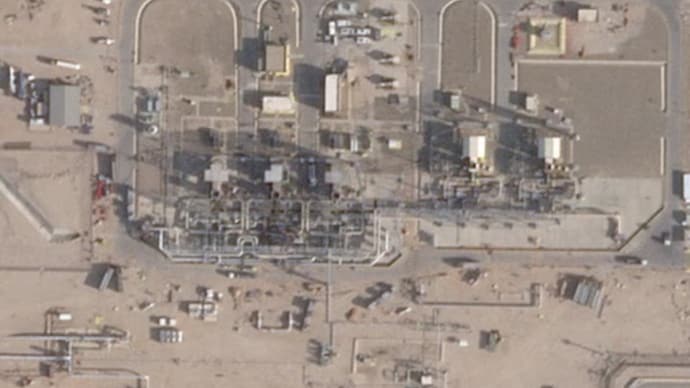
A satellite image shows damage at a Saudi oil facility serving the East-West Pipeline. (File Photo: Reuters)

UPDATED: Sep 22, 2026 00:08 IST
After relentless drone attacks by Iran-backed Houthis disrupted its major East-West oil pipeline to the Red Sea, Saudi Arabia has stepped up crude oil loadings from terminals in the Gulf, offering rare signs of a partial recovery in exports despite continued disruption to regional energy flows.
Saudi Aramco loaded about 14 million barrels of crude on seven supertankers in the Gulf on Sunday, according to data from TankerTrackers.com cited by Reuters. The vessels were all Very Large Crude Carriers (VLCCs). Satellite imagery also appeared to show seven tankers near Saudi Arabia's Ras Tanura port.
The increased activity has raised expectations that Saudi Arabia is finding alternative routes to maintain crude exports after the pipeline shutdown disrupted shipments from the kingdom's Red Sea terminals. Those expectations weighed on oil prices on Monday, with Brent crude falling below 100 dollars per barrel for the first time since September 9.
SAUDI OIL LOADINGS SHIFT TO GULF
The latest tanker activity points to a significant shift in how Saudi Arabia is moving crude to international markets.
Drone attacks forced the kingdom to shut its East-West Pipeline on September 13, bringing crude loadings at Yanbu, a major export terminal on the Red Sea, to a halt. The pipeline normally allows Saudi Arabia to move large volumes of crude across the Arabian Peninsula without sending them through the Strait of Hormuz.
With the route unavailable, Aramco has instead increased loadings from its eastern Gulf terminals, including Ras Tanura.
Saudi crude loadings from Gulf terminals have averaged about 3.7 million barrels per day since September 12, according to Vortexa, a company that tracks oil flows. That compares with about 2.9 million barrels per day earlier in September.
By contrast, Saudi loadings from the Red Sea averaged about 3.9 million barrels per day between September 1 and 11, before the pipeline shutdown disrupted shipments.
JP Morgan analysts also pointed to signs of a recovery in Saudi exports. In a September 18 note, they said satellite data showed Saudi crude moving through the Strait of Hormuz had averaged 2.9 million barrels per day over the previous six days, up sharply from about 700,000 barrels per day in August.
RIYADH SEEKS ALTERNATIVE EXPORT ROUTES
The disruption has forced Saudi Arabia to adjust its crude sales and shipping plans.
Aramco cancelled some crude cargoes destined for European customers after the East-West Pipeline was shut, while increasing sales to Asian buyers for oil loaded at its eastern ports inside the Strait of Hormuz. Saudi Arabia has also been making greater use of ship-to-ship transfers to move crude through alternative routes.
Trade sources told Reuters last week that the kingdom had sold about 60 million barrels of crude from Ras Tanura for loading through ship-to-ship transfers at Oman's Sohar port this month and next.
The pipeline shutdown remains a major concern because the East-West route has played a crucial role in protecting Saudi oil exports from disruptions around the Strait of Hormuz. For the past six months, the pipeline has allowed the world's biggest oil exporter to bypass the strategic waterway and send about 4 million barrels of crude per day to Yanbu on the Red Sea. That volume is equivalent to roughly 4 per cent of global oil supply.
- Ends
With inputs from agencies
Published By:
Satyam Singh
Published On:
Sep 22, 2026 00:08 IST