 1 month ago
Mumbai-based State Bank of India (SBI) is confident of sustaining its growth momentum through FY27, backed by healthy credit demand across retail, MSME, agriculture and corporate segments, according to CS Setty, Chairman of India's largest lender.
The bank believes its strong liquidity position, lower funding costs and a robust corporate pipeline will help maintain its performance despite an evolving interest rate environment.
Setty said SBI remains comfortable with its revised credit growth guidance of 14-15% and expects demand to remain broad-based, with sectors such as renewables, highways and data centers continuing to support corporate lending. He added that the bank's funding position remains strong, supported by excess liquidity and expected FCNR deposit inflows.
On profitability, the lender continues to maintain its full-year net interest margin (NIM) guidance of 3%, saying the impact of FCNR deposits has already been factored into its outlook.
Setty also said asset quality remains healthy, describing the rise in first-quarter slippages as seasonal, while ruling out any need to raise additional capital during the year.
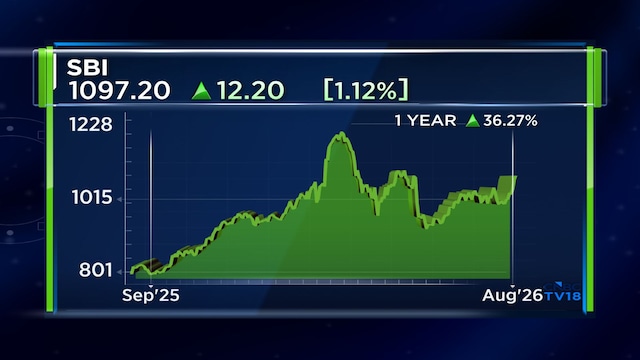
In the April-June quarter (Q1FY27), State Bank of India reported net interest income (NII) of ₹46,992 crore, a net profit of ₹21,121 crore, while the net interest margin (NIM) for the overall bank stood at 2.86%.
This is an edited transcript of the interview.
Q: State Bank of India has reported a strong set of numbers in the first quarter. Net profit rose 10%, while net interest income grew over 15%. The bank's credit growth also climbed to a 15-quarter high. Can this stellar performance be sustained through the year?
A: Sustainability and consistency of performance are something we always strive for, and the numbers you are seeing now are a conscious effort in that direction. The numbers you mentioned are not outliers. The sequential increase in overheads is expected, while year-on-year overheads remain contained. One of the standout factors has been our proactive effort to reduce the cost of resources. We have successfully brought it down by almost seven basis points, which has helped protect margins despite challenging market conditions.
We also have a fair idea of our FCNR(B) trajectory in quarter two, so we proactively reduced our bulk deposits, which also contributed to lower funding costs. With the liquidity and capital available, we are confident these numbers can be sustained.
Q: Advances have grown strongly, but at almost double the pace of deposits. Does that concern you, with the credit-deposit ratio inching up to about 74%? Are you comfortable at these levels?
A: Our ability to fund credit growth comes not only from deposits but also from the excess liquidity we hold in the form of excess SLR. As we speak, we have nearly ₹4 lakh crore of excess SLR, which gives us the flexibility to look beyond high-cost deposits. We believe bulk deposits are essentially a treasury activity. The treasury can either access bulk deposits or borrow from the market because we have adequate securities to offer. Combining the excess liquidity available within the system, 10-11% deposit growth, and the FCNR(B) inflows, we are confident we have sufficient funding capacity.
Q: You are targeting $10 billion in FCNR deposits. Will that further reduce your reliance on bulk deposits?
A: There is only so much you can reduce, some of the bulk deposits are relationship deposits built over the long-term. We offer better rates to these customers through bulk deposits. Broadly speaking, a significant portion of FCNR(B) deposits, not only for us but also for other large banks, will reduce competition for bulk deposits. That should help bring down overall funding costs. However, if credit growth remains robust, some banks may still need to access the bulk deposit market.
Q: Your margins surprised positively this quarter, yet you continue to guide for a 3% NIM for the full year. Has the impact of the FCNR raise already been factored into that guidance?
A: Yes, it has been factored into our guidance. We have given full-year guidance of a 3% NIM, and we continue to stand by it.
Q: You have also raised your credit growth guidance from 13-14% to 14-15%. What gives you the confidence to do that? Will much of the growth come from the corporate book?
A: We are seeing credit demand across sectors, including MSME, retail, personal loans and agriculture. In agriculture, growth is primarily being driven by agricultural gold loans. On the corporate side, demand remains healthy across several sectors, including conventional industries, renewables, highways and data centers.
It is broad-based demand, and we currently have a corporate loan pipeline of more than ₹3 lakh crore, which provides good visibility for growth. As I mentioned earlier, our credit growth guidance is linked to nominal GDP growth. If nominal GDP grows at around 12%, SBI has consistently grown 2-3 percentage points faster, and our guidance reflects that trend.
Q: Asset quality is the best we have seen from SBI in a long time. However, slippages rose sequentially to about ₹7,046 crore. Is that largely seasonal because of the agriculture book? Also, your SMA book has increased from ₹3,350 crore to ₹4,174 crore. Is there any concern that these could slip into NPAs?
A: We have always provided guidance on credit costs rather than gross or net NPAs. We continue to maintain our broad guidance of 50 basis points, although we are unlikely to reach that level. The increase in slippages is largely seasonal. Out of the ₹7,000 crore of slippages, we have already recovered nearly ₹1,400 crore. There is no cause for concern. The first quarter generally sees higher gross slippages. As we move into the following quarters, they become net slippages, and we have enough time to recover many of these accounts.
Agricultural slippages also contribute to this seasonal pattern. Overall, there are no concerns regarding asset quality. This is supported not only by a benign credit cycle but also by improvements in underwriting and risk management.
Q: So, there is nothing to worry about with the increase in the SMA book?
A: No, there are no concerns.
Q: Finally, to support 14-15% credit growth, capital appears adequate. But would you consider raising capital during the year? Apart from the planned NSE IPO, do you have any capital-raising plans?
A: No, we do not need to raise any additional capital at this stage. Both the proposed divestment you mentioned and the divestment we have already completed in our mutual fund business are providing adequate capital to support our growth.
Watch accompanying video