1 month ago
Neet rate could rise to 1 in 6, says Milburn, as he warns detachment 'becoming permanent' for young people
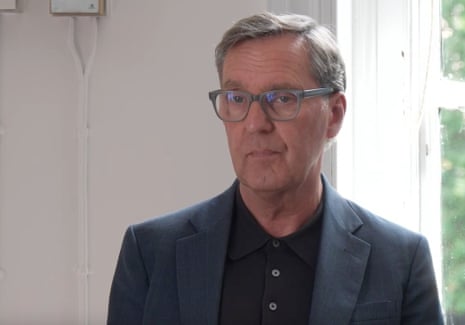
Milburn said he thought every young person had something to offer.
When Pat [McFadden] first asked me to do this work. I came to it with this view. Every young person has something to give the scale and aptitude of potential.
Every one of them should have an opportunity to learn or to earn.
He said youth unemployment had been a problem for a long time.
The Neet [not in education, employment or training] rate in our country has barely been below 10% in 25 years. It’s one thing to be ignorant about a problem. It’s quite another to be neglectful.
And I’m sad to say that for far too long in our country, the Neet crisis has been swept under the carpet.
Not any longer. This review exists because today Britain faces a genuine generational faultline.
But the problem was getting worse, he said.
We do not just have a chronic problem, it is getting worse, not getting better.
And we have neither a system or a plan to deal with it.
A decade or more ago, the problem was temporary youth unemployment. And youth unemployment today is still, of course, far too high.
But now it is something deeper and far more corrosive. It is youth detachment from the labour market. Nearly six in 10 young people who are Neet today are economically inactive. That means they not only don’t have a job, they’re not looking for a job.
Six in 10 have never had a job. 20 years ago, that figure was closer to four in 10.
Detachment is no longer temporary for too many young people, it is becoming permanent.
If the current trajectory continues within five years, we forecast in this report that today’s one in eight young people who are Neet will climb to one in six.
We are at risk of a lost generation.
Key events 1m ago UK risks £125bn hit a year from youth unemployment, landmark report says 4m ago Milburn says employers need 'new deal' to help encourage them to hire more young Britons as immigration falls 21m ago Milburn says UK should learn from Netherlands, where further education system much better and Neet rates much lower 33m ago Milburn says Ofsted system needs to change so schools incentivised to stop pupils becoming Neets 41m ago Milburn says migrants not to blame for Neets crisis - but falling immigration creates 'opportunity' to help solve problem 1h ago Milburn says welfare system failing to help get young people into work 1h ago Milburn says he would like to see benefits spending fall, but via getting more people into jobs not via 'arbitrary' cuts 1h ago Milburn says he's not interested in blame game, and wants to focus on solutions 1h ago Milburn warns 'bad things' will happen if people conclude politics can't solve problems like Neet crisis 1h ago Milburn says Labour policies have not helped jobs situation for Neets - but stresses problem goes back much longer 1h ago Milburn says 'great British promise', that each generation does better than last, 'is being broken' 2h ago Milburn says Neet crisis 'a moral one', as well as financial, costing Neets £300,000 over their lifetime 2h ago Neet rate could rise to 1 in 6, says Milburn, as he warns detachment 'becoming permanent' for young people 2h ago Milburn opens press conference saying Neet crisis 'probably most significant crisis facing country today' 2h ago Zack Polanski says media scrutiny he gets is 'incredibly disproportionate' compared to attention given to Nigel Farage 3h ago Milburn suggests he favours ban on social media for under-16s 3h ago More than one million young people not in education, employment or training, ONS says 3h ago Mitigating Mandelson risks would have been impossible, says former MI6 chief 3h ago Britain ‘sleepwalking into a food crisis’ without urgent action, experts say 3h ago Streeting criticises Blair for wanting to leave too much power in hands of markets 4h ago Minimum wage rise has made it difficult for employers to hire young people, says Alan Milburn Show key events only Please turn on JavaScript to use this feature
UK risks £125bn hit a year from youth unemployment, landmark report says
Here is Richard Partington’s story about the Milburn report.
Milburn says employers need 'new deal' to help encourage them to hire more young Britons as immigration falls
Q: According to a thinktank report, 27 young non-EU migrants have been hired for every one Briton since 2020. Do you think employers should have to offer jobs to British young people first?
Milburn said he thought that would happen anyway because immigration levels are falling. (See 12.20pm.)
But he said employers would need more support from government to allow this to happen. He explained:
You bring in a migrant worker. They’re often experienced. They’re often a bit older. There’s a high work appetite.
A young person might well have a big work appetite, but they’ve had no work experience, never been exposed to the world of work, never had an opportunity to have that Saturday job, a bit of work experience.
And so this is going to mean that employers are going to have to work a bit harder in order to get the very best out of those young British workers. But that’s what they should be doing.
And the deal that we need to construct as a society is if employers are going to do that, how can the government help them and enable them to do that as well?
That’s the new deal. And it’s an important one in a world where levels of migration are seemingly on … a pretty clear downward trajectory.
Q: Do you think there should be a separate welfare system for young people?
Milburn said the benefits system has “different purposes for different cohorts in the population”.
He said the system had to be geared to the needs of young people. That issue should be considered, he said.
Q: Are you worried that the structure of Pip (the personal independence payments) keeps young people out of the labour market? Does the government need to review how it works.
Milburn said:
In a sense it’s unfair to blame Pip for not getting good participation outcomes because that’s not what it was set up to do. It was set up with an entirely different purpose in mind.
But, in the light of how much Pip costs are rising, it is right to review it, he said. He said Stephen Timms is doing that for the government.
Milburn says UK should learn from Netherlands, where further education system much better and Neet rates much lower
Q: Spending on adult apprenticeships and adult education has fallen sharply since 2010. Is that part of the problem?
Yes, it is, Milburn said.
If you look at countries comparable to ours, take Holland as an example. Holland has a third of the Neet rate that we do in the UK.
Is that about Dutch kids being different from British kids? Not all.
Is that about their labour market being different? Maybe a bit.
What is it fundamentally about? It’s about some structural things.
First of all, it’s about the question that you ask, which is they make a priority of vocational education and investment in it. And when you look at the numbers, there’s a far higher proportion of Dutch kids, Dutch young people, in the equivalent of our FE colleges than there are here. So they’ve made a deliberate choice and it’s produced a pretty good outcome.
Secondly, they approach things in different structural way. So one of the very striking features of the Dutch system, for example, is it’s much more integrated. The services pull together. Ours is fractured. They’re integrated. They’re pulled together.
There’s one data set. Critically there’s one organisation responsible. We have no one responsible here because everyone is.
And the final part of the action that they seem to get right, that we get wrong, is that employers are much more engaged from the outset with the education system, so that kids are getting familiarity with employers, with the world of work, with work experience, with all of those things that we know that employers are crying out for.
I’m not saying you can do a lift and shift from the Dutch system because you can’t. There’s different traditions, different cultures, different structures. But, boy o boy, is there something to learn.
Milburn says Ofsted system needs to change so schools incentivised to stop pupils becoming Neets
Milburn said he would like to see schools given better incentives to stop their pupils endinng up Neet. He said:
You get five good GCSEs, that’s great, you get a tick in the box, the school does well, it passes its Ofsted inspection.
What happens if 30% of those kids end up Neet? Is that a good result or is it a bad result? I would say that’s a bad result.
So we’ve got to change the incentive system, we’ve got to change the inspection system, we’ve got to change what it is that schools and colleges are accountable for.
That’s quite a big change. But honestly, it needs to happen.

Milburn said he has been talking to mayors a lot as part of his review. They would be a big part of the solution, he suggested.
The labour market in Middlesbrough is just a different labour market from Islington.
And the people who’ve got to decide about what is right in that labour market for matching supply with demand have got to be based in those local areas.
And a big part of this equation is further education and vocational education more generally.
Milburn says migrants not to blame for Neets crisis - but falling immigration creates 'opportunity' to help solve problem
Q: Is immigration part of the problem?
Milburn replied:
We found no evidence that there is a link between levels of migration and higher levels of Neets.
Milburn said it was true to say that immigration has been high over the past 10 to 15 years, and that migrants were working in sectors of the economy, like hospitality and retail, where traditionally young people worked.
He went on:
I’d like to sort of couched it in a slightly different way if I can, which is I think migration is now an opportunity to help solve the problem.
We’re on a downward trend, migration levels down, not up. I don’t know how long that’s going to last, but it seems to be pretty consistent. All the economists tell me that it will keep falling, and we could have a minus net level of migration figure before too long.
And frankly, to be honest, too many employers have been on Easy Street. They’ve been able to import labour from overseas rather than grow labour and skills at home.
I know they’ve all got a problem. Talk to any employer, talk to employers and hospitality at the bottom end of the labour market, talk to employers in technology at the top end of the labour market, and they will all complain about the same thing, which is a shortage of skilled labour.
So where they’re going to recruit from. There’s a pool of labour [young people – the Neets]
Is it straightforward, is it easy? No. Is the pastoral burden for an employer higher? Yes it is. And that means back to some of these questions about national insurance contributions.
And we’ve got to accept that the pastoral burden for employers will be higher and therefore the support that employers will need, particularly small and medium sized enterprises will be higher too.
Reverting to what he said earlier (see 11.48am), Milburn said this should not be a “blame game” issue.
It’s one of those issues that’s a blame game issue. We just blame immigration as the problem. It’s not really, it isn’t.
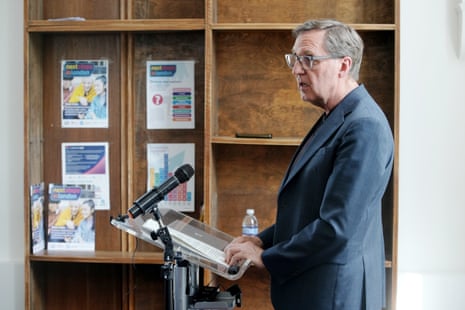
Milburn says welfare system failing to help get young people into work
Q: Do you want to see more conditionality in the benefits system, with people losing welfare payments if they don’t take part in work or training?
Milburn said that he was not making policy recommendations today.
But he said the report explains how the system works, and he said that some of incentives in the welfare system were “perverse”.
He went on:
There’s a backlog of two million waiting for a reassessment of their work capability. That’s two million people who could be helped into being in a job.
We’re not doing face to face assessments in the way that we once were. That means you can’t have a meaningful conversation with a young person who might have autism, might be living in a rural area where there’s no public transport. You want to be able to have a meaningful conversation with these people.
Milburn says he would like to see benefits spending fall, but via getting more people into jobs not via 'arbitrary' cuts
Q: Do you think Labour has the appetite for welfare reform in the light of what happened last year when it tried to cut Pip (the personal independence payment – a disability benefit)?
Milburn replied:
I’ve always taken the view that you live and learn. And I like to think that people in government – and Pat [McFadden] is one of them – have lived and learned.
Look, if you frame welfare reform is all about cost out and taking money away from people, particularly those who are sick and disabled, you are going to get an appropriate response. And that is what has happened.
So what are we trying to do here? We’re trying to do something entirely different, which is to say what is going on for young people from early years all the way through to the welfare system. What is it that we need to do to enable them to do what they want to do, which is to be in work?
Miliburn said he was regularly asked if he thought the benefits bill should be lower. He went on:
The honest answer to that question is yes, it should.
But the sustainable way to reduce the benefits bill is not by plucking an arbitrary figure out of thin air and saying, we’re going to cut it.
The way to do it is to get more young people into work, because if they’re working, they’re earning. If they’re earning pay, paying taxes. If they pay in taxes, they’re less reliant on benefits.
Milburn said the problem with the system now was that it was set up in the wrong way.
The first instinct is to say to a young person, particularly with a health condition or a disabled person, you can’t work, rather than saying to them, what would it be that would enable you to work? How can we help and support you to do so?
So I think honestly, that is the right question.
Milburn said he thought cabinet ministers agreed.
My sense is that there is an appetite to go back into this [welfare reform], but to go back into it in the right way.
Milburn says he's not interested in blame game, and wants to focus on solutions
Q: Why has the problem got worse in the UK compared to other countries?
Milburn said this had been a problem for years. It was a structural issue.
The easiest thing is to do the blame game. Everybody wants to blame everybody. You know blame the smartphones, blame the parents, blame the benefit system, blame the employers, blame the politicians.
Fine. But that doesn’t get you anywhere. It really doesn’t.
You’ve got to understand what the hell is going on, why it’s getting worse, not better.
You got to take a systems-wide view of it.
And what is unique about what we tried to do here is we’ve tried to look at it through a systems lens, both on the supply side and the demand side.
And that will point us to getting answers that are sustainable.
Milburn warns 'bad things' will happen if people conclude politics can't solve problems like Neet crisis
Q: [From the Mirror] Is instability in the Labour party making this situation worse?
Milburn jokes about that being outside his terms of reference, “thank God”.
But he says this is a problem all the political parties need to address.
If politics can’t get its act together and deal with the future of this generation, then honestly, people will take a view about politics, which is that it’s not working. And when that happens, bad things happen.
So my view is that, whatever happens, whoever’s around, whoever’s up, who’s down, whoever’s in power, this is an issue that is not going to go away. The question is, is somebody going to lean into it and solve it?
Milburn is now taking questions.
Q: [From the Sun] Do you think there is a case for some sort of national service for young people?
Milburn says he is not really addressing solutions at this point. He says he is focusing on what causes the problem.
Milburn says Labour policies have not helped jobs situation for Neets - but stresses problem goes back much longer
Milburn says young people have been hit by a perfect storm.
A generation ago almost 2 in 3 of this age cohort were in work.
Today, it’s barely 50% for under 18s.
In education, the number also holding down a job has halved during that time.
Now, there’s been much focus about the impact on youth employment of recent policies like the youth minimum wage and the rise in national insurance contributions.
Employers repeatedly raised this with me as an issue, and it is true; the changes have had an impact. It’s always a risk for an employer to take on a young person precisely because they’re unproven.
So if public policy wants more young people in work, it has to minimise risks and maximise opportunity incentives for employers.
But no one should pretend that the structural change that has been taking place in the youth labour market has only recently been triggered.
Over the last few decades, Britain has had jobs boom, but one that has largely passed.
Young people’s entry level jobs have long been in sharp decline compared to the start of the century. There are 1.6 million fewer low and medium skilled jobs in the economy. Vacancies in hospitality have halved in the last four years. Saturday jobs have long since been in freefall. Apprenticeship starts amongst young people have fallen by 35% over the last decade.
The first rung of the ladder in careers has thinned for too many young but is now simply out of reach.
That places them in a hopeless catch-22 position where employers ask for work experience, but opportunities for young people to gain it have either narrowed or have gone.
Milburn says 'great British promise', that each generation does better than last, 'is being broken'
Milburn said his team spoke to countless organisations when they produced this report.
I’ve been around politics and public policy for more decades than I care to remember. I can genuinely say I’ve never come across an issue as visceral as this with the public.
Wherever I’ve been, whoever I’ve spoken to. I’ve come across a deep concern bordering on a fear about the future facing young people.
Parents are more worried than ever about their kids. Grandparents, too, about their youngsters’ prospects for a job, a home, a decent future.
For decades in Britain, the foundation of our unwritten social contract has been that each generation would be able to do better than the last.
That great British promise for this generation is being broken.
The DWP has now published the Milburn report, and associated data tables.
Milburn said this situation is not sustainable.
The problem is that for too many young people, opportunities are not growing. They’re shrinking.
Reversing that starts with understanding what is driving it in the first place.
This is the first of two reports that I’ll produce, as Pat was saying. The next in the autumn, will provide proposed solutions to the Neet crisis.
He said today’s report focuses on diagnosing the problem.
Milburn says Neet crisis 'a moral one', as well as financial, costing Neets £300,000 over their lifetime
Milburn said this was more than just a financial crisis.
There is much talk, of course, of this being an economic or a fiscal crisis.
And indeed it is. The cumulative cost to our country of almost one million young people outside of education and work is estimated in my report at £125bn a year – more than we spend on education.
But the principal cost isn’t borne by the taxpayer. It’s borne by the young person.
Being Neet has a long term scarring impact – cost to their confidence, cost of their health, cost to their future income.
For those who spend the whole period from 18 to 24 years of age outside of education and work – as about a quarter of 24 year old Neets do – the lifetime loss can approach £300,000.
That is not an abstract number. It’s a deposit never saved, a home never bought, a pension never built, the hope of a good life never realised.
So this is more than an economic crisis. It’s a moral one.
Neet rate could rise to 1 in 6, says Milburn, as he warns detachment 'becoming permanent' for young people
Milburn said he thought every young person had something to offer.
When Pat [McFadden] first asked me to do this work. I came to it with this view. Every young person has something to give the scale and aptitude of potential.
Every one of them should have an opportunity to learn or to earn.
He said youth unemployment had been a problem for a long time.
The Neet [not in education, employment or training] rate in our country has barely been below 10% in 25 years. It’s one thing to be ignorant about a problem. It’s quite another to be neglectful.
And I’m sad to say that for far too long in our country, the Neet crisis has been swept under the carpet.
Not any longer. This review exists because today Britain faces a genuine generational faultline.
But the problem was getting worse, he said.
We do not just have a chronic problem, it is getting worse, not getting better.
And we have neither a system or a plan to deal with it.
A decade or more ago, the problem was temporary youth unemployment. And youth unemployment today is still, of course, far too high.
But now it is something deeper and far more corrosive. It is youth detachment from the labour market. Nearly six in 10 young people who are Neet today are economically inactive. That means they not only don’t have a job, they’re not looking for a job.
Six in 10 have never had a job. 20 years ago, that figure was closer to four in 10.
Detachment is no longer temporary for too many young people, it is becoming permanent.
If the current trajectory continues within five years, we forecast in this report that today’s one in eight young people who are Neet will climb to one in six.
We are at risk of a lost generation.
Milburn opens press conference saying Neet crisis 'probably most significant crisis facing country today'
Alan Milburn is speaking now.
He says the Neet crisis is “probably the most significant challenge facing our country today”.
New figures released showing that there are now over one million young people in our country not in education, employment or training.
It’s actually more than a statistic. It’s a warning. A warning that far too many young people are reaching adulthood only to find the door to opportunity closed, then Neet.
It’s an ugly term, but it’s a term with ugly consequences – aspirations thwarted, confidence drained, futures narrowed before they’ve properly begun.