 1 month ago
Tata Sons chairman says artificial intelligence is expanding the scope of IT services rather than threatening it, as TCS reports a $2.4 billion annualised AI revenue run-rate and outlines five major AI opportunities.
3 Min Read
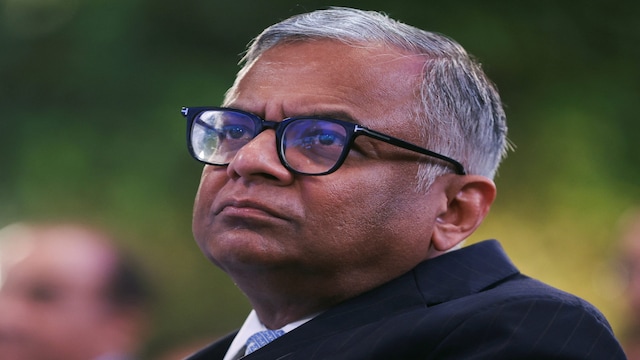
TCS could have as many AI agents as human employees within the next three years, Tata Sons Chairman N Chandrasekaran said on Tuesday (June 9).
"Far from being a mortal threat, AI is the most significant opportunity yet for enterprise IT," he said while addressing shareholders at Tata Consultancy Services' 31st Annual General Meeting.
The remarks come amid persistent investor concerns over the impact of generative AI and automation on the labour-intensive business models of Indian IT services companies.
Chandrasekaran said the market's worries stem from a misunderstanding of how AI will reshape enterprise technology spending.
Despite fears around AI-driven disruption, he said "margins have held, revenues are up, and the deal pipeline is stronger than ever", arguing that the industry's fundamentals remain intact.
"AI is not merely a technology. It is infrastructure — an infrastructure of intelligence," he said, adding that as the cost of intelligence falls, more business processes, decisions and customer interactions will become candidates for AI-driven transformation.
Citing broader industry trends, Chandrasekaran said three-quarters of enterprises globally expect technology spending to increase over the next two years, largely because of AI.
The Tata Sons chairman also disclosed that TCS had an annualised AI revenue run-rate of $2.4 billion in the last quarter of fiscal 2026, growing at a compound quarterly growth rate of 22.4%.
Chandrasekaran said: "I predict that over the next three years, TCS will have as many AI agents as human employees."
He outlined five major opportunities that he believes will drive growth in the AI era.
The first involves modernising legacy technology systems, including outdated infrastructure, fragmented data environments and cybersecurity frameworks that enterprises must overhaul before deploying AI at scale.
The second opportunity lies in redesigning end-to-end business processes using AI, from supply chains to customer journeys. The third is the emerging market for governing and managing AI agents within organisations to ensure compliance, security, performance and cost control.
A fourth area is "sovereign AI", where governments and regulated institutions seek greater control over AI infrastructure, cloud environments and data. Chandrasekaran said TCS has already launched sovereign AI infrastructure initiatives in India and Europe.
The fifth opportunity is "physical AI", which extends artificial intelligence into factories, warehouses, energy networks, vehicles and other real-world environments. As an example, he cited a TCS deployment for a global agribusiness that uses a four-legged robot equipped with cameras and sensors to monitor hazardous warehouse conditions.
According to Chandrasekaran, established IT services firms retain a structural advantage in the AI era because enterprises require more than access to AI models.
"In enterprise AI, the scarcest resource will not be the model. It will be context and trust," he said, pointing to TCS's longstanding client relationships, regulatory expertise and experience managing complex technology systems.
The chairman also struck an optimistic note on the broader industry outlook, saying the global enterprise IT market, currently valued at around $1.6 trillion, is expected to reach $3 trillion over the next decade as AI drives increased technology spending across industries.
TCS reported consolidated revenue of ₹2.67 lakh crore for fiscal 2026, up 4.6% year-on-year, while net profit rose 8.8% to ₹52,820 crore. The company said total contract value exceeded $40.7 billion during the year.