 1 month ago
While missiles and drones fall from the skies, Iran is still busy posting memes and managing its image for the world. Because in the modern world, war is no longer just fought on battlefields. It is fought on timelines, in captions, and in who tells the story best. There are no clear winners in the US-Israel-Iran war on the battlefield yet, but Iran is clearly winning the propaganda war. It is projecting itself not as a victim but as fearless, strong, and unapologetically savage.
If a country has missiles and rockets raining down from the skies, what would you expect it to look like? Dead bodies on the ground, buildings reduced to rubble, people crying out in pain and fear, politicians looking permanently stressed, and kids hiding wherever they can. The usual war-torn checklist, right?
But Iran clearly did not get that memo.
Because while the world imagines chaos, someone in Iran is busy dropping top-tier memes and Olympic-level trolling. People are out on the streets, not running away but showing up at rallies in support of their government. Kids are not begging for the war to stop. They are asking for a pink missile because, apparently, even war needs aesthetics. And artists are performing, clapping back creatively at Trump’s attack threats like it is a cultural mic drop.
Iran is not struggling. Iran is not shattering. Iran is not playing the victim card. Iran is turning crisis into content and being unapologetically, almost theatrically, savage.
And yet, beneath all the bravado, the numbers do not joke. Over 3,500 people have died in US-Israel strikes, with many more wounded in just six weeks of war. The pain is real, but it is being carefully tucked away, almost edited out, to project a version of Iran that looks fearless, unbothered, untouchable.
Clearly, Iran has parallaly started another war: propaganda war. What is even more stunning? People are buying it.
And here is the real plot twist. Iran has been under an internet shutdown since February 28, the very day the attacks began. Which means all this content. Yes, the memes, the messaging, the mood, is not for those inside the country.
It is for us.
MEMES AS STRONG AS MISSILES
Since the US and Israel began their bombing campaign, Iranian embassies have turned into full-time meme factories, flooding their feeds with extreme online snark. Government-aligned accounts are out here posting AI-generated Lego-style animations linking the Epstein files to Trump’s war. Subtle? Not even trying.
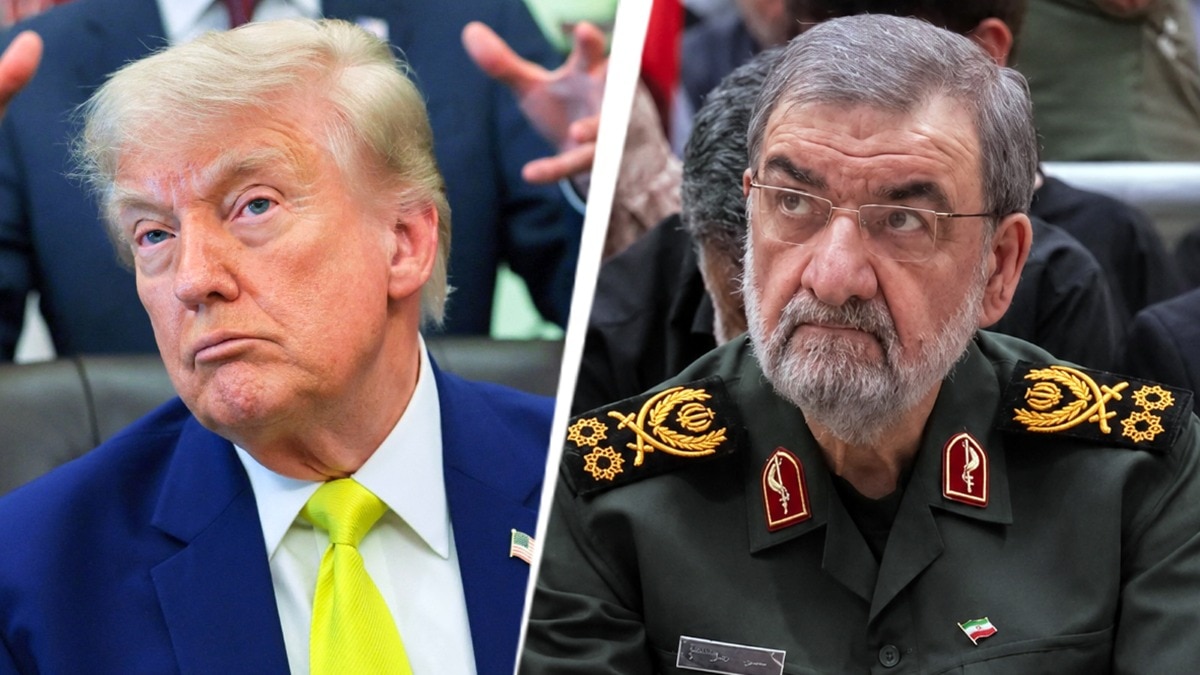
And then there’s Mohammad-Bagher Ghalibaf, one of Iran’s top wartime leaders, casually trolling the US administration, whose president was once the world’s most famous tweeter. The irony writes itself.
Even with the regime battered but still standing, Iran’s online army is working overtime to sell the ceasefire as a win. The moment the attacks began, this network did not scramble. It launched. Viral content, sharp messaging, and perfectly timed jabs aimed straight at the Trump administration’s weak spots.
The Jeffrey Epstein scandal pops up like a recurring character, with claims that Trump started the war as a distraction from his past links. Other posts suggest he was played by Israel or is trying to profit from the chaos. And then there is the crowd favourite, "taco", short for "Trump always chickens out".
Iranian missions have also been sharing some witty political cartoons. One shared by the embassy in Bulgaria depicted an arm bearing Iran’s flag gripping Trump’s neck, symbolising dominance. Another, posted by the Consulate General in Mazar-e-Sharif, showed Trump being lifted by a hand, again suggesting Iranian control.
People were clearly impressed and an X user asked Iran’s Mumbai consulate if it was hiring Indians for its "media team". The reply went viral: “Hi. We’d genuinely love to, but at the moment there are no vacancies.”
PUBLIC RALLIES AND HUMAN CHAINS
From Iranian embassy accounts to pro-Iran handles online, the memes are coordinated. But on the ground, ordinary citizens are just as loud, just as visible, and very much not keeping it low-key.
In response to Trump’s threats, massive rallies have taken over the streets. People holding Iranian flags, chanting slogans, and turning public squares into displays of loyalty.
Encouraged by clerical rulers, supporters of the Islamic Republic step out night after night, filling the streets even as strikes continue. According to the regime, more than 850 demonstrations have taken place since the war began. That is not spontaneous energy. That is an organised presence.
Alia Brahimi from the Atlantic Council wrote on X, "That leaders will be killed has long been accepted, and there has been decades of ideological conditioning to prepare Iranians to absorb the death of senior commanders.”
She added, “That moral effort has an organisational counterpart which has built resilience by making sure there are multiple replacements for anyone who holds a senior post, and by, more recently, decentralising decision-making. This is part of the Islamic Republic’s unique system and worldview."
In simple terms, the system is designed not to fall apart, even when tested.
When Trump threatened to target energy sites, the Iranian regime called on people to form human chains. And people showed up. Power plants, bridges, potential targets, suddenly surrounded by civilians standing guard.
President Masoud Pezeshkian claimed that 14 million Iranians had volunteered to fight in case of a US or Israeli ground invasion, nearly double previous numbers. "I too have been, am, and will remain ready to give my life for Iran," he wrote.
Because in this version of the story, resistance is both policy and performance.
LEADERS SMILE, TAKE SELFIES
Leaders are making sure they match the energy and keep people in confidence. So, despite continuous missile and drone attacks, Iran’s leaders, including its President, keep making very public appearances. Not rushed, not hidden, not even slightly low-profile. They are out there at rallies, in the middle of crowds, smiling and taking selfies like this is a campaign trail, not a conflict zone.
There's no visible fear. No visible anxiety. Just carefully curated calm.
Analysts say this is not a coincidence. It is a strategy. A calculated effort by Iran’s leadership to project resilience and authority. The message is simple. The Islamic Republic is unshaken by strikes, firmly in control, and very much watching.
Omid Memarian, a senior Iran analyst at DAWN, a Washington-based think tank, told Reuters that the decision to send officials into gatherings reflects a layered strategy, including an effort to sustain the morale of core supporters at a moment of acute pressure.
"The system relies heavily on this base; if its supporters withdraw from public space, its ability to project control and authority weakens significantly," Memarian said.
Hadi Ghaemi, head of the Center for Human Rights in Iran, calls it what it is. Optics with a purpose.
"By being in the middle of large crowds, they have protections that would make Israeli-American attacks against them very bloody and generate sympathy worldwide," he told Reuters.
In other words, the selfies are not just for show. They come with a security upgrade.
SONGS OF RESISTANCE
In what might be the most poetic form of defiance yet, Iran is not just responding with missiles or memes, but with music. Iranian musician Ali Ghamsari took things to a whole new level by performing a traditional tar recital outside the Damavand power plant. Yes, the same site that US President Donald Trump had threatened to target. The move seemed less like a subtle protest and more like a melodic dare.
Captured on video, Ghamsari sits calmly on a traditional mat, playing the tar, a long-necked instrument at the heart of Persian classical music. The setting screams tension. The music does the exact opposite.
"Hello my dear friends. I am currently at the Damavand Power Plant. I wish you were here with me, as this is a site that has been threatened with attack, which I hope will not happen. I hope the sound of my tar can inspire peace and help keep the lights in people’s homes on," he said.
While Trump threatens to target power plants, Iranian musician Ali Ghamsari sits beside one & plays for peace, for light, for life.
Targeting civilian infrastructure is not strategy — it is a #Warcrime.
When power speaks the language of destruction, humanity answers with music. pic.twitter.com/PFWqEb5ZhI— Iran Embassy in The Hague, The Netherlands (@IRAN_in_NL) April 7, 2026
And it does not stop there.
Composer and kamancheh player Hamidreza Afarideh returned to what remained of his destroyed music school. Not to rebuild. Not yet. First, to play.
“I wanted the last sound that remains here to be music, not bombs and missiles,” he said.
Hamidreza Afrideh, a composer and kamancheh player, sits on the ruins of his music school and says:
"I wanted the last sound that remains here to be music, not bombs and missiles." pic.twitter.com/8kK0352dqB— Alireza Akbari (@itsalireza_akb) April 7, 2026
Different places, same instinct. Even if everything around you falls apart, make sure you stand tall.
FEARLESS CHILDREN
In Iran, even kids are not just kids. They are packaged as brave, "revolutionary", and very camera-ready.
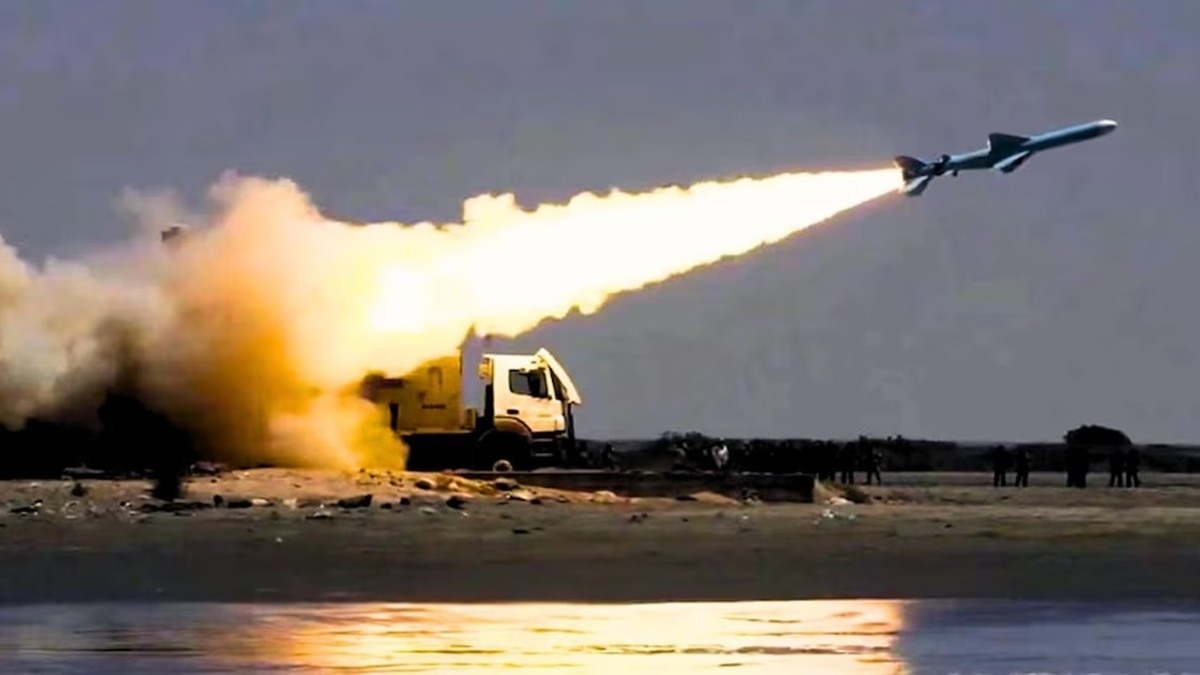
Case in point, the now-viral pink missile. When Iran launched it, the internet had questions. Turns out, it was at the request of a little girl who asked the IRGC to make it happen. And they did.
The missile even carried a Persian message: "In response to the request of the little revolutionary girl." Because nothing says soft power quite like weaponised cuteness.
Iran’s Tasnim News Agency doubled down by posting a video of the girl alongside images of the Seyed Majid pinpoint striker missile, now painted pink. The internet did what it does best. It shared, it reacted, it amplified. Iran, once again, stayed in the headlines.
IRGC “Plows Tel Aviv” with “Pink Missile” After Child’s Plea
A young Iranian girl’s daring call—“Seyed Majid, the pinpoint striker, plow Tel Aviv with a pink missile”—was answered in less than 48 hours as the IRGC launched a pink missile at the occupied city. pic.twitter.com/vbUUcTh17W— Tasnim News Agency (@Tasnimnews_EN) April 6, 2026
Because clearly, even in the middle of a high-stakes war, Tehran understands the assignment. If you cannot control the narrative, at least make it go viral.
And then comes the next clip.
In another widely circulated video, a reporter asks a child dressed in military gear about Trump’s desire to change the regime in Iran. A heavy question, loaded with geopolitics. The answer was nothing what people expected.
When the reporter says, "Trump says he wants to change the regime in Iran," the child shoots back, "My diaper is dirty, come and change my diaper first."
PROMOTING TOURISM?
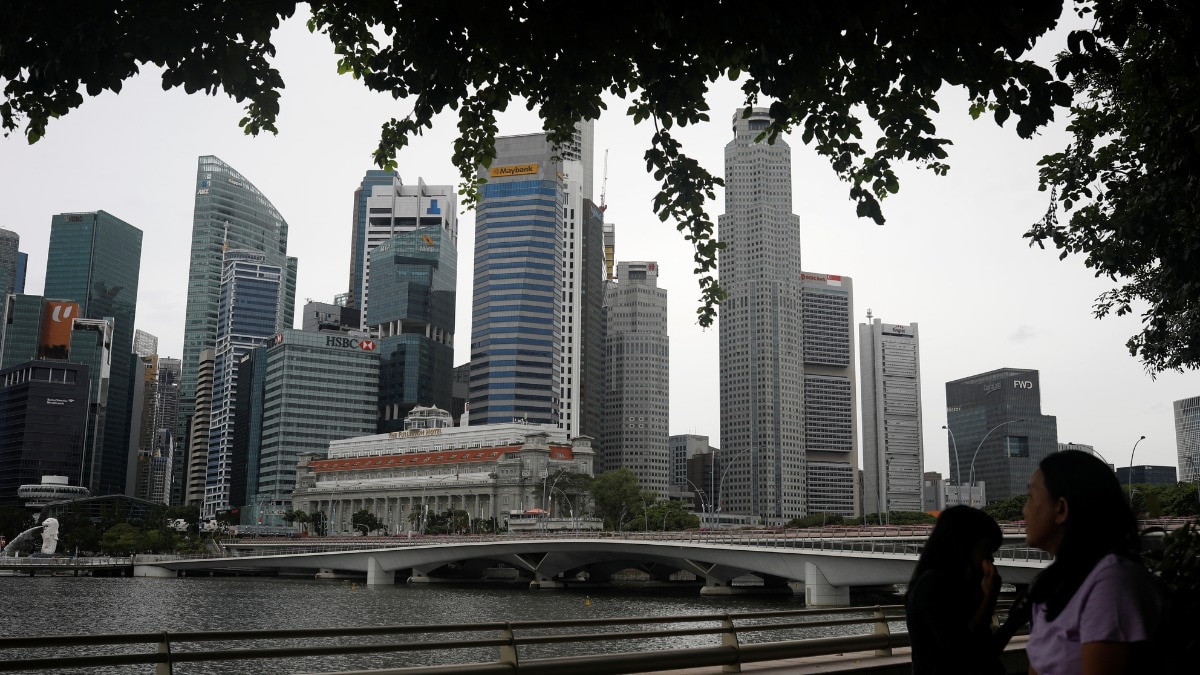
Iranian embassies have suddenly discovered a new diplomatic mission: tourism marketing. From stunning metro stations to striking cityscapes and architectural showpieces, official handles and users alike are busy curating a parallel Instagram version of the country. This is less geopolitics, more "welcome to Iran, once the missiles are gone."
But this is not out of nowhere. It is a response to US Secretary of State Marco Rubio’s remark: "If Iran spent billions on people instead of weapons, it would be a much better country." Pro-Iran handles are now ensuring that people not only see its stunning infrastructure but also regret that they never saw it before.
And the internet did what it does best. It replied with pictures. Social media users began flooding timelines with images of Iran’s infrastructure, from beautifully designed metro stations to modern public spaces, all framed as a quiet flex against the West.
One post read, "This is what America & Israel fear and hate. Because they know they could NEVER produce anything so beautiful. This is why they hate Iran (& many other countries in the global south)."
This is what America & Israel fear & hate
Because they know they could NEVER produce anything so beautiful
This is why they hate Iran (& many other countries in the global south) https://t.co/QTHKvpXx98— Stop The Bollocks with Mirabel (@MirabelTweets1) April 10, 2026
Another Iranian account posted a picture of a mall in Tehran and asked, "Mall of Iran in Tehran, Iran. Does this look better or worse than a US mall?"
Iran is making sure that before the war ends, people's perception of it is changed. They are sharing videos of women walking freely in modern outfits with no hijab, tourists lauding the hospitality and facilities and glimpses of the most outstanding bridges and landmarks. The images from war-hit countries so far have been of bodies, rubble and missile attacks but Iran has flipped the script and how.
'IRAN WINNING PROPAGANDA WAR'
Clearly, this is not just a war of missiles. It is a war of narratives, and Iran has been treating it like one from the start. Alongside battlefield responses, it has built a parallel information front where perception moves faster than evidence and attention often matters more than accuracy.
Iranian embassy accounts across the world, from Zimbabwe to India, have embraced this meme-driven communication style. What once looked like official diplomacy now often resembles internet culture with geopolitical stakes.
"There’s no question that Iran has been winning the propaganda war. The Trump administration has been on the back foot," said Darren Linvill, co-director of the Media Forensics Hub at Clemson University.
Tehran’s approach is not accidental. Researchers say the IRGC has spent years developing digital influence networks that rely on English-speaking content creators, fast-moving meme formats, and AI-generated visuals designed for maximum virality. The IRGC has funded a network of companies staffed by young digital natives fluent in English-language meme culture, researchers said, while pro-regime outfits have mastered rapid-fire AI-animated videos.
"The Iranian aim has been to attract attention, make the division inside the US even bigger and put pressure on Trump," said Gholam Khiabany, a professor of media studies at Goldsmiths University.
They have also catered to a different, anti-imperialist global audience with posts on Palestinian solidarity, the Vietnam war and atrocities against Native Americans.
But propaganda only works because it travels further than context.
Reports say that back home the language is raw and rough, with pro-regime figures on TV reportedly warning would-be dissidents, "we’ll grab you by the collar, one by one" and "make your mothers mourn for you."
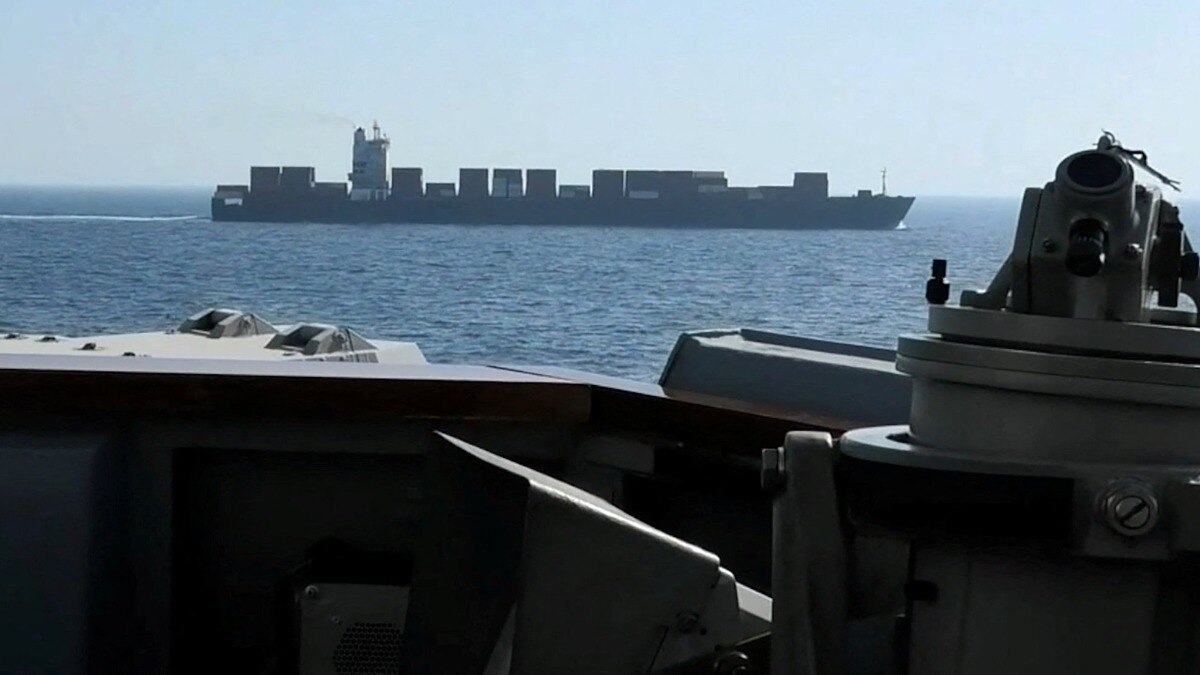
Iran has lost many of its top officials and people. Buildings, bridges, as well as vital transport networks are all damaged. It has responded by attacking Israel and the Gulf, mobilising proxy militias and throwing global shipping and energy markets into disarray by effectively closing the Strait of Hormuz, a critical maritime corridor.
But even as Trump talks of “total surrender” and wiping out Iran’s leadership, Ghalibaf and other officials are still online, still posting, still mocking, adding another layer of defiance to every swipe.
"If your main engagement with the war is via these Iranian videos, you basically see the US and Israel unleashing all their military might to no avail, and then Iran basically laughing at them," said the Atlantic Council’s Brooking.
When Iran shares memes after memes targeting Trump and the US, social media users like, share, and follow. They appreciate Iran’s sense of humour, with many wondering "who’s running these handles" and some even going to the extent of asking "is there a vacancy?"
But nobody asks where the bodies are. Where is the ground reality? Where are the pictures of people who must be mourning the death of their loved ones? Iran is presenting a narrative that portrays it as a hero warrior, and it is succeeding because the world is buying it without negotiation. This is the art of being savage.
- Ends
Published By:
Akash Chatterjee
Published On:
Apr 12, 2026 09:30 IST
Tune In