4 weeks ago
The Trump administration has reportedly put Venezuela’s hardline interior minister, Diosdado Cabello, on notice that he could be next to fall if he does not support the acting president, Delcy Rodríguez, who has been in power since Nicolás Maduro was seized on Saturday.
Reuters reported that US officials are “especially concerned” that Cabello – long seen by many as the regime’s real No 2 – could sabotage Washington’s plan to keep key figures from Maduro’s inner circle in place in the name of stability while pursuing a transition and unrestricted access to Venezuela’s oil.
In a post on Monday, Donald Trump said Venezuela would be “turning over” $2bn worth of crude to the US, a flagship negotiation that would divert supplies from China while helping Venezuela avoid deeper production cuts.
The US secretary of state, Marco Rubio, speaking on Wednesday after briefing US senators, said Washington had a three-step strategy for the South American country, beginning with stabilising it after the seizure of Maduro.
“We don’t want it descending into chaos,” said Rubio, adding that the second phase would involve “ensuring that American, western and other companies have access to the Venezuelan market in a way that’s fair”, as well as “beginning a process of reconciliation … so that opposition forces can be amnestied, released from prison or brought back to the country, and start rebuilding civil society.
“And then the third phase, of course, will be one of transition,” he added.
María Corina Machado, the Venezuelan opposition leader, has vowed to return to the country as soon as possible. Rejecting the authority of the acting president, backed – for now – by the US, she said she expected new elections to be called quickly. “In free and fair elections, we will win more than 90% of the votes,” she told Fox News this week.
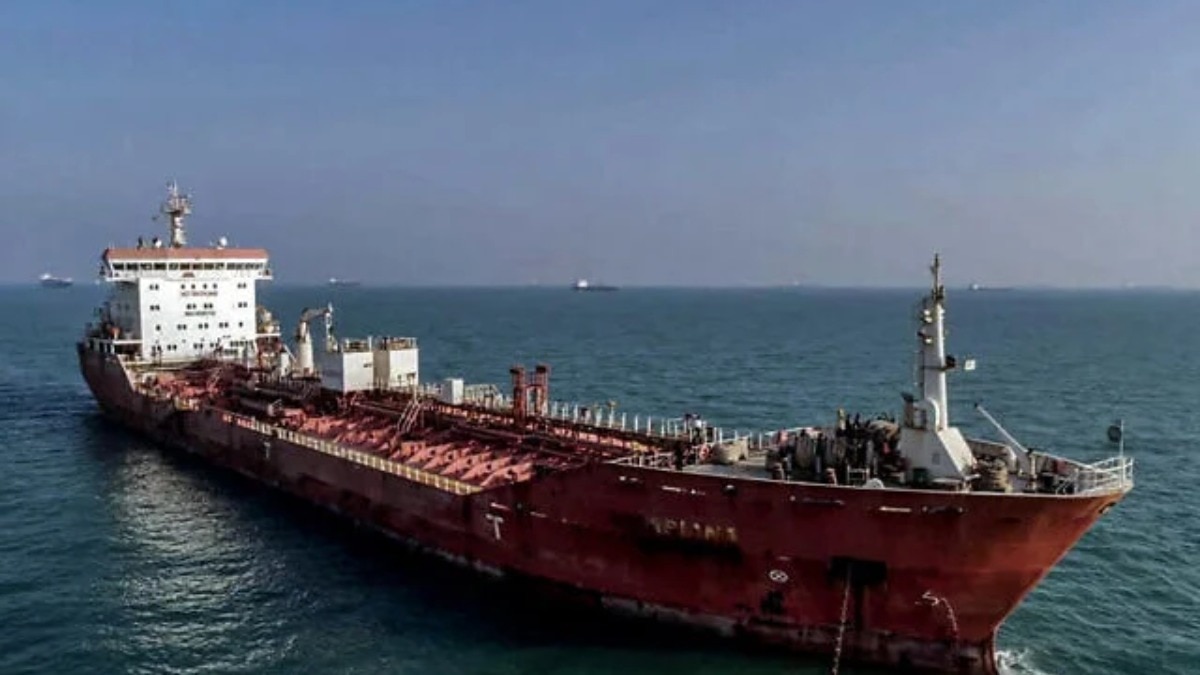
Also on Wednesday, the US seized a Russian-flagged oil tanker in the Atlantic and a second vessel in the Caribbean, as the defence secretary, Pete Hegseth, posted that America “continues to enforce the blockade against all dark-fleet vessels illegally transporting Venezuelan oil to finance illicit activity, stealing from the Venezuelan people”.
In the meantime, US officials have told Cabello through intermediaries, according to Reuters, that if he proves defiant, he could face a fate similar to Maduro’s.
Cabello, for his part, has posted videos on social media showing himself commanding dozens of heavily armed men patrolling the streets of Caracas. He controls the police, counterintelligence agencies and the militias known as colectivos.
“It’s calm, it’s tranquil. Your conscious people know what we must do, working to restore the normality that should prevail in the country and get back to work. Today shops opened without any problems,” Cabello said in one video, pointing to a clock showing 11pm on Tuesday.
He is also seen taking photos and shaking hands with civilians and shopkeepers, and making a speakerphone call with what appears to be another commander, asking how things are. “In battle, my commander, in battle, my captain. Defending our homeland,” comes the reply.
In another clip, dozens of armed men pose for the camera with rifles raised and fists clenched, chanting: “Always loyal, never traitors!” and “To doubt is to betray!” – the same slogan emblazoned on Cabello’s cap, which he also wore at Rodríguez’s swearing-in ceremony on Monday, a gesture interpreted by some as a sign of resentment at not being placed in charge and a warning that any concessions to the US would be seen as a betrayal of Chavismo.
Cabello has a long history of rivalry with Rodríguez and her brother, Jorge Rodríguez, the president of the Venezuelan congress. Although many considered him the regime’s second-most-powerful figure after Maduro, analysts stress that there was no clear hierarchy. Power was divided among factions – one dominated by Cabello, another by the Rodríguez siblings, among others – that coexisted and competed.
Cabello was among the officers who took part in Hugo Chávez’s failed coup attempt in 1992 and is therefore regarded as a “core” Chavista.
The interior minister is also widely seen as one of those most responsible for the Maduro regime’s extensive and well-documented human rights abuses, which included more than 20,000 extrajudicial killings, enforced disappearances and torture, and the jailing of thousands of political opponents.
Since Monday, the colectivos under his command have been patrolling streets, operating checkpoints and checking people’s phones in a crackdown aimed at consolidating authority after the US attack.
The regime has issued a decree declaring a “state of external commotion”, effectively a state of emergency, ordering the “immediate search and capture of anyone involved in the promotion or support of the US armed attack”. At least 16 journalists and media workers were detained – 14 in Caracas and two near the Colombian border – with 15 later released, one of whom was deported.
On Tuesday, the acting president declared seven days of national mourning for those killed in what was the first large-scale US military attack on South American soil.
Rodríguez also named Gen Gustavo González López as the new commander of the presidential honour guard, replacing Maj Gen Javier Marcano Tábata. Although Tábata survived the operation that captured Maduro, in which at least 24 Venezuelan soldiers and 32 Cubans were killed, most of them part of Maduro’s personal security detail, his position was said to have become untenable amid criticism over an alleged failure to prevent his leader’s capture.
The acting president also hardened her rhetoric against Washington, saying in a televised address that “no external agent governs Venezuela” – a clear rebuttal to Trump’s claim that, after Maduro’s capture, the US would now run the country.
The remarks marked a shift from the conciliatory tone she had adopted on Sunday, as she returned to harsher language, describing the US strike as a “terrible military aggression” and a “criminal attack” whose “absolutely illegal outcome, in violation of international law”, was the “kidnapping” of Maduro and his wife, Cilia Flores.