 1 hour ago
US President Donald Trump on Thursday cancelled plans to livestream the execution of Nidal Malik Hasan, a former US Army major convicted of killing 13 people in a 2009 shooting at Fort Hood, Texas. The execution by firing squad will proceed as scheduled on December 3, but only immediate family members of the victims will be allowed to witness it in person if they choose.
The decision followed growing opposition from Republican lawmakers, religious leaders and human rights organisations, who warned that broadcasting an execution could turn capital punishment into a public spectacle.
Trump announced the reversal on Truth Social, saying he had considered livestreaming the execution as a deterrent to terrorism but ultimately decided against it after hearing concerns.
"I think streaming the execution for all to see might have been a strong deterrent for the World to witness how America deals with Terrorists and SCUM like Hasan but, many very good and well meaning people would rather not watch him die, through streaming, or through any other visual device," Trump wrote.
"He will die, as scheduled, by firing squad, but this event will not be streamed. That said, the execution may be viewed in person by the immediate families of the victims, if they so choose. They deserve to witness JUSTICE!" he added.
WHO IS NIDAL MALIK HASAN?
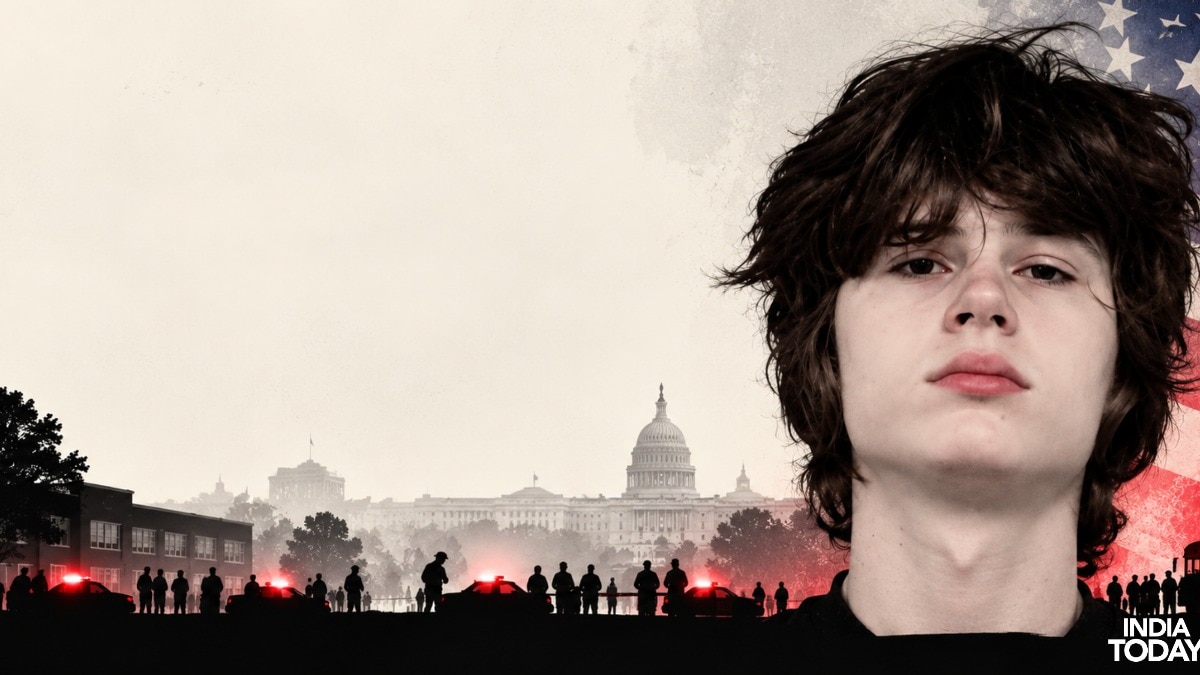
Hasan, now 56, is a former US Army psychiatrist who carried out one of the deadliest shootings at an American military installation.
On November 5, 2009, Hasan opened fire inside a medical processing facility at Fort Hood, Texas, where soldiers were preparing for deployment overseas. Thirteen people were killed, including a pregnant soldier, and 32 others were injured.
Hasan was shot by police during his arrest and was left paralysed. He is believed to use a wheelchair.
During his military trial in 2013, Hasan admitted carrying out the attack, claiming he wanted to stop what he described as America's war against Islam. A military court convicted him of the killings and sentenced him to death. Investigators also found that Hasan had exchanged electronic communications with Anwar al-Awlaki, a radical Yemeni-American cleric linked to al-Qaeda.
Trump referred to those communications in his Truth Social post, criticising the FBI's handling of the intelligence before the attack. He said investigators had reviewed Hasan's emails but concluded that they did not pose a threat, a decision later criticised as an intelligence failure.
WHY DID TRUMP CANCEL THE LIVESTREAM?
The Pentagon's proposal to broadcast Hasan's execution had triggered opposition across political and religious lines, including from members of Trump's own Republican Party. US Vice President JD Vance had questioned whether the livestream would take place.
"I don't know that that's actually going to happen," Vance told reporters in Cincinnati when asked about the plan supported by Defence Secretary Pete Hegseth.
"I'm not going to be watching it," he added.
Several Republican lawmakers also objected. Senator John Curtis warned that "a civilization erodes when it cultivates an appetite for executions as a form of entertainment." Senator Thom Tillis and Representative Austin Scott argued that broadcasting executions would resemble the tactics used by Islamist extremist groups.
Representative Rob Bresnahan said the suffering of victims' families "deserves respect, not a public show." Representative Michael Baumgartner also urged the administration to reconsider the proposal, while Democratic lawmakers overwhelmingly opposed it.
Trump had initially defended the death sentence but stopped short of endorsing the broadcast. Speaking to reporters before Thursday's announcement, he described Hasan as "totally nuts" and said he had yet to "make a determination about that."
RELIGIOUS LEADERS AND UN RAISE CONCERNS
Opposition also came from prominent Christian leaders and international human rights organisations. Archbishop Paul Coakley, president of the United States Conference of Catholic Bishops, condemned the proposed livestream as a "barbaric promotion of a culture of death."
Walter Kim, president of the Association of Evangelicals, warned that broadcasting an execution by firing squad "risks turning one of the state's most solemn responsibilities into a public spectacle, promoting a culture of death, rather than a culture that upholds the dignity of every human being."
The United Nations human rights office also criticised the proposal.
"Public executions constitute a form of cruel, inhuman or degrading treatment or punishment," spokesperson Shabia Mantoo told reporters in Geneva.
Amnesty described the use of a firing squad as "reprehensible", while mental health experts warned that broadcasting an execution could traumatise children.
Former Counterterrorism Center director Joe Kent, who resigned from the Trump administration earlier this year, raised a separate concern about the potential security implications.
"Streaming his execution is not just a stain on our morality — it also gives the terrorists free propaganda that they will use to radicalize & recruit more terrorists," Kent wrote on social media.
EXECUTION TO PROCEED ON DECEMBER 3
Despite cancelling the livestream, Trump has made clear that Hasan's execution will go ahead as planned.
The execution is scheduled to take place at Fort Hood, the same military installation where Hasan carried out the shooting in 2009.
US federal prison regulations prohibit the recording or broadcasting of executions, although military regulations do not contain the same explicit restriction.
- Ends