1 month ago
Amid heightened geopolitical tensions and a US-led Iran conflict, the administration said increased defence spending is vital for security, stressing its goal of strengthening military power to ensure peace through strength.
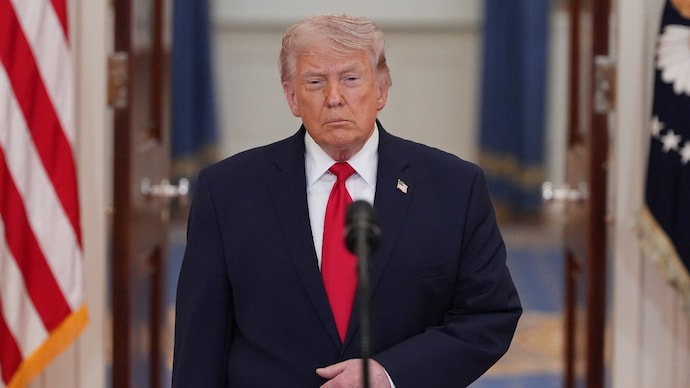
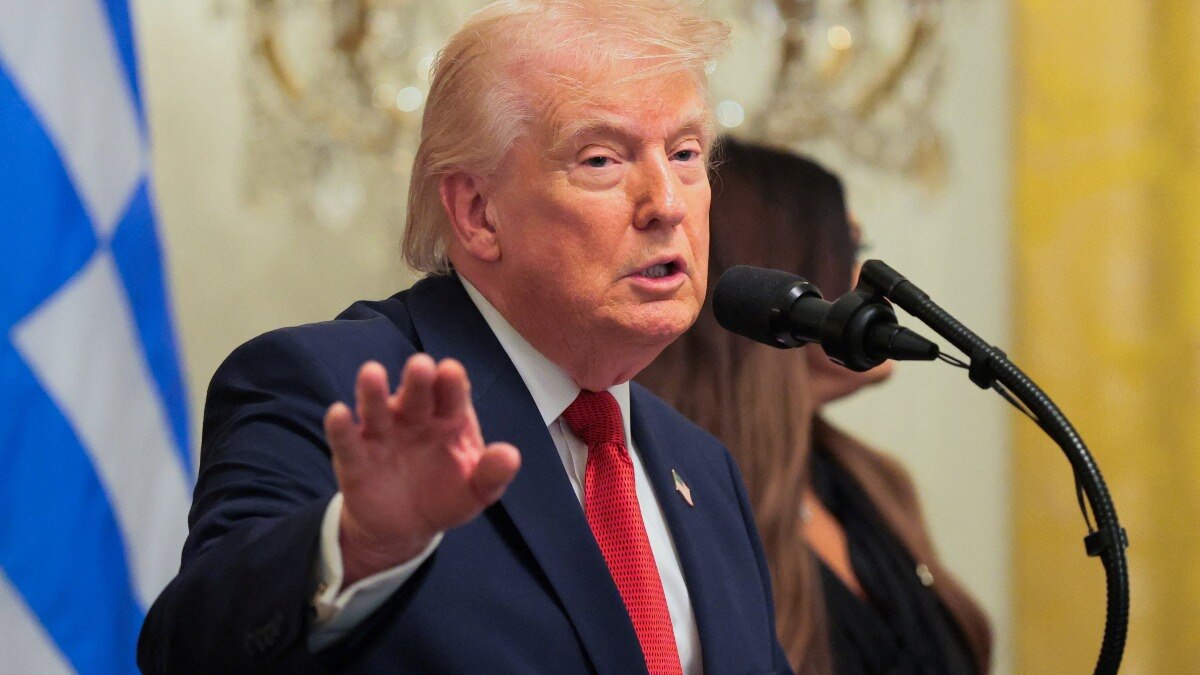
President Donald Trump arrives to speak about the Iran war from the Cross Hall of the White House on Wednesday, April 1, 2026, in Washington. (AP Photo)

New Delhi,UPDATED: Apr 3, 2026 21:08 IST
Donald Trump has unveiled a sweeping 2027 federal budget proposal that prioritises military spending at an unprecedented scale while calling for notable reductions in domestic programs. According to the Associated Press, the plan includes a USD 1.5 trillion allocation for defence—the largest such request in decades—underscoring the administration’s focus on strengthening US military capabilities.
The proposed increase had been anticipated, particularly amid rising geopolitical tensions and the backdrop of a US-led conflict involving Iran.
The administration argues that bolstering defence is essential to maintaining national security and global stability. "President Trump is committed to rebuilding our military to secure peace through strength," the budget document states.
At the same time, the proposal outlines a 10% cut in non-defence spending.
The administration suggests that certain responsibilities currently managed at the federal level—such as childcare and aspects of healthcare—should be shifted to state and local governments.
Trump reinforced this stance in remarks ahead of a national address, saying the federal government cannot simultaneously fund wars and expansive domestic programs.
"We're fighting wars. We can’t take care of day care," Trump said at a low-key White House event on Wednesday.
"It's not possible for us to take care of day care, Medicaid, Medicare — all these individual things," he said, adding, "They can do it on a state basis. You can't do it on a federal".
While the president’s budget reflects policy priorities, it does not carry the force of law.
Congress ultimately determines federal spending and frequently modifies or rejects presidential proposals.
The document, prepared under Budget Director Russ Vought, serves as a policy blueprint intended to guide lawmakers as they craft appropriations bills.
The proposal sets up a likely clash in Congress, where debates over defence and domestic spending are expected to intensify.
Lawmakers must weigh competing priorities amid already strained federal finances. The US currently faces nearly USD 2 trillion in annual deficits, with total national debt exceeding USD 39 trillion.
A significant portion of federal spending—around two-thirds of an estimated USD 7 trillion annual budget—is automatically directed toward entitlement programs such as Social Security, Medicare, and Medicaid.
These programs continue to expand due to demographic trends, particularly an ageing population.
The remaining discretionary spending has traditionally been split between defence and domestic programs, making Trump’s proposed shift particularly consequential.
In addition to defence spending, the budget outlines several specific priorities across government sectors:
A 13% increase in funding for the Department of Justice, which the White House said would be focused on violent criminals.A USD 10 billion fund within the Park Service for beautification projects in Washington, DC.A USD 481 million increase in funding to enhance aviation safety and support an air traffic controller hiring surge.With the nation running nearly USD 2 trillion annual deficits and the debt swelling past USD 39 trillion, the federal balance sheets have long been operating in the red.The administration is also relying on Republican allies in Congress to push key elements of the budget forward.
The plan proposes that USD 1.1 trillion in defence spending would go through the regular appropriations process, requiring bipartisan support, while USD 350 billion would be advanced through budget reconciliation—a mechanism that allows passage with a simple majority.
However, the budget arrives amid ongoing disputes over current-year funding.
Congress remains deadlocked on several issues, including Department of Homeland Security funding, with Democrats seeking changes to immigration enforcement policies that Republicans oppose.
A partial government shutdown has further complicated negotiations, stretching into its seventh week.
Despite these challenges, the administration hopes its proposal will shape the broader fiscal debate.
Last year’s budget efforts showed that Congress is willing to diverge from White House plans, particularly on domestic spending. Programs targeted for cuts were often preserved or only modestly reduced.
As lawmakers prepare to negotiate the 2027 budget, Trump’s proposal highlights a clear shift in priorities—one that elevates defence spending while calling for a leaner federal role in domestic policy.
- Ends
With agency inputs
Published On:
Apr 3, 2026 21:08 IST
Tune In