1 month ago
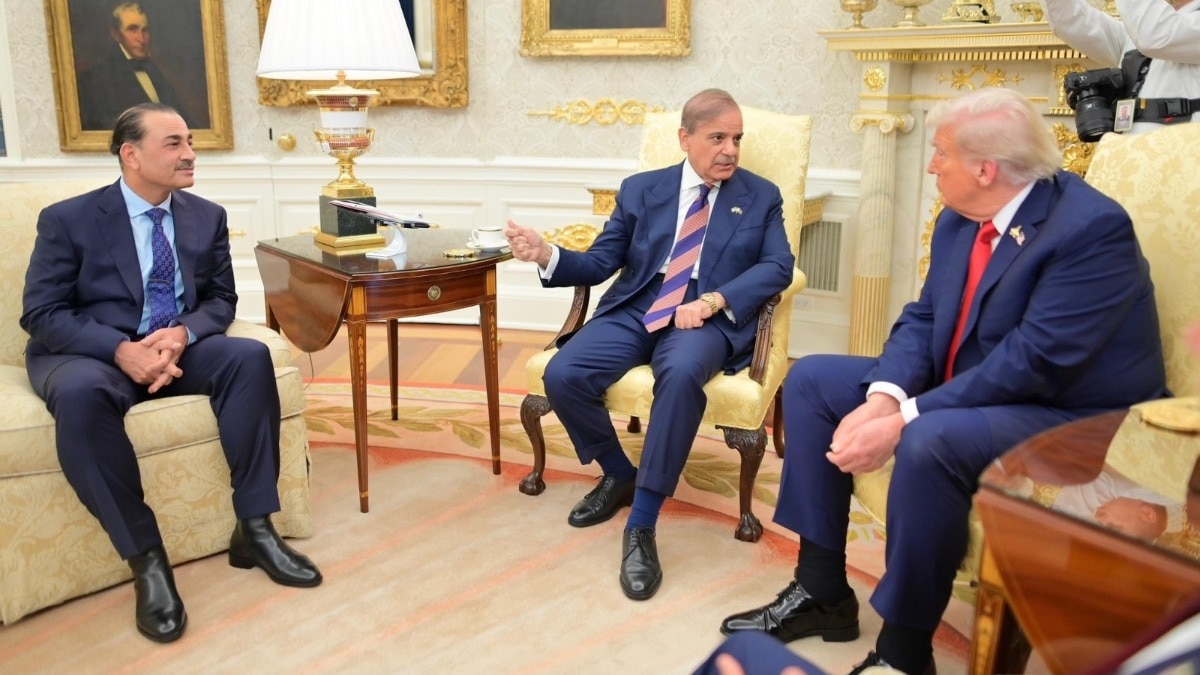
In a lengthy Truth Social post about expanding the Abraham Accords after the Iran peace deal, Trump listed the world leaders he had spoken to over the weekend. But when it came to Pakistan, he did not mention Prime Minister Shehbaz Sharif.
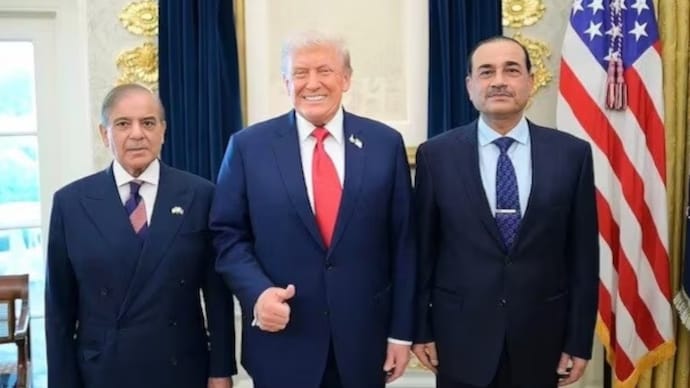
The message felt less like a diplomatic oversight and more like confirmation of a reality inside the country. (Photo: Reuters)

UPDATED: May 26, 2026 01:29 IST
US President Donald Trump may have unintentionally answered Pakistan's most uncomfortable question with a single social media post. While urging Muslim-majority nations to join the Abraham Accords after a potential Iran peace deal, he named Pakistan army chief Asim Munir among the leaders he spoke to and completely skipped Prime Minister Shehbaz Sharif, reigniting debate over who truly holds power in Islamabad.
In a lengthy Truth Social post on Monday about expanding the Abraham Accords, Trump listed the world leaders he had spoken to over the weekend. But when it came to Pakistan, he did not mention Prime Minister Shehbaz Sharif.
Instead, the US President named Pakistan's army chief, Syed Asim Munir Ahmed Shah.
The omission was hard to miss.
Trump referred to Saudi Arabia's Mohammed bin Salman, the UAE's Mohammed bin Zayed, Turkish President Recep Tayyip Erdogan and Egyptian President Abdel Fattah el-Sisi by their official state leadership roles. But Pakistan's elected prime minister was nowhere in the list.
The message felt less like a diplomatic oversight and more like confirmation of a reality inside the country: that Pakistan's military establishment continues to wield far greater influence than its elected government, especially on foreign policy and national security matters.
WHO HOLDS POWER IN PAKISTAN
Trump's remarks came as he pushed several Muslim-majority nations to formally recognise Israel under the Abraham Accords framework first brokered during his previous term. Saudi Arabia, Qatar, Pakistan, Egypt and Turkey were mentioned as potential participants in a big regional reshuffle linked to ongoing negotiations with Iran.
But Pakistan's inclusion carries high risk for Islamabad. Unlike the UAE, Bahrain, Pakistan has never recognised Israel and has traditionally tied any diplomatic relations to the creation of an independent Palestinian state.
That is why Trump's proposal has placed Islamabad in an extraordinarily uncomfortable position.
Officially recognising Israel without major movement on Palestinian statehood could trigger fierce backlash and political instability inside Pakistan. For the elected government, it could be politically devastating. For the military establishment, it could open doors to cease the power, again.
SILENCE ON TRUMP CALL SPOKE VOLUMES
According to a report by Axios, Trump floated the idea during a high-level conference call involving Pakistan and several Arab leaders over the weekend. The response, according to the report, was silence.
Axios said Trump eventually joked and asked participants whether they were still on the line after proposing wider recognition of Israel under the Abraham Accords.
For Pakistan, it was an awkward moment. Islamabad has attempted to position itself as a mediator between Iran and the United States while maintaining close ties with Gulf countries and China.
At the same time, Pakistan cannot afford a major rupture with Trump, particularly on the economic and diplomatic front, after years of strained US-Pakistan relations following America's withdrawal from Afghanistan.
That balancing act becomes far harder if Trump begins pressuring Pakistan to normalise ties with Israel.
ASIM MUNIR'S RISING PROFILE
Trump's decision to mention Asim Munir instead of Shehbaz Sharif also highlighted the army chief's growing profile.
Munir has increasingly emerged as Pakistan's key decision-maker during regional crises, particularly on issues involving Iran, Afghanistan and cooperation with the US.
Several reports claim he has built direct access to Trump's inner circle. Trump held close door meeting and praised Munir last year.
Pakistan now finds itself trapped between competing realities.
Rejecting Trump's Abraham Accords push too aggressively risks straining ties with Washington during a period of regional instability. But moving even slightly towards recognising Israel could ignite enormous domestic anger.
- Ends
Published By:
Satyam Singh
Published On:
May 26, 2026 01:29 IST