1 month ago
Sources said the US has used virtually all of its ATACMS and PrSM missiles during the Iran war. The reported drawdown has fuelled concern inside the Trump administration about readiness for other crises.
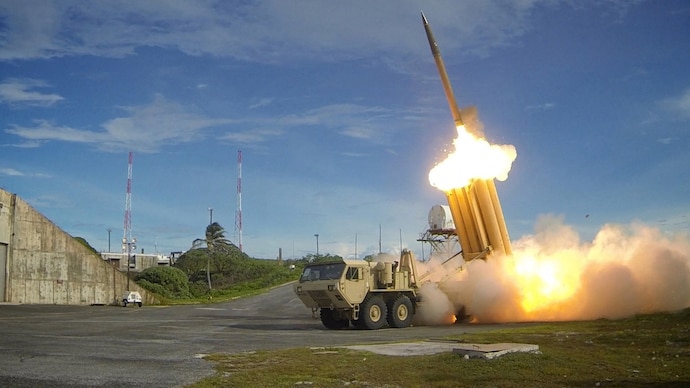
Representational image (File: Reuters)

New Delhi,UPDATED: Aug 4, 2026 17:48 IST
The United States Army has depleted much of its stockpile of precision long-range missiles during its five-month military campaign against Iran, according to a Reuters report citing multiple sources familiar with the matter. The reported drawdown has sparked concerns within the Trump administration and the Pentagon over the military's preparedness for future conflicts, particularly with rivals such as China and Russia.
The report said the Army has used "virtually all" of its surface-to-surface Army Tactical Missile Systems (ATACMS) and Precision Strike Missiles (PrSM), two of the country's most important long-range precision weapons. While the exact number of missiles remaining is unknown, three people familiar with the data said supplies have fallen sharply as the conflict has dragged on far longer than initially anticipated.
President Donald Trump had launched the Iran campaign jointly with Israel in February, predicting it would be brief. However, five months later, the prolonged conflict has significantly strained US missile inventories.
KEY MISSILE STOCKPILES UNDER PRESSURE
ATACMS and the newer Precision Strike Missile are designed to strike targets from long distances with high accuracy while keeping US forces out of harm's way. These weapons have also played a crucial role in Ukraine, where US-supplied ATACMS have enabled Kyiv to hit military targets deep inside Russia.
Military analysts say such long-range munitions would be indispensable in any potential conflict with China, given Beijing's sophisticated air defence network. The report noted that the Pentagon had already begun transitioning from ATACMS to the more advanced PrSM, but production of the newer missile is still ramping up, leaving existing stockpiles relatively limited.
One source told Reuters that the heavy use of these missiles reflected a deliberate strategy by the Trump administration to avoid riskier air operations involving piloted aircraft over Iranian territory.
INTERNAL CONCERNS OVER MILITARY READINESS
According to the report, internal discussions within the Trump administration over the past week have centred on whether the United States can continue striking Iran without reducing missile inventories to levels that could affect its ability to respond to crises elsewhere.
A fourth source said US Central Command had nearly exhausted the land-based missiles allocated before the war began but had replenished supplies by drawing from stockpiles stationed in other parts of the world.
The sources, who spoke on condition of anonymity, said officials were increasingly worried that declining missile reserves could undermine Washington's ability to deter adversaries, including China and Russia.
Responding to the report, the White House rejected suggestions that the US military was facing a shortage.
"Our defense companies are, at this moment, making more munitions than they have ever made before, in addition to expanding their plants and equipment at record levels," Trump said in a statement, adding that the United States still had "far more munitions than anyone in the world" and "far more than we need."
Pentagon chief spokesperson Sean Parnell also dismissed concerns, saying the US military "has everything it needs to execute at the time and place of the President's choosing" while maintaining a "deep arsenal of capabilities" to protect American interests.
DEFENSIVE WEAPON STOCKS ALSO DECLINING
The report said concerns extend beyond offensive missiles.
According to the Centre for Strategic and Studies (CSIS), around 65 per cent of Patriot missile interceptors had been used between February and July, while stockpiles of THAAD ballistic missile interceptors had fallen by at least 38 per cent during the same period. Two sources told Reuters those estimates broadly matched internal US government figures.
The report also said the United States has used nearly half of its global inventory of Tomahawk cruise missiles since the conflict began, although Reuters could not independently verify that figure.
Patriot and THAAD systems form the backbone of America's missile defence network, while Tomahawk cruise missiles remain the Navy's primary long-range strike weapon against heavily defended targets.
PRODUCTION SURGING, BUT EXPERTS URGE CAUTION
Although defence manufacturers have significantly increased production, analysts caution that replenishing inventories will take time.
Lockheed Martin, which manufactures ATACMS, PrSM and the THAAD system, did not respond to Reuters' queries regarding stockpile levels. Raytheon, which produces Tomahawk cruise missiles and Patriot interceptors, also declined immediate comment.
Experts said production of artillery shells and missiles is currently at record levels, but warned that output may still be insufficient to sustain a prolonged, high-intensity conflict.
The debate over dwindling weapons supplies comes amid broader political questions over Trump's authority to continue military operations against Iran without congressional approval. No declaration of war or authorisation for the use of military force has been submitted to Congress since the conflict began.
- Ends
With agency inputs
Published By:
Priyanka Kumari
Published On:
Aug 4, 2026 17:48 IST