4 weeks ago
One amendment, sponsored by Rep. Steny Hoyer, would name India, China, Trkiye, Azerbaijan, Hungary, Slovakia, the UAE, Singapore, Kazakhstan and Kyrgyzstan as the initial countries eligible for duties of up to 100% under the legislation.
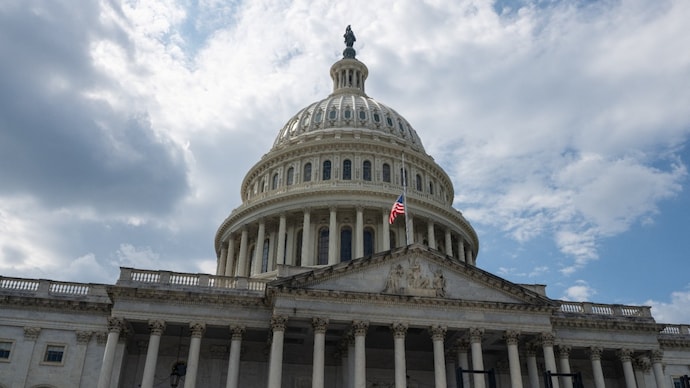
The House Rules Committee has formally listed the amendments for consideration Monday.

Washington DC,UPDATED: Sep 14, 2026 23:43 IST
India could face a fresh and potentially significant trade threat from Washington as House Democrats move a series of amendments to the sweeping Russia-Iran sanctions legislation that would specifically identify India among countries eligible for duties of up to 100% over purchases of Russian crude oil or natural gas, or for facilitating sanctions evasion.
The House Rules Committee has formally listed the amendments for consideration Monday as lawmakers take up the Senate-passed Lindsey O. Graham Sanctioning Russia and Iran Act of 2026.
One amendment, sponsored by Rep. Steny Hoyer, would name India, China, Trkiye, Azerbaijan, Hungary, Slovakia, the UAE, Singapore, Kazakhstan and Kyrgyzstan as the initial countries eligible for duties of up to 100% under the legislation.
The language does not itself impose a 100% tariff on India. Instead, it would establish India as a country eligible for such duties under the bill’s secondary-tariff mechanism.
That distinction is important: the legislation would give the US president authority to impose the additional duties, rather than automatically applying a 100% tariff to Indian goods.
WHY INDIA IS IN THE CROSSHAIRS
The issue is India’s continued purchase of Russian energy.
Since Russia’s invasion of Ukraine, Indian refiners have dramatically increased purchases of discounted Russian crude, helping India secure cheaper supplies while providing Moscow with an important source of export revenue.
India has consistently defended those purchases as an energy-security decision and has maintained that it complies with applicable international and US sanctions.
The US legislation, however, takes a different approach: it seeks to use access to the American market as leverage against countries that continue buying Russian energy.
The Senate-passed bill already gives the president the ability to impose tariffs of up to 100% on countries that are major purchasers of Russian energy. Reuters reported that the Senate legislation specifically creates the possibility of targeting major Russian-energy buyers including India and China.
The House amendment would go further by explicitly putting India on the initial list of countries eligible for those duties.
WHAT COULD A 100% TARIFF MEAN FOR INDIA?
If the authority ultimately becomes law and is used against India, the impact would extend well beyond the oil trade.
The proposed mechanism is aimed at imports from the targeted country into the United States. A 100% additional duty could therefore sharply increase the cost of Indian products entering the American market.
That could put pressure on major Indian export sectors, depending on how the administration implements the authority and which products are covered.
Potentially exposed areas could include:
* Pharmaceuticals
* Textiles and apparel
* Engineering goods and machinery
* Chemicals
* Auto components
* Gems and jewelry
* Electronics and technology-related goods
The actual economic impact would depend on the tariff rate imposed, the products covered, exemptions and whether Indian exporters or American importers absorb the additional cost.
The United States is one of India’s largest export markets, making any broad-based additional tariff a potentially significant issue for Indian manufacturers and exporters.
DEMOCRATS SEEK TO REWRITE THE TARIFF MECHANISM
The House amendments create an unusual dynamic.
While one Democratic amendment explicitly names India as eligible for duties of up to 100%, other Democratic amendments seek to remove or narrow the broad secondary-tariff authority contained in the Senate bill.
Rep. Gregory Meeks and Democratic colleagues have submitted an amendment that would strike the section authorizing broad secondary tariffs altogether. Another would clarify that the European Union is not treated as a single “country” for purposes of the secondary tariffs. (House Rules Committee )
That means the House debate could become a fight not simply over whether to sanction Russia, but over how much tariff power Congress should give the president and how that power should be applied to countries such as India.
WAIVER COULD ALSO BECOME HARDER
A separate Meeks amendment would tighten the president’s ability to waive sanctions.
Under the proposed amendment, sanctions against Russia or countries helping Russia could be waived only when doing so is considered “vital to the national security of the United States.”
For India, that provision could matter because Washington-New Delhi relations increasingly involve strategic considerations beyond the Russia question — including China, the Indo-Pacific, defense cooperation, technology, supply chains and energy security.
A narrower waiver standard could therefore reduce the administration’s flexibility to make exceptions based on broader diplomatic or economic considerations.
$15 BILLION FOR UKRAINES ADDED TO THE PACKAGE
The House Democratic amendments also seek to add $15 billion in foreign military financing for Ukraine, further linking the economic pressure on Russia and its energy buyers with continued US military support for Kyiv.
The legislation comes as the House prepares to consider the measure after the Senate passed it 86-11 in August. Reuters reported that President Donald Trump has signaled support for the sanctions legislation, while concerns have emerged in the House over the breadth of the tariff authority and its potential economic consequences.
A NEW PRESSURE POINT IN US-INDIA RELATIONS
For India, the legislation arrives at a particularly sensitive moment.
New Delhi is simultaneously seeking to deepen its strategic relationship with Washington while maintaining longstanding defense and energy ties with Moscow.
Prime Minister Narendra Modi held talks with Russian President Vladimir Putin in New Delhi this month, with energy and defense cooperation among the issues discussed. India is also hosting the BRICS summit as it seeks to balance its relationships with Russia, the United States and other major powers.
The proposed legislation therefore puts a potentially difficult choice at the center of US-India economic relations:
Continue buying Russian energy and risk additional US trade penalties, or reduce Russian energy purchases to minimize exposure to Washington’s secondary sanctions regime.
For now, India is not automatically facing a 100% tariff. The House amendment would place India among the countries eligible for such duties. Whether those duties are ultimately imposed would depend on the final legislation, presidential action and any exemptions or waivers.
But the message from Capitol Hill is becoming clearer: India’s Russian oil purchases are increasingly being treated in Washington not only as a foreign-policy disagreement, but as a potential trade issue.
- Ends
Published By:
Aprameya Rao
Published On:
Sep 14, 2026 23:43 IST