 1 hour ago
The US Supreme Court refused to revive restrictions on gender-affirming healthcare for transgender federal inmates. The order leaves the policy blocked while the class-action challenge proceeds.
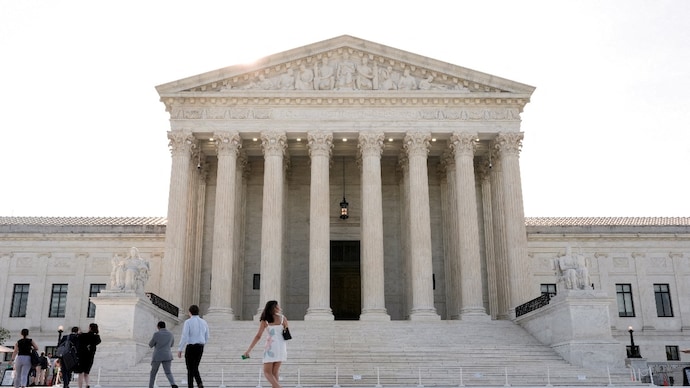
US Supreme Court building. (File Photo: Reuters)
The US Supreme Court on Wednesday refused to let President Donald Trump’s administration immediately enforce restrictions on gender-affirming healthcare for transgender inmates in federal prisons, leaving in place a lower court order blocking the policy while a legal challenge continues.
The court rejected an emergency appeal by the Justice Department seeking to overturn the injunction. The decision marks a setback for the administration’s efforts to roll back transgender rights, although the Supreme Court did not explain its reasoning in the brief order.
Conservative Justices Clarence Thomas and Samuel Alito dissented.
The policy, introduced in February, bars federal prisons from providing medical and surgical treatments for gender transition. It also prohibits social accommodations, including clothing and hair-removal devices, intended to help inmates align their appearance with their gender identity. Psychiatric services remain permitted under the restrictions.
Three transgender inmates held at federal correctional facilities in New Jersey, Florida and Minnesota challenged the policy through a class-action lawsuit.
“This ruling will prevent serious and irreparable harm to plaintiffs and the class while we continue to challenge the government's unlawful efforts to deny medically necessary healthcare for political reasons,” said Aditi Shah, an attorney with the American Civil Liberties Union, which is representing the inmates.
The Federal Bureau of Prisons declined to comment on the Supreme Court's decision.
LOWER COURT FOUND POLICY LIKELY UNLAWFUL
In June, US District Judge Royce Lamberth in Washington blocked the restrictions, finding that the policy was likely “arbitrary and capricious” under a federal law governing agency procedures.
Lamberth said the Bureau of Prisons had disregarded its own evidence and experience and had “reverse engineered” the policy to implement Trump's executive order on transgender issues.
“With this opinion, the court has no intention of wading into the culture war being waged against transgender individuals,” the judge wrote.
The US Court of Appeals for the District of Columbia Circuit refused to lift the injunction on September 18, prompting the administration to approach the Supreme Court.
In its appeal, the Justice Department argued that the prison system had reasonably concluded that gender-transition treatments were not medically necessary and that security and prison-administration concerns independently justified the restrictions.
The administration described the treatments as “unproven sex-rejecting interventions” and argued that the policy prioritised mental-health care while discontinuing disputed medical procedures.
The inmates, however, warned that blocking hormone therapy could cause serious harm, including worsening depression, anxiety, suicidal thoughts and self-harm.
TRUMP ADMINISTRATION'S WIDER TRANSGENDER RESTRICTIONS
Trump has pursued a series of measures targeting transgender rights since returning to office in January 2025.
On his first day back, he signed an executive order recognising only male and female sexes under federal policy. The directive also called for changes across federal agencies, including restrictions on the placement of transgender women in women's prisons and an end to federal funding for treatments intended to alter an inmate's appearance to align with their gender identity.
The latest dispute concerns a reversal of the federal prison system's earlier approach. According to the inmates challenging the policy, the system had provided hormone therapy to people diagnosed with gender dysphoria since at least 1992.
Gender dysphoria refers to significant distress that may arise when a person's gender identity does not align with their sex assigned at birth.
Government figures from 2025 showed that more than 2,000 transgender inmates were housed in federal correctional facilities and halfway houses.
SUPREME COURT HAS BACKED OTHER RESTRICTIONS
The latest order comes after a series of Supreme Court decisions favouring restrictions on transgender rights, despite the court's intervention in the prison healthcare dispute.
The conservative-majority court has upheld state restrictions on transgender athletes participating in female sports teams and allowed the Trump administration to enforce a ban on transgender people serving in the military.
It has also allowed states to prohibit gender-affirming medical treatment for transgender minors and permitted restrictions on gender identity designations on passports.
The court's refusal to immediately reinstate the prison policy does not settle the underlying legal challenge. The restrictions will remain blocked while the litigation proceeds.
- Ends
With inputs from Reuters