1 month ago
Missouri's congressional map fight has returned to the US Supreme Court after conflicting rulings. The standoff has left voters and candidates uncertain ahead of a crucial November election.

Image used for representational purposes only

Jeffersoncity,UPDATED: Sep 10, 2026 04:20 IST
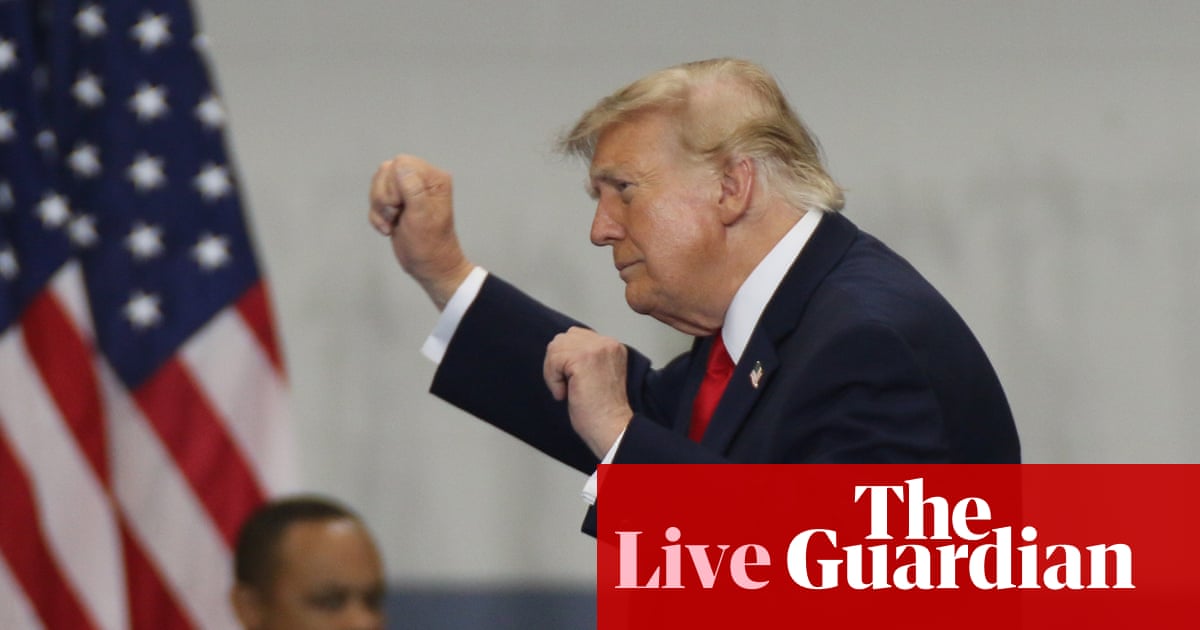
A fight over Missouri's congressional districts returned to the US Supreme Court on Wednesday, less than two months before a key November election that will decide control of Congress and could shape the future of President Donald Trump's agenda. A chain of conflicting court orders has left voters uncertain about which US House districts they will vote in and which candidates will be on their ballots.
The latest turn came after a federal appeals court panel sided with Republicans and refused to overturn a federal judge's order that backed a new map supported by Trump. That ruling was quickly challenged in the US Supreme Court, a day after the court had allowed a Missouri Supreme Court decision against the Trump-backed districts to stand.
Missouri moved quickly last year to redraw congressional districts after Trump urged Republican-led states to redraw maps to their advantage before the midterm elections. After Texas, Missouri became the second Republican-governed state to act. State lawmakers passed new US House districts in September, targeting a Kansas City-based seat held by Democratic Representative Emanuel Cleaver. The plan was meant to help Republicans win seven of Missouri's eight House seats, one more than before.
Opponents of the new map responded by collecting hundreds of thousands of petition signatures to force a statewide vote on the issue. They submitted the signatures in December. But Republican Secretary of State Denny Hoskins waited until August, on the same day as Missouri's primary, to reject the petition, saying a referendum petition could not be used for congressional redistricting. That delay allowed the new districts to be used in the primary.
The Missouri Supreme Court later ruled that Hoskins was wrong and ordered him to place the referendum on the November ballot, which he did. It also said the new districts had never become law and had instead been suspended retroactively to when the petition was submitted in December. The court barred Hoskins from using the new map and said the old map, passed by Republican lawmakers in 2022 after the last census, must be used in the November election. On Tuesday, the US Supreme Court declined to hear an appeal.
Minutes after that, federal District Judge Stephen Clark in Missouri issued a conflicting order. He temporarily barred Hoskins from using any map other than the new congressional districts in the November election, saying that changing districts between the primary and the general election could violate voters' federal rights. Opponents then asked the 8th US Circuit Court of Appeals to reverse Clark's order, but it refused, sending the matter back to the US Supreme Court.
Opponents have also asked the Missouri Supreme Court to hold Hoskins in contempt for taking steps to use the new districts in November, and the court scheduled a contempt hearing for Thursday. State lawyers for Hoskins want the federal judge to stop that hearing, arguing that he was following orders and that a federal court order based on the US Constitution overrides a state order based on the state constitution.
Changing congressional districts after a primary is unusual, but not without precedent. After a US Supreme Court ruling in April weakened the federal Voting Rights Act, Alabama lawmakers changed some congressional districts even though a primary had already been held in May, and the state later conducted a new primary in August. A comparable situation took place in Texas in 1996, when a federal court struck down several congressional districts after the primaries and the state then held an open primary for those districts in November. In Missouri, however, no court has suggested holding the primary again, and the candidates who won in August have already been certified for the November ballot according to the district numbers they won.
"Here in Missouri, we've witnessed a series of unprecedented actions, one after another," said Travis Crum, a law professor at Washington University in St Louis who specialises in election law. He added: "That is a tough and complicated legal question, and there is no definitive ruling from the Supreme Court that one could point to for an answer." With the election drawing closer, Missouri is still caught between competing court orders and without a clear model to follow.
With PTI Inputs
- Ends
Published By:
India Today Web Desk
Published On:
Sep 10, 2026 04:20 IST