 58 minutes ago
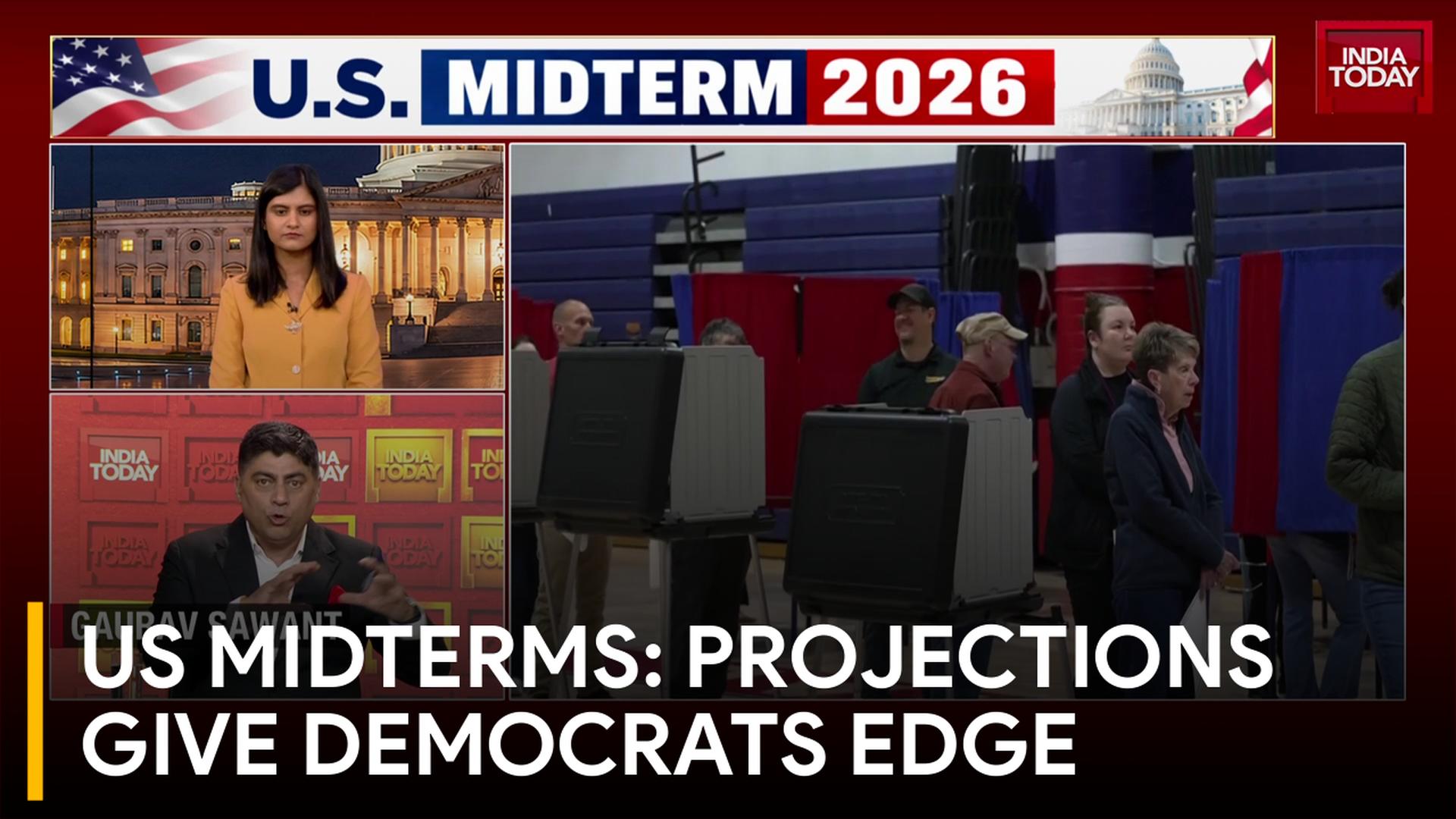
Americans are voting in midterm elections that will decide control of Congress. The outcome could curb Donald Trump's agenda during his final two years.

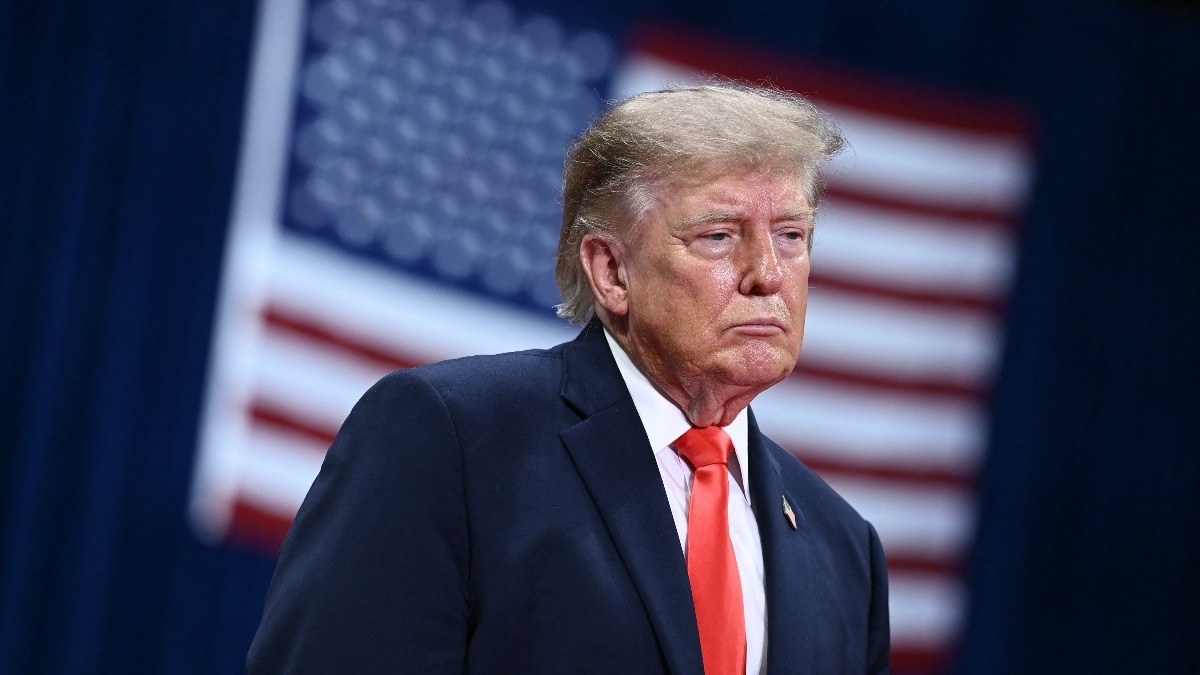
Image used for representational purposes only
Americans began voting on Tuesday in an election widely seen as a referendum on President Donald Trump's second term, which has been marked by a prolonged war in Iran, rising inflation, trade disputes and deep social divisions, news agency Press Trust of India reported.
The elections will determine whether Trump's Republican Party retains control of the House of Representatives and the Senate, the two chambers of the US Congress. Opinion polls have predicted that the Democratic Party could take control of at least the House, if not the Senate, for the final two years of Trump's term.
On the eve of the elections, the US launched limited strikes on Iran's Qesham island in the Strait of Hormuz. Officials said the strikes were in response to Iran firing at a US aircraft.
All 435 House seats and 37 seats in the 100-member Senate are at stake. Elections are also being held for governor in 36 states, including Ohio, where Indian-American Republican candidate Vivek Ramaswamy is in a close contest with Democratic nominee Amy Acton.
Several Indian-American candidates are contesting posts ranging from governor to city council membership. Kerala-born Democrat Nithya Raman is in a close contest with her former boss, Karen Bass, for mayor of Los Angeles, the second-largest city in the US.
Indian-American lawmakers Ro Khanna, Ami Bera, Pramila Jayapal and Suhas Subramanyam are seeking re-election to the House. Fellow Democrats Pia Dandiya and Amish Shah are contesting competitive races in their bids to enter Congress for the first time.
Republicans and Democrats made their final appeals to voters on Monday. Trump chose the Lincoln Memorial Reflecting Pool as an unusual venue to highlight renovations in the national capital rather than discuss tax cuts, tariffs and border security, which had been central to his election rallies.
According to the White House, Trump toured 20 states, mostly Republican strongholds, and addressed 30 rallies over 32 days. Analysts said his approval ratings were at an all-time low and that he had become a liability for Republican candidates.
If Democrats take control of Congress as forecast, they will be able to intensify scrutiny of Trump's actions and limit his ability to advance his agenda. He will, however, retain the power to govern through executive orders for the remaining two years of his term.
Shuchita Patel, a Democrat contesting for Forsyth County commissioner, told PTI: "We are reaching a boiling point in the country as a whole. There are the elites, the ruling class, the Epstein class that is truly 1 per cent that is wealthy, and there is the rest of us."
Trump acknowledged that a Democratic victory could restrict his administration but indicated that he would not allow Congress to slow him down. "I guess I'll become Mr Veto," he told the New York Post's Pod Force One podcast when asked about Republicans possibly losing control of both chambers, referring to the president's power to veto legislation passed by Congress.
Former president Barack Obama campaigned for Democrats at rallies in Ohio, Michigan and Georgia. "This election is our last, best chance of at least reining him in, reining in some of the foolishness of this administration," Obama said in Georgia.
"It's the circuit-breaker in the system, and we need to flip it," he said, criticising Trump for focusing on White House renovations rather than issues affecting people.
Democrats suffered a late setback when Michigan Congresswoman Haley Stevens crossed over to the Republican side on Sunday and broke ranks with Democratic Senate nominee Abdul El-Sayed, who could become the first Muslim elected to the US Senate.
The Democratic Party rallied behind El-Sayed and issued statements condemning Stevens after she endorsed his Republican rival, Mike Rogers, and appeared with him in public. Stevens had lost the Senate primary to El-Sayed. She is a strong supporter of Israel, while El-Sayed is a fierce critic of the US ally.
Democrats hope to win seven Republican-held Senate seats in Michigan, Maine, Ohio, Kansas, Texas, Iowa and Alaska as they seek a majority in the 100-member chamber.
Each of the 50 US states is represented by two senators, who serve six-year terms. Senators are divided into three groups, with their terms staggered so that elections are held every two years. House members serve two-year terms.
Republicans hold narrow majorities in both chambers. In the House, Speaker Mike Johnson has 218 Republicans and one independent, California's Kevin Kiley, against 214 Democrats, while two seats are vacant.
The Senate is divided 53-47 in favour of Republicans. Democrats need a net gain of four seats to take control. Of the 35 Senate seats on the ballot, 22 are held by Republicans, according to the PTI report.
The midterm elections are also important for Vice-President J D Vance as he strengthens his claim to succeed Trump. Vance campaigned in New York and Ohio on Monday, where Republicans were contesting House and Senate seats.
Vance highlighted Trump's moves to end taxes on tips and overtime and secure the border. He also described Democrats as "lunatics" who had contempt for American voters.
About 210 million Americans are registered to vote, according to USAFacts. California has the most registered voters at 23.2 million, followed by Texas with 17.4 million and Florida with 13.6 million. Together, the three states account for about 26 per cent of all registered voters. Wyoming has 278,468 registered voters, Vermont 459,455 and Alaska 603,310, the lowest totals in the country.
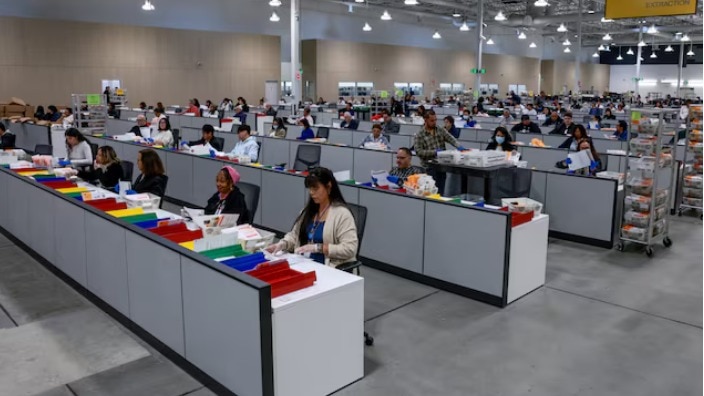
More than 57 million ballots had been cast across 47 states and Washington, DC, by Monday, according to the Associated Press. This compared with just under 44.5 million ballots cast across 49 states and Washington, DC, at the same stage in 2022.
The vote will decide control of Congress, governors' offices in 36 states and several local posts, while also testing public support for Trump and determining how much freedom he has to pursue his agenda during the final two years of his presidency.
With PTI Inputs
- Ends