1 month ago
'We are Russia's next target,' Nato's secretary general Rutte warns
Meanwhile, Rutte delivers a very stark warning in the opening lines of his speech in Berlin as he says:
“I’m here today to tell you where Nato stands and what we must do to stop a war before it starts. And to do that, we need to be crystal clear about the threat: we are Russia’s next target, and we are already in harm’s way.”
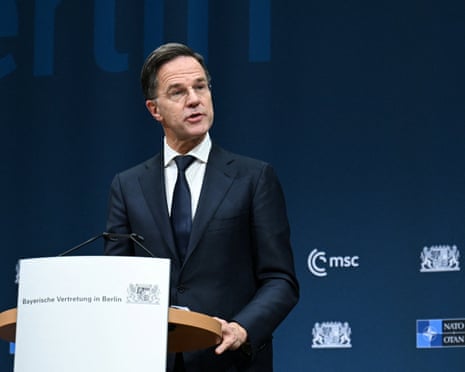
He says that while the decision to accelerate defence spending at Nato’s Hague summit earlier this year was welcome, “this is not a time for self-congratulation.”
“I fear that too many are quietly complacent. Too many don’t feel the urgency. And too many believe that time is on our side. It is not. The time for action is now. Allied defence spending and production must rise rapidly. Our armed forces must have what they need to keep us safe.”
Rutte says that Russia “has become even more brazen, reckless and ruthless towards Nato and towards Ukraine.”
“During the cold war, President Reagan warned about the aggressive impulses of an evil empire. Today, President Putin is in the empire building business again.”
He warns that “in his distorted view of history in the world, Putin believes that our freedom threatens his stranglehold on power and that we want to destroy Russia.”
He says that China is Russia’s “lifeline” that allows it to pursue its aggressive line, and its supported by North Korea and Iran.
Rutte pointedly praises Trump for his efforts, saying “he is the only one who can get Putin to the negotiating table.”
“So let’s put Putin to the test. Let’s see if he really wants peace or if he prefers the slaughter to continue,” he says.
(I think we know the answer by now, Mark.)
But he says it’s important “all of us keep up the pressure on Russia and support the genuine efforts to bring this war to an end.”
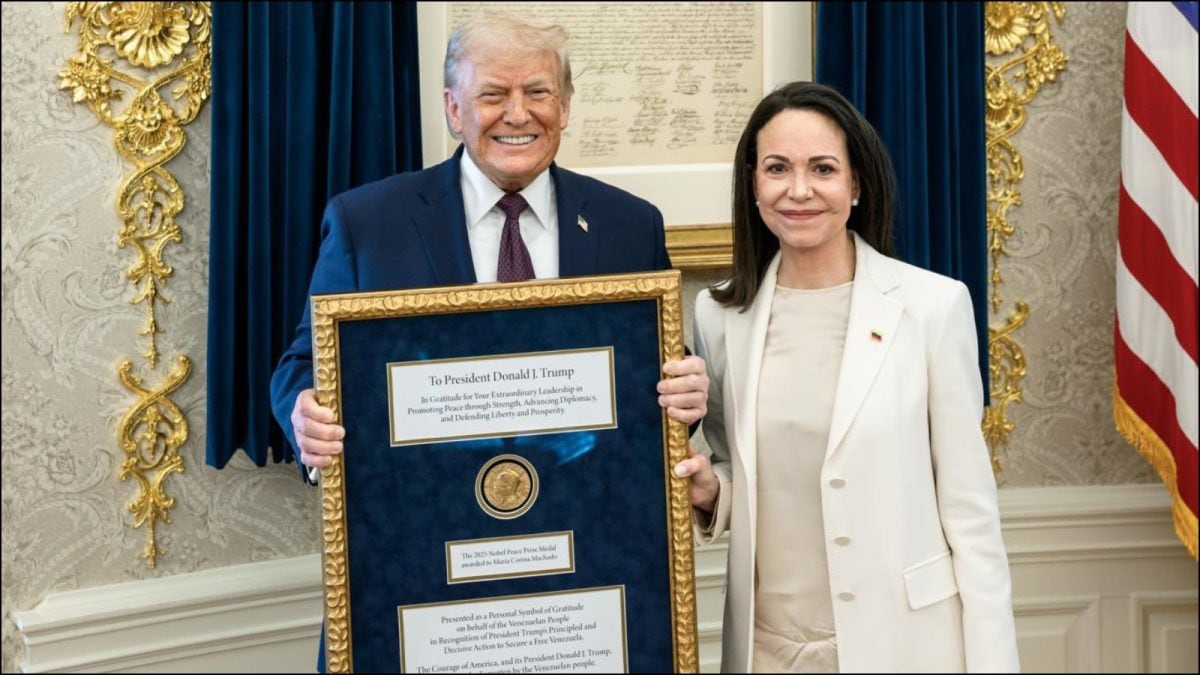
Key events 22s ago ‘Censorship pure and simple’: critics hit out at Trump plan to vet visitors’ social media 52m ago EU governments start process of freezing Russian assets long-term 1h ago Bulgarian prime minister Zhelyazkov resigns after weeks of street protests 1h ago Nato chief tells allies 'we are Russia's next target' – video 2h ago Russia calls for UK to disclose what soldier killed in Ukraine was doing 2h ago EU watchdogs raid Temu’s Dublin HQ in foreign subsidy investigation 3h ago 'Coalition of Willing' set to hold call 3h ago Rutte's Berlin speech - in pictures 3h ago Europe will 'have to step up,' Rutte says, but denies 2027 US target 3h ago 'I've long stopped guessing what's in his head,' Rutte says of Putin 3h ago Germany's Wadephul stresses importance of getting deal on using frozen Russian assets 3h ago 'Difficult to say,' Nato's Rutte on timeline for Ukraine peace deal 4h ago Nato's Rutte delivers stark warning on Russian threat facing Europe 4h ago 'Ukraine's security is our security,' Rutte warns, as he warns again Putin getting his way on Ukraine 4h ago 'We are Russia's next target,' Nato's secretary general Rutte warns 4h ago Bulgarian prime minister Zhelyazkov resigns 4h ago 'If you want to know Russia’s actions, listen to what it accuses others of,' German minister says 4h ago Austrian parliament passes controversial school headscarf ban 5h ago 'At last, we are not fighting against it alone,' Orbán says as he welcomes US criticism of EU's 'civilisational-scale decline' 6h ago No reason to doubt US commitment to Nato, Merz and Rutte say 6h ago Germany's Merz plays down suggestions of clash with Trump, says they had 'constructive' call 6h ago We will not let anyone or anything to divide Europe, Germany's Merz says 7h ago Germany's Merz, Nato's Rutte brief press after talks 7h ago 'Quite an experience,' Machado says of her secret trip to leave Venezuela for Oslo 7h ago 'I'm just one of millions of mothers longing to embrace their children,' Machado says of family reunion in Oslo 7h ago 'I am very hopeful Venezuela will be free,' Nobel prize winner Machado says 7h ago Russia sent US proposals on collective security guarantees to end Ukraine war, Lavrov says 8h ago Nobel peace prize winner Machado arrives in Oslo 8h ago Morning opening: Strong words, but what's next? Show key events only Please turn on JavaScript to use this feature
‘Censorship pure and simple’: critics hit out at Trump plan to vet visitors’ social media
Robert Booth and Jakub Krupa
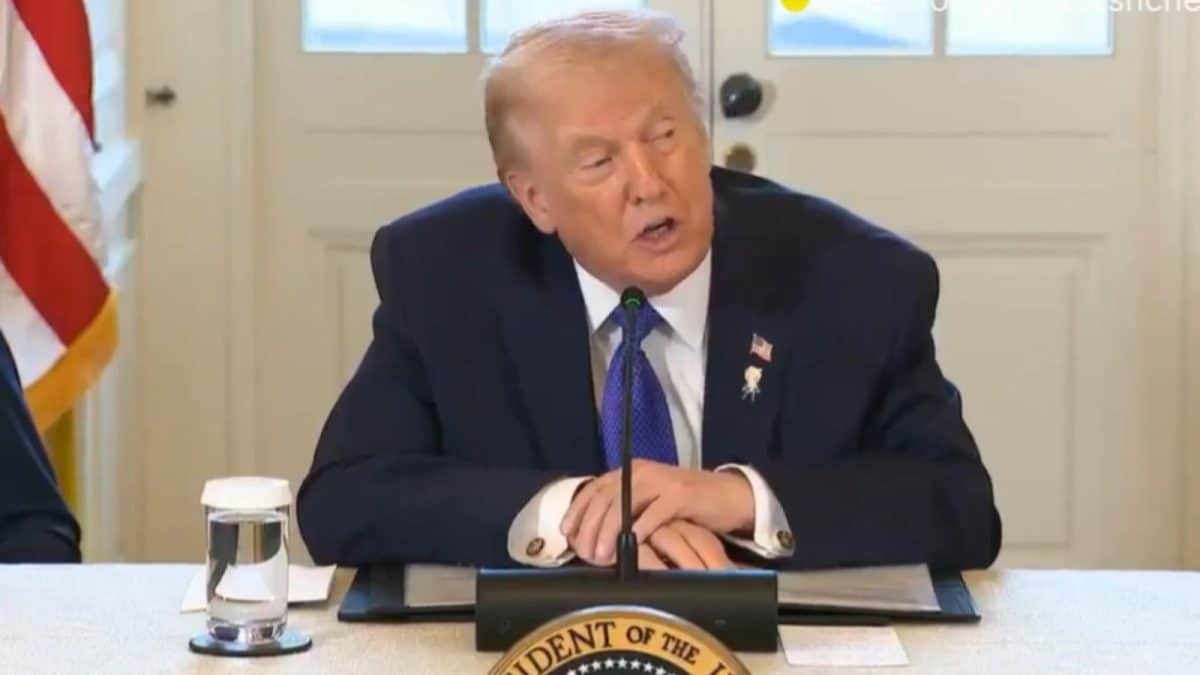
Free speech advocates have accused Donald Trump of “shredding civil liberties” and “censorship pure and simple” after the White House said it planned to require visa applicants from dozens of countries to provide social media, phone and email histories for vetting before being allowed into the US.
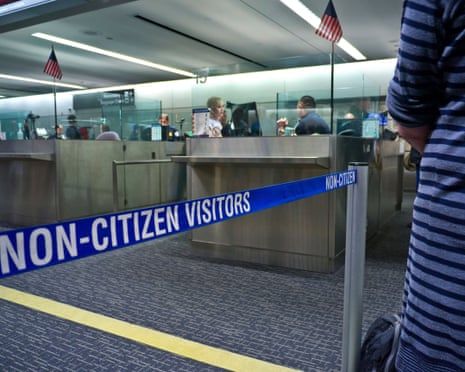
In a move that some commentators compared to China and others warned would decimate tourism to the US, including the 2026 Fifa World Cup, the Department for Homeland Security said it was planning to apply the rules to visitors from 42 countries, including the UK, Ireland, Australia, France, Germany and Japan, if they want to enter the US on the commonly used Esta visa waiver.
The checks will be carried out when a traveller applies for their Esta and “will require Esta applicants to provide their social media from the last five years” as well as “telephone numbers used in the last five years” and “email addresses used in the last 10 years”, government documents show.
In Brussels, Trump’s move was described as “ironic” given his criticism of the EU’s €120m fine of Elon Musk’s X platform last week as “nasty”. The border measures were “a dramatic overreach and breach of fundamental rights,” said the German MEP Birgit Sippel, a member of the European Parliament’s committee on civil Liberties, justice and home affairs.
Minky Worden, the director of global initiatives at Human Rights Watch, said the new entry requirements were “an outrageous demand that violates fundamental free speech and free expression rights”, according to Politico.
Asked on Thursday how it would protect its employees from the checks, the European Commission described the policy as “floated plans”. “We haven’t seen any confirmation of this plan, so there’s no need for us to further speculate,” a spokesperson said.
EU governments start process of freezing Russian assets long-term
Meanwhile, there is a breaking news line from Brussels, with Reuters reporting that the European Union governments have started a process to freeze Russian central bank assets immobilised in Europe for the long-term to avoid votes every six months on rolling over the freeze and pave the way for the use of the money for Ukraine.
The decision to launch the process, under which a qualified majority of EU governments has to agree, is part of the EU’s legal system which allows governments to take special measures if they believe they need to protect the economic stability of the EU in special circumstances under Article 122 of the EU treaty.
“The Danish Presidency can inform that COREPER (ambassadors of EU governments in Brussels) has agreed on a revised version of the Art. 122-proposal and approved the launch of a written procedure for formal Council decision by tomorrow around 5 pm,” the Danish presidency of the EU said in a statement, quoted by Reuters.
The move is likely to prompt angry reaction from Hungary and Slovakia, who had previously threatened to block the rollovers in disputes over other parts of the EU policy towards Russia, particularly on energy (which is, erm, exactly why the majority is progressing with this proposal).
Bulgarian prime minister Zhelyazkov resigns after weeks of street protests
I have promised you an longer update on the resignation of the Bulgarian prime minister, Rosen Zhelyazkov, so here is a bit more context, via Reuters.
Zhelyazkov announced the decision in a televised address just minutes before parliament was due to vote on a no-confidence motion after weeks of street protests over its economic policies and its perceived failure to tackle corruption.
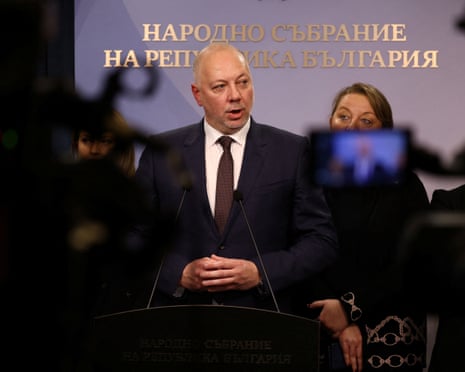
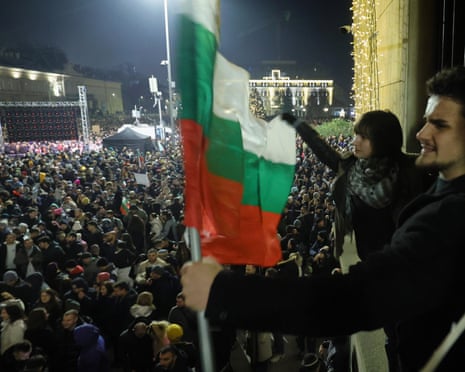
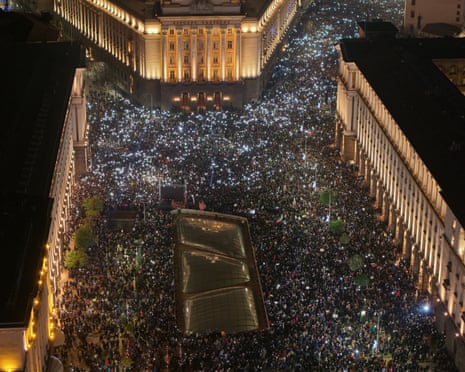
Thousands of Bulgarians rallied last night in Sofia and dozens of other towns and cities, the latest in a wave of demonstrations highlighting public anger over endemic graft and successive governments’ inability to root it out.
Last week, Zhelyazkov’s government withdrew its 2026 budget plan, the first drafted in euros, after protests erupted over proposals to raise social security contributions and taxes on dividends to fund higher state spending.
Despite the retreat, demonstrations have continued in a country that has held seven national elections in the past four years, most recently in October 2024, amid deep political and social divisions.
Zhelyazkov’s resignation comes less than three weeks before Bulgaria is scheduled to join the euro zone on 1 January.
Under Bulgaria’s constitution, president Ruman Radev will now ask parties in parliament to try to form a new government. If they fail – as appears likely – he will appoint an interim administration to run the country until new elections can be held.
Nato chief tells allies 'we are Russia's next target' – video
And here’s a video of one of the key passages from Nato’s secretary general Rutte’s speech in Berlin we reported earlier.
Ukrainian journalist Viktoriia Roshchyna was captured by Russian troops while reporting from behind enemy lines in the summer of 2022, one of an estimated 16,000 civilians detained by Russia since the beginning of the full-scale invasion.
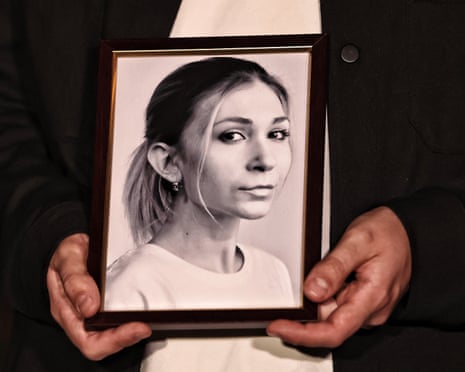
Details of her last days in captivity have now emerged with the witness account of a soldier who was with her when she was transported to a prison deep inside Russia.
Read more here:
Russia calls for UK to disclose what soldier killed in Ukraine was doing
On Tuesday, 28-year-old L/Cpl George Hooley of the Parachute regiment died in Ukraine, in what Keir Starmer, the British prime minister, described as a “tragic accident” away from the frontlines.
Russian Foreign Ministry spokeswoman Maria Zakharova on Thursday said the British government needed to disclose what Hooley was doing in Ukraine, accusing London of playing a larger role in the conflict.
“Let the UK government not lie to its subjects,” Zakharova said in a live Russian broadcast. “Don’t lie about those who are being sent there from the United Kingdom. Those who are sent there, they conduct direct instructions of the UK government in Ukraine. They commit acts of sabotage, terrorist acts, extremist tasks as well.”
Britain has been tight-lipped in acknowledging the presence of its military personnel in Ukraine, in part because it is reluctant to allow their presence to be exploited by Russia for propaganda purposes. Starmer said on Wednesday that Hooley died while watching a test of “a new defensive capability” with members of the Ukrainian military.
Zakharova did not provide any evidence to back up her accusations of an alleged wider UK involvement, but said that Russia would regard any foreign military contingents in Ukraine as “legitimate targets”.
This comes as the UK prepares to join with France and more than 30 other countries in deploying troops to Ukraine to act as a stabilization force when there is a durable ceasefire. Members of the “coalition of the willing” are set to meet on a video call with Ukraine’s president, Volodymyr Zelenskyy, on Thursday.
EU watchdogs raid Temu’s Dublin HQ in foreign subsidy investigation

Lisa O’Carroll
Temu’s European headquarters in Dublin have been raided by EU regulators investigating a potential breach of foreign subsidy regulations.
The Chinese online retailer, which is already in the European Commission’s spotlight over alleged failures to prevent illegal content being sold on its app and website, was raided last week without warning or any subsequent publicity.
“We can confirm that the commission has carried out an unannounced inspection at the premises of a company active in the e-commerce sector in the EU, under the foreign subsidies regulation,” a commission spokesperson said on Thursday.
Temu was approached for comment.
Read more here:
'Coalition of Willing' set to hold call
Another “Coalition of the Willing” call is set to begin this afternoon. Ukraine’s president, Volodymyr Zelenskyy, will be on Thursday’s call, along with British prime minister Keir Starmer, French President Emmanuel Macron, Germany’s Chancellor Friedrich Merz and numerous other leaders of nations supporting Ukraine.
This call comes at a delicate time, with Donald Trump voicing impatience with European allies amid chaotic American efforts to push through a peace deal. Zelenskyy was expected to hand over a revised version of a peace plan to US negotiators on Wednesday.
“This week may bring news for all of us,” Zelenskyy wrote on X. “We believe that peace has no alternative, and the key questions are how to compel Russia to stop the killings and what specifically will deter Russia from a third invasion.
Rutte's Berlin speech - in pictures
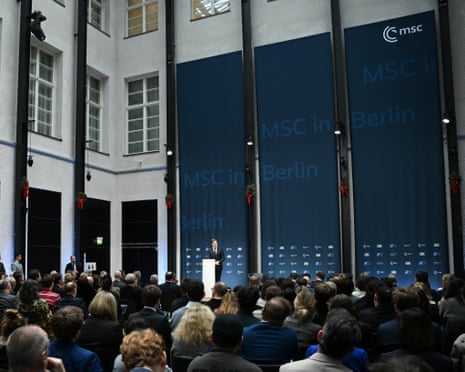
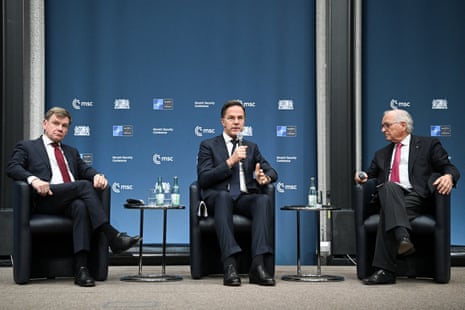
Europe will 'have to step up,' Rutte says, but denies 2027 US target
Rutte also says that Europe will see a shift in its approach to defence, as it will have to take more and more responsibility for its own security.
He says the Reuters report from last week suggesting US plans to shift the majority of burden for defending Europe on European countries by 2027 was “not right” and “the US has also confirmed that.”
“But more generally, yes, it’s clear that Europe will have to step up, and that’s exactly what we are doing.”
And that ends this somewhat explosive debate in Berlin.