 1 hour ago
Pakistan has stepped up its campaign against India over the Indus Waters Treaty as a heatwave intensifies water woes. However, the reality is that Pakistan's water crisis is the product of its own failures. In this article, we tell you the key reasons behind it.
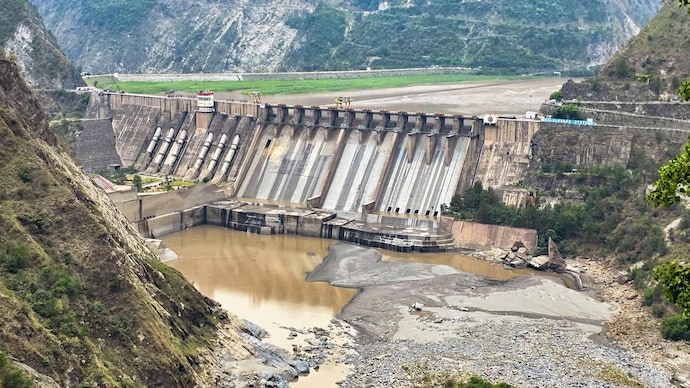
India suspended the Indus Waters Treaty last year following the Pahalgam attack
Pakistan, a state sponsor of terror, seems to have found a new way to deflect attention from its record on terrorism. It has turned to a new rallying cry - water, or Indus water to be precise. As a punishing heatwave grips the country, leading to fears of a water shortage, a desperate Pakistan hosted an "international conference". The centrepiece of this campaign was Pakistan's claim that India was "stopping water" by suspending the Indus Waters Treaty (IWT). However, in reality, Pakistan's growing water crisis is of its own making.
Pakistan's water crisis did not begin with India's decision on the Indus Treaty, which was taken following the 2025 Pahalgam attack. The roots, in fact, lie in decades of neglect, a lack of storage capacity, poor water management, and internal disputes among its provinces. In short, Pakistan has never worked towards securing its own water future.
This, despite Pakistan's economy being heavily dependent on agriculture and its status as one of the world's most water-stressed countries. Yes, that's the irony of the situation. We will come to this in the later part of the story.
PAKISTAN'S GLOBAL CONFERENCE ON INDUS TREATY
Instead of tackling it, Pakistan, being Pakistan, has chosen to do what it has been doing for decades: build a warped narrative blaming India. Over the past year, Pakistan sent its ministers to Western countries to put pressure on India to restore the Indus Treaty.
Interestingly, the country founded on the two-nation theory also started to tom-tom its pre-Islamic Indus Valley Civilisation heritage to push forwards its case. It has also sought to shape its narrative through think-tanks such as London's Chatham House.
However, the efforts have fallen flat. Even the World Bank, which helped broker the IWT, has declined to intervene.
Pushed to a corner, Pakistan came up with an "international conference", which featured no major prominent foreign leaders. People like a Chinese academic Victor Gao or some unknown US official didn't really add much.
What, however, was unmistakable was the empty rhetoric coming from some Pakistani leaders, including threats of nuclear Armageddon by Bilawal Bhutto. Pakistan's climate change minister Musadik Malik also threatened to "cut off those hands" that seek to control the Indus water.
India, however, has made it amply clear that the Indus treaty won't be back unless Pakistan reined in terror organisations. "Blood and water cannot flow together," Prime Minister Narendra Modi has said repeatedly.
The Pahalgam carnage, which left 25 tourists dead, was the tipping point for India suspending the IWT. For more than six decades, India honoured the treaty through wars and terror attacks like the 26/11 Mumbai carnage or the Pulwama tragedy.
As per the 1960 treaty, the three eastern rivers - Ravi, Sutlej, and Beas – were allocated entirely to India. Pakistan received exclusive rights over the western rivers - Indus, Jhelum, and Chenab.
India, however, was permitted to build "run-of-the-river" hydroelectric projects on the western rivers.
WHY PAKISTAN CAN'T BLAME INDIA FOR WATER WOES
Over the years, India has built substantial storage infrastructure on the eastern rivers. This has prevented flooding in downstream Pakistan, especially in areas like Lahore. Thus, if India had to "weaponise" water, as Pakistan has claimed, it could have done so long ago.
In fact, a substantial amount of water allocated to India under the IWT continues to flow into Pakistan because of a lack of storage facilities and canal networks on the Indian side to divert it to irrigation fields in Jammu and Kashmir. For decades, Pakistan continued to benefit from it.
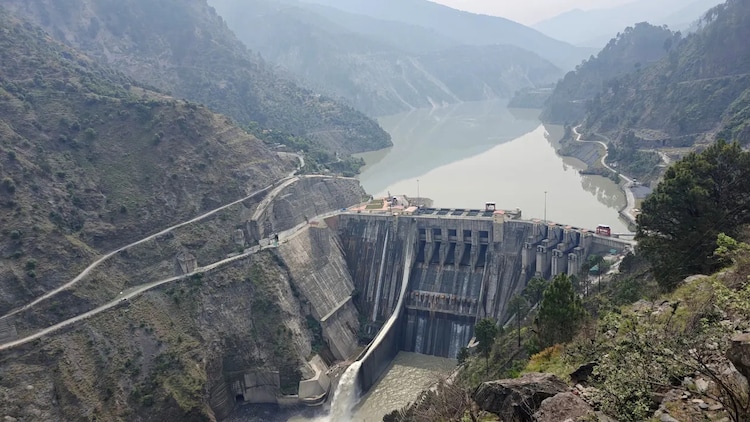
However, India has now accelerated efforts to utilise this untapped water. The long-delayed Shahpur Kandi Dam project on the Punjab-J&K border is nearing completion. This will end the routine flow of surplus water from the Ravi to Pakistan, and divert it to drought-hit Kathua and Samba districts.
Projects linked to the Chenab basin and the proposed Chenab-Beas canal system. The Rs 2,532 crore project will help divert surplus Chenab water to the Beas river system.
But all these projects are not designed to divert Pakistan's share of water, but to make greater use of water previously unused by India.
As to Pakistan's allegation of India stopping the flow of western Indus rivers, Delhi presently doesn't have the infrastructure to turn off the tap or divert a substantial amount of water. Most are run-of-the-river hydropower projects on the tributaries and have capacities of less than 5 MW.
For the Pakistanis reading this, this reality should strike hard. What may strike harder is how decades of neglect by the Sharifs and Bhuttos have left Pakistanis high and dry, literally. Stay with us, and we will explain how, with data.
PAKISTAN'S SELF-MADE CRISIS
Firstly, if Pakistan takes its water so seriously, then the proof would show in its Budget allocation. Here Pakistan lies exposed. In FY 2025-26, funding for water projects was slashed by 27% (from 184.6 billion Pakistani Rupees to 133.4 billion PKR). The next year, it was further cut by 42% (103 billion PKR).
In fact, according to an analyst who posts from the account Meru, the backlog of incomplete water projects stands at a staggering Rs 1.27 trillion.
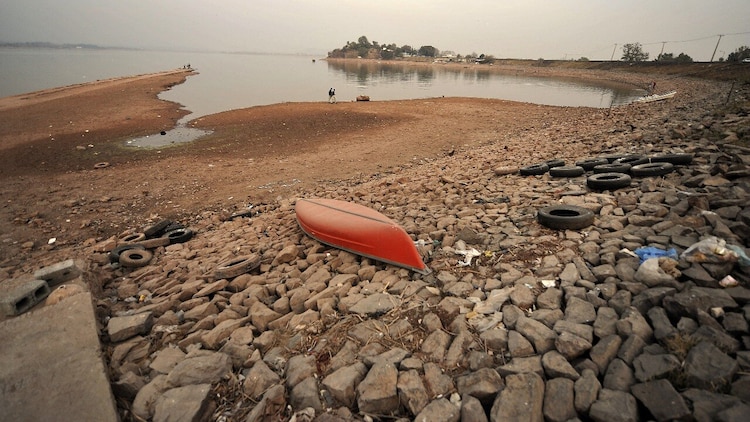
Moreover, Pakistan also lacks the reservoirs it needs to store enough water to deal with the crisis it faces every summer. In fact, as per a report, Pakistan anticipated a water shortage of up to 21% at the start of the crucial Kharif crop season last May. The IWT suspension did not even come into effect then. This year, the summer is likely to be even more devastating due to the El Nino phenomenon.
In essence, 79 years of corruption and neglect have ruined one of the world's largest irrigation systems.
Poor crop-selection strategies are also to blame. Despite being among the most water-stressed countries, Pakistan sees widespread cultivation of water-intensive crops like rice, wheat, sugarcane, and cotton.
According to Pradeep Kumar Saxena, who served as the Indian commissioner for Indus waters (2016-2022), Pakistan is also to blame for high wastage.
"The numbers are stark: total water wasted by Pakistan through unutilised flow to the sea is as high as India's entire share under the Indus Waters Treaty," Saxena wrote in an article for NatStrat.
Besides, inadequate regulatory mechanisms have led to unchecked groundwater exploitation. It has led to a drastic fall in water tables across large areas of the country.
Internal disputes between Pakistan's provinces also play a major part in the water crisis. For example, last month, Pakistan reported a severe water shortage across Sindh and Balochistan. According to a report in The Dawn, the water level in Sindh's canal network has reached alarming levels.
The water deficit in the North West Canal is 64%, while that in the Rice Canal is 38%. The deficit in the Dadu Canal is an alarming 82%.
However, much of the crisis is not due to India, but illegal withdrawals by upstream regions. As per the report, Punjab province in Pakistan is drawing more than 20% more water than its allocation.
The development has triggered internal bickering. Last month, the Jamaat-e-Islami accused the Pakistan Peoples Party (PPP)-led Sindh government of failing to address Karachi's chronic water shortages despite years in power.
Layered atop the groundwater crisis is sedimentation, which has reduced the storage capacity of major reservoirs like the Tarbela Dam. The Tarbela Dam, one of the world's largest dams, is facing a 48% reduction in its original water storage capacity due to sediments. It is only recently that Pakistan has started desilting key dams on a war footing.
It is a different matter that Pakistan has added no major storage capacity for nearly half a century after the Tarbela Dam was constructed in 1976.
WHAT CAN WE CONCLUDE
The facts and data are in front of you. Thus, Pakistan's claim that India's suspension of the Indus Treaty was behind its water crisis is nothing but an exaggeration to mask its failures and gain diplomatic support.
The reality is that Pakistan's water crisis is largely a result of its own policy failures. Blaming India for it doesn't seem to hold much water.
Pakistan very well understands that arguing about water is easier than terrorism. However, a leopard can't change its spots.
Before ending my article, I would like to share a quote by the famous Swiss psychologist and author Carl Jung - who looks outside dreams; who looks inside, awakes.
- Ends
Published By:
Abhishek De
Published On:
Jul 4, 2026 09:32 IST