1 month ago
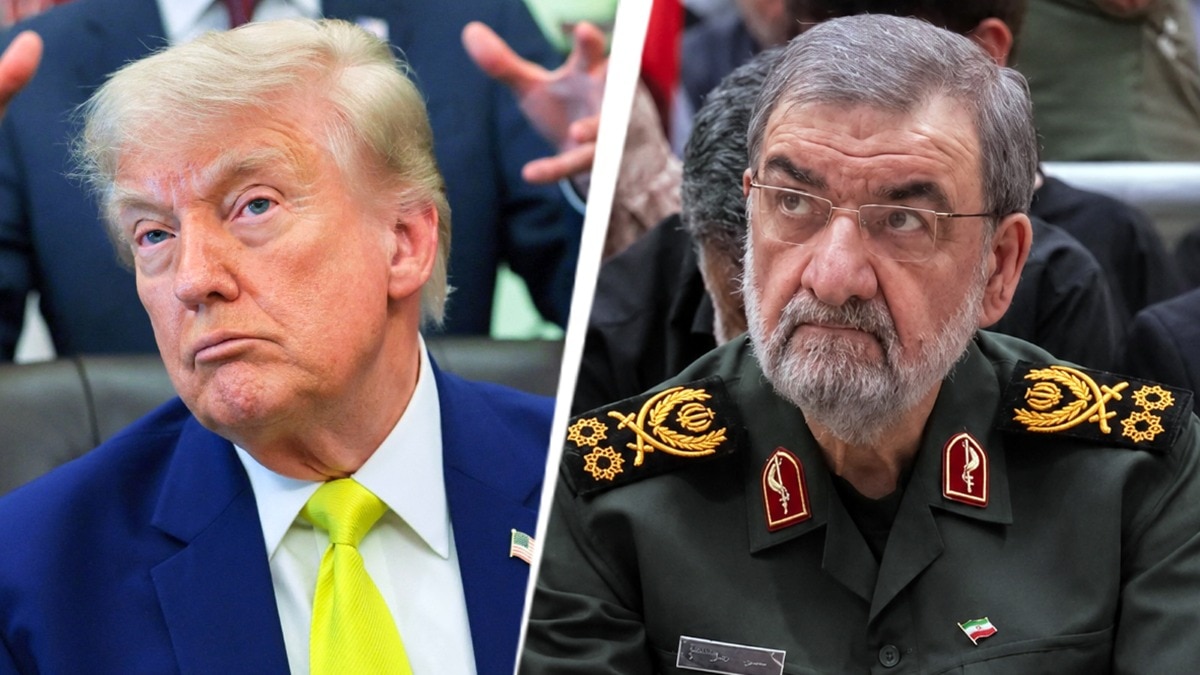
US President Donald Trump's war cry turned into just a cry, and then a walk-back. Because at home, there's a war too. A figurative one. His threats to wipe out a civilisation echoed louder in the US than they could in Iran. Here's why Trump blinked, again.
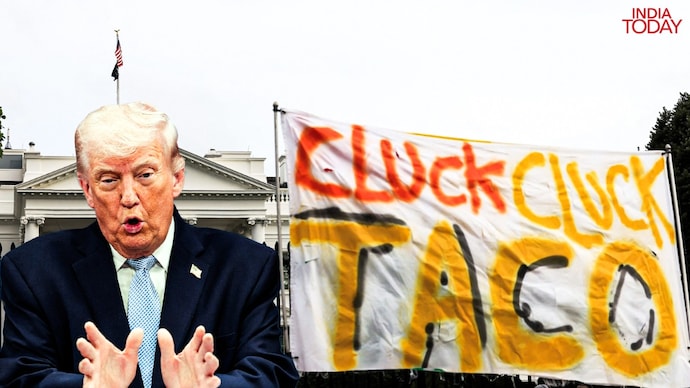
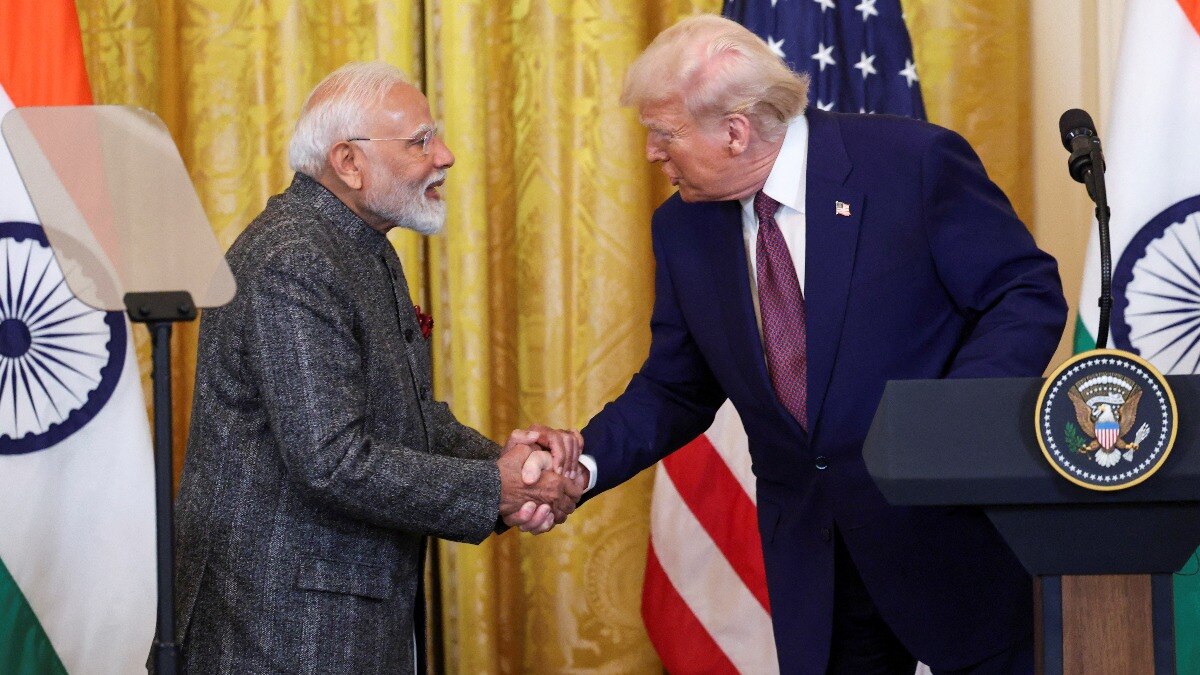
After warning of killing the entire civilisation on Tuesday, Trump has proved the TACO theory right, once again. (Image: File)

New Delhi,UPDATED: Apr 8, 2026 10:54 IST
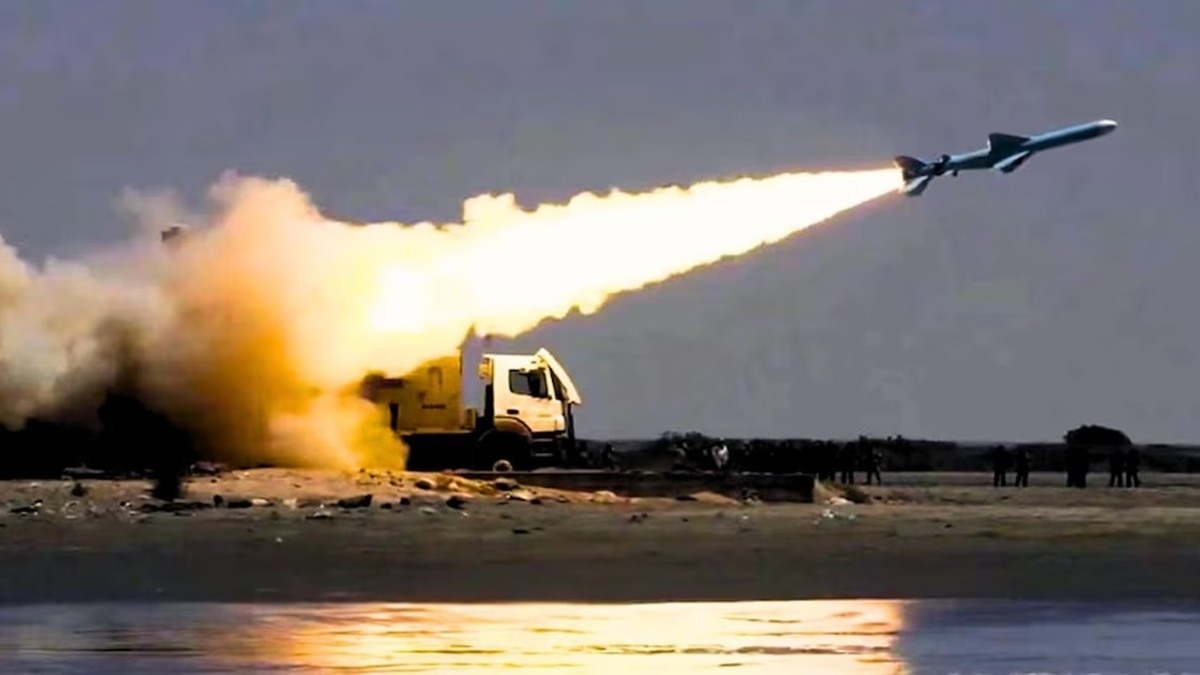
If you look at the events that have transpired in the last 24 hours, you would think Armageddon was about to arrive. The president of the most powerful office on Earth said he would wipe out an entire civilisation. The US Marines were practising firing drills aboard the USS Tripoli, and a B-52 bomber, a nuclear-capable strategic aircraft, took off from the UK's Fairford airbase. All signs of something big about to come. The deadline was just a couple of hours away when these developments were unfolding.
Iran, on the other hand, had its targets set on major energy infrastructure in Middle Eastern countries, almost ready to fire. Then came something that nobody expected. Amid the war drums, a white flag popped up, and the sound of cluck cluck. A chicken appeared on the battlefield. It was US President Donald Trump who had blinked, yet again.
But why did Trump, who was battering Iran left, right, and centre, suddenly announce a ceasefire? That too, with Iran's demands putting both the US and Israel's objectives on the back foot?
Let's first have a look at the demands that Iran has called for. It has demanded controlled passage through the Strait of Hormuz, something that Tehran has said might never be restored to the original status quo that prevailed before the war. The demand also asks for Iran's dominance in the Strait.
Then there are reparations. Full payment for Iran's damages, and the release of Iranian properties seized abroad.
Tehran has asked the US to end the war against the "Axis of Resistance", withdraw US combat forces from all bases in the Middle East, and ratify all issues at the UN Security Council.
Then come even bigger ones: termination of all Atomic Energy Agency (IAEA) Board of Governors resolutions, and most importantly, lifting primary and secondary sanctions on Iran.
The Don agreed to all of them. But why?
The answer lies in the frustration seen in the Supreme Commander of the United States' Military. When America's bombs fell short of making Iran bow, Trump's F-bombs started dropping. Defence analysts began pointing out that what we are seeing is the US President’s frustration spilling into the open, because things are not going the way he wanted them to be.
More than anything else, the situation has started to turn against Trump back home.
From Republicans to Democrats, and from celebrities to ordinary citizens, the sentiment back in the US about the war in Iran has been the same—the war is absolutely unnecessary.
And for a President fighting an unpopular war, it was showing on the streets. The biggest example of it came in the No Kings 3.0 protests in late March against the Trump administration, which saw more than 3,300 organised events across the country that drew a combined estimated eight to nine million protesters — the largest single-day protest in American history.
Midterm elections are due just over six months from now, and such a level of unpopularity might not play in the Republicans' favour, especially when the Democrats have flipped over 21% of GOP-held legislative seats in 2025.
Trump's tariffs have already pinched the American commoners' pockets, and with a war that the US is (or let's hope was) fighting at the behest of Israel, the economy was again staring at a bigger disaster.
It wasn't America's war to begin with. The US got into it because of Israel's fear of Iran's nuclear capabilities and its support for proxy militias threatening Israeli security.
The more the US tried to batter Iran, the worse things got for it and Israel, as Tehran wreaked havoc in the Middle East and triggered global energy supply shocks.
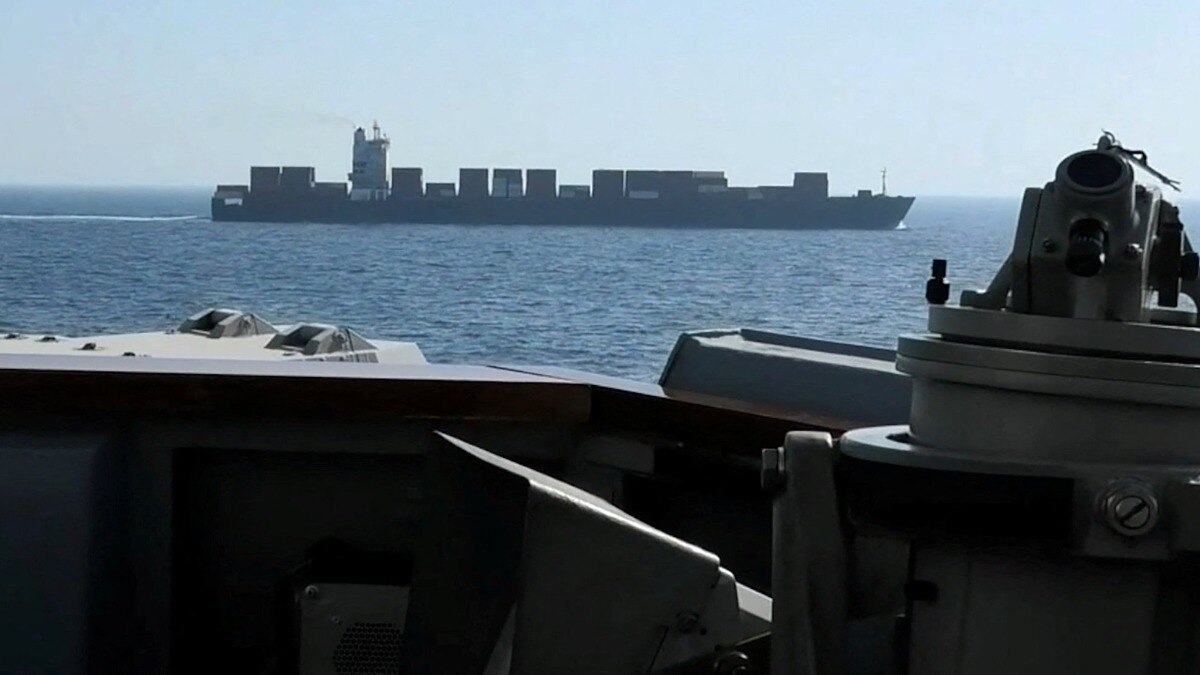
Strikes aimed at degrading Iran's military infrastructure and forcing the reopening of the Strait of Hormuz only ended up choking it further.
The costs mounted rapidly for the US. In just the first six days of Operation Epic Fury, the Pentagon estimated direct military spending at $11.3 billion. By day 12, independent analyses placed the total around $16.5 billion, with daily rates averaging $500–900 million thereafter.
Over roughly five weeks until early April, cumulative direct costs are likely to exceed $30–40 billion.
This is where critics and American citizens began asking again, how is there no money for healthcare, but always money for war?
The cluck was long coming.
Through the war in Iran, Trump repeatedly extended his deadlines for assaults on Tehran and its energy infrastructure. Since launching the initial ultimatum on March 21, he first issued a 48-hour demand for Iran to fully reopen the Strait of Hormuz or face strikes on power plants.
Hours before expiration, he paused for "productive talks."
On March 26, he added a 10-day extension to April 6 at 8 pm ET.
Then, there were further short shifts, including a 24-hour push and additional pauses. Trump repeatedly framed each deadline as potentially final while citing ongoing negotiations.
Then, the ceasefire. The famous TACO. A diplomatic cluck this time. Apocalypse now, not anytime soon.
- Ends
Published By:
Avinash Kateel
Published On:
Apr 8, 2026 10:54 IST